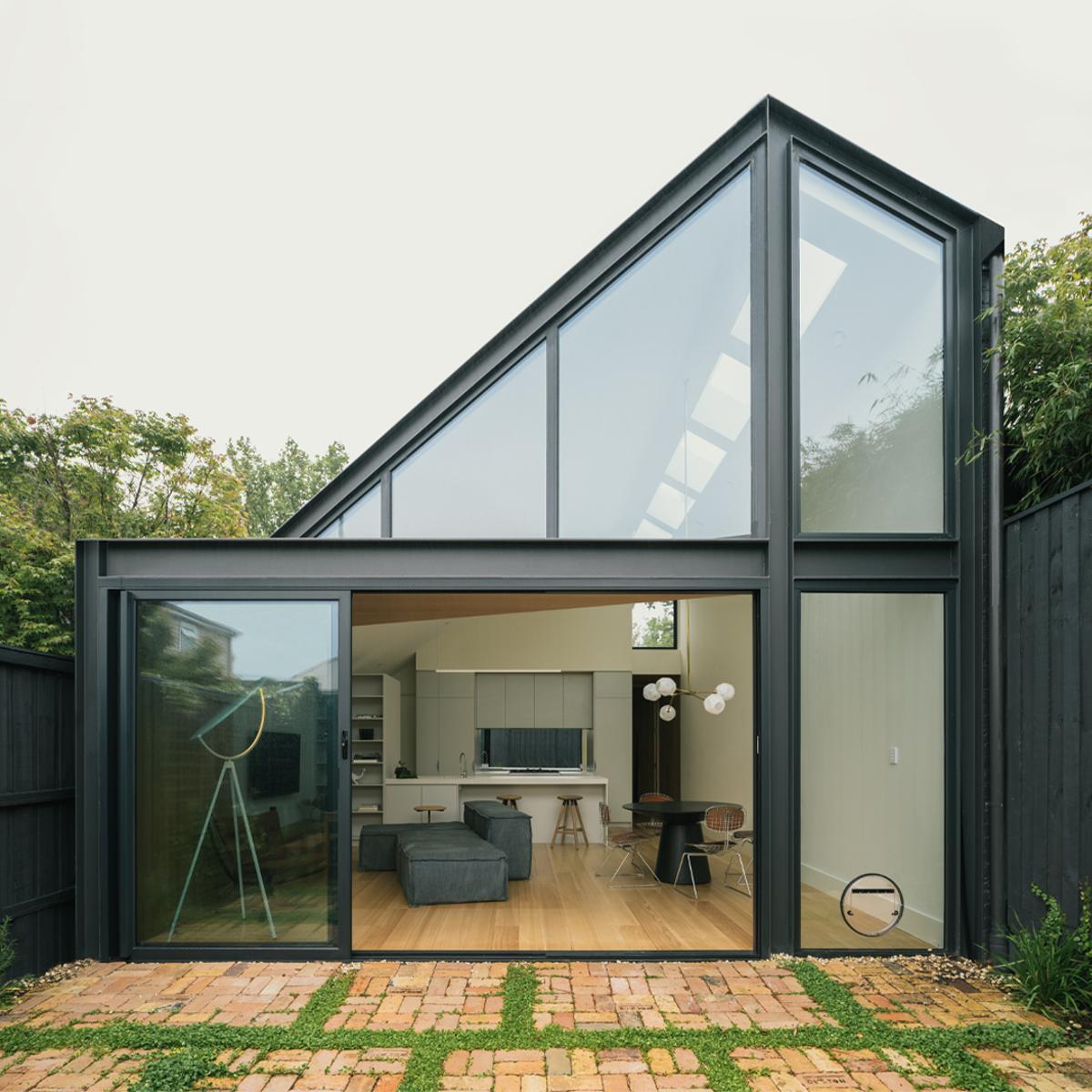
Why It Matters
The house demonstrates how thoughtful infill design can revitalize small urban sites, delivering heritage‑sensitive density without compromising neighbor relations. Its daylight‑focused strategy highlights growing demand for sustainable, livable apartments in dense city cores.
Key Takeaways
- •190 m² modern addition replaces cold lean‑to.
- •Double‑height living area maximizes natural light.
- •Floor‑to‑ceiling windows connect interior to courtyard.
- •Design bridges neighboring two‑storey and single‑storey homes.
- •Minimal shadowing respects southern neighbour’s outdoor space.
Pulse Analysis
Melbourne’s inner‑city suburbs, such as Abbotsford, are experiencing a wave of infill development as the city seeks to accommodate a growing population without expanding outward. Architects face the dual challenge of preserving historic streetscapes while delivering modern amenities on parcels that are often narrow and already built up. Abbie House exemplifies a solution that respects the Victorian weatherboard envelope yet injects contemporary spatial quality. By re‑imagining a neglected lean‑to into a bright, single‑level addition, the project illustrates how modest footprints can be transformed into high‑value residences.
The design hinges on a double‑height living volume that floods the interior with daylight through floor‑to‑ceiling glazing. This generous glazing not only creates a visual link to the rear courtyard but also reduces reliance on artificial lighting, aligning with sustainable design goals. Positioning the new mass between a two‑storey house to the north and a single‑storey dwelling to the south required careful massing to avoid casting shadows on the smaller neighbor. Eckersley Architects achieved this by stepping the roofline and aligning the façade with the existing boundary walls, delivering a seamless transition between contrasting scales.
Abbie House’s success underscores a broader shift toward compact, light‑filled dwellings that maximize livability on limited urban parcels. Developers can command premium prices for such thoughtfully designed infill units, while municipalities benefit from increased density without sacrificing heritage character. The project also illustrates how strategic daylighting and considerate massing can meet sustainability targets, a factor increasingly scrutinized by green building certifications. As cities worldwide grapple with housing shortages, the principles demonstrated here—heritage integration, neighbor‑sensitive form, and daylight‑driven interiors—are likely to inform future infill strategies.
Abbie Abbotsford Terrace / Eckersley Architects
Comments
Want to join the conversation?
Loading comments...