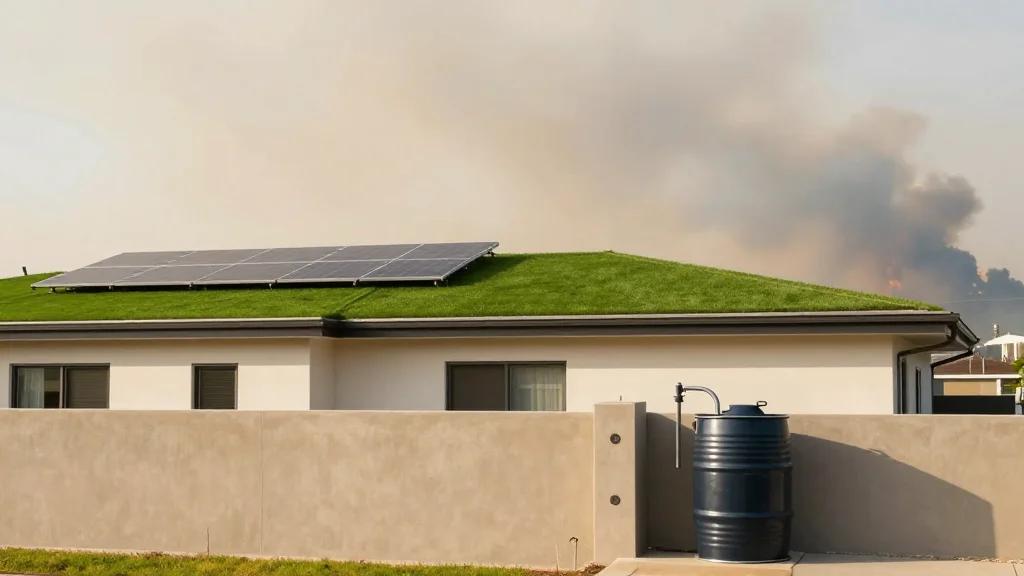
Affordable Housing Standard Evolves From Sustainability to Resilience
Why It Matters
By embedding disaster‑ready design into affordable housing, the criteria help protect low‑income families from climate shocks while unlocking public incentives, thereby aligning social equity with climate‑risk mitigation. This convergence accelerates resilient development at scale across U.S. municipalities.
Key Takeaways
- •Updated criteria add resilience assessments for heat, flood, wildfire risks
- •All certified affordable units must provide resident emergency manuals
- •Over 20 cities use the standard for tax abatements and funding
- •New guidelines promote electrification, renewable energy, and EV charging
- •Resident feedback shaped health, noise, and traffic safety improvements
Pulse Analysis
The latest Enterprise Green Communities Criteria reflect a broader industry pivot: affordable housing is no longer judged solely on energy efficiency but on its ability to withstand climate extremes. By integrating resilience metrics—such as vulnerability to heat waves, wildfires, and power outages—the standard equips developers with a clear roadmap to future‑proof units. This shift acknowledges that low‑income tenants disproportionately bear the brunt of climate events, making resilience a social‑justice imperative as well as an environmental one.
Municipalities are already leveraging the updated criteria to tighten the link between public funding and climate outcomes. Cities like Chicago, Boston and New York require the certification for tax abatements, low‑income housing tax credits, or direct financing, effectively turning resilience compliance into a prerequisite for capital. Developers who adopt the new guidelines can tap into streamlined approval processes and potentially lower insurance premiums, while investors gain confidence from a standardized risk‑mitigation framework. The inclusion of electrification pathways and EV‑charging infrastructure further aligns affordable projects with emerging clean‑energy incentives.
For residents, the enhanced focus on health and safety translates into tangible benefits: improved ventilation, noise reduction, and clear emergency manuals empower occupants to manage daily comfort and crisis situations. As climate risks intensify, the criteria’s holistic approach—spanning energy, health, and disaster preparedness—sets a benchmark for the next generation of resilient, affordable communities. Stakeholders across the housing supply chain are likely to adopt similar standards, accelerating a nationwide shift toward climate‑smart, equitable development.
Affordable housing standard evolves from sustainability to resilience
Comments
Want to join the conversation?
Loading comments...