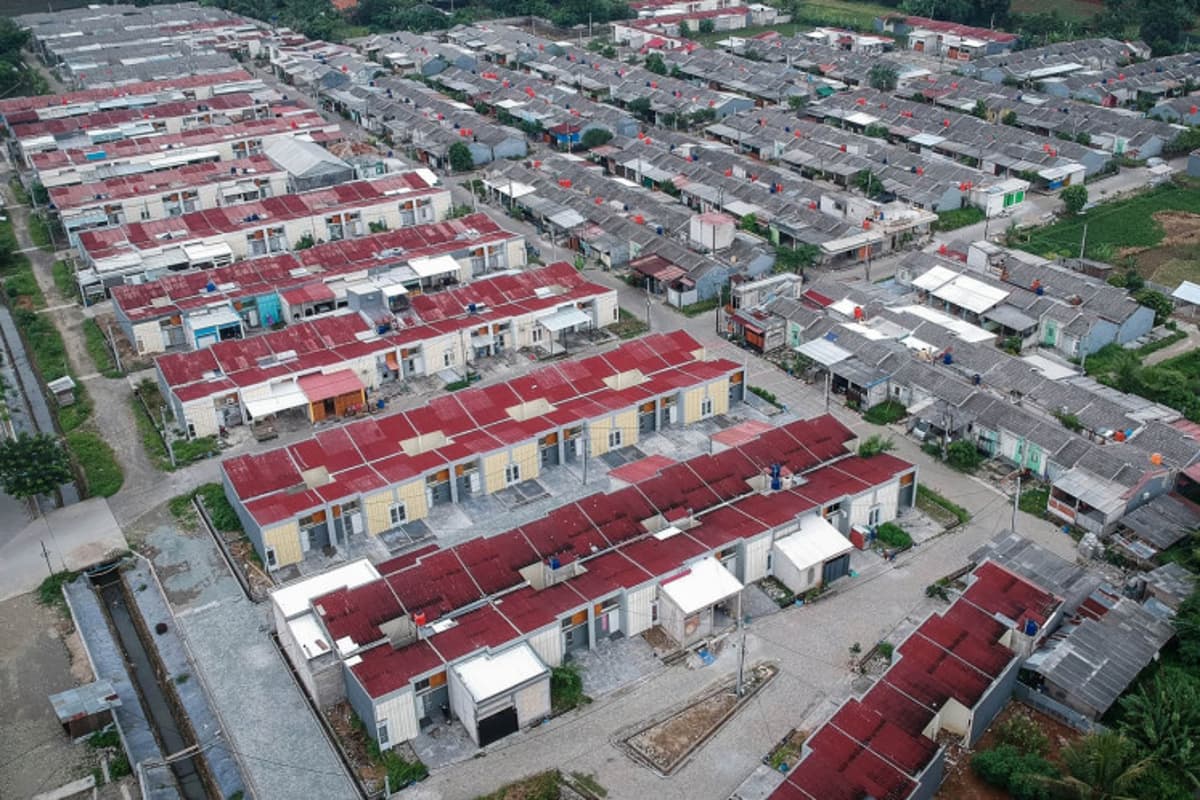
Analysis: A House Today, a Lifetime of Debt
Why It Matters
The policy could reshape homeownership access for Indonesia’s lower‑income formal sector, but its long‑term debt burden and limited reach risk deepening financial insecurity.
Key Takeaways
- •40‑year mortgage cuts monthly payment by ~30% for low‑income buyers
- •Scheme targets formal workers; informal sector likely remains excluded
- •Debt spans most of working life, risking retirement financial strain
- •Housing supply lag persists despite financing facility’s 350,000‑unit target
- •Longer tenors may lower default risk but increase long‑term vulnerability
Pulse Analysis
Indonesia’s housing crisis is now quantified as a 15‑million‑unit backlog, a figure that eclipses the nation’s annual construction capacity. Rising land prices and stringent bank lending criteria have forced many households, especially in rapidly urbanising regions like West Java and Banten, to stay renters. The government’s Housing Financing Liquidity Facility aims to fund 350,000 new units this year, yet even that ambitious target falls short of the structural deficit, underscoring the need for broader supply‑side reforms.
The 40‑year mortgage proposal, championed by President Prabowo Subianto, promises to cut monthly installments by roughly a third, bringing a US$10,565 home within reach of low‑income formal workers. By capping the interest rate at 5%, the scheme reduces the cost of borrowing and, according to REI chairman Joko Suranto, could lower default risk. However, the extended tenor means borrowers would be servicing debt well into their retirement years, a scenario that clashes with Indonesia’s typical retirement age of 55 and the precarious income streams of informal workers. This mismatch raises concerns about long‑term financial vulnerability and the adequacy of social safety nets.
Beyond financing, the core challenge remains the supply gap. Even if the FLPP’s unit target is met, the market will still be starved of affordable homes, especially for those excluded from formal credit channels. Policymakers must therefore pair longer‑term mortgages with measures that boost low‑cost construction, streamline land acquisition, and expand credit access for informal earners. Only a coordinated approach that addresses both demand and supply can prevent the 40‑year loan from becoming a lifetime of debt rather than a pathway to sustainable homeownership.
Analysis: A house today, a lifetime of debt
Comments
Want to join the conversation?
Loading comments...