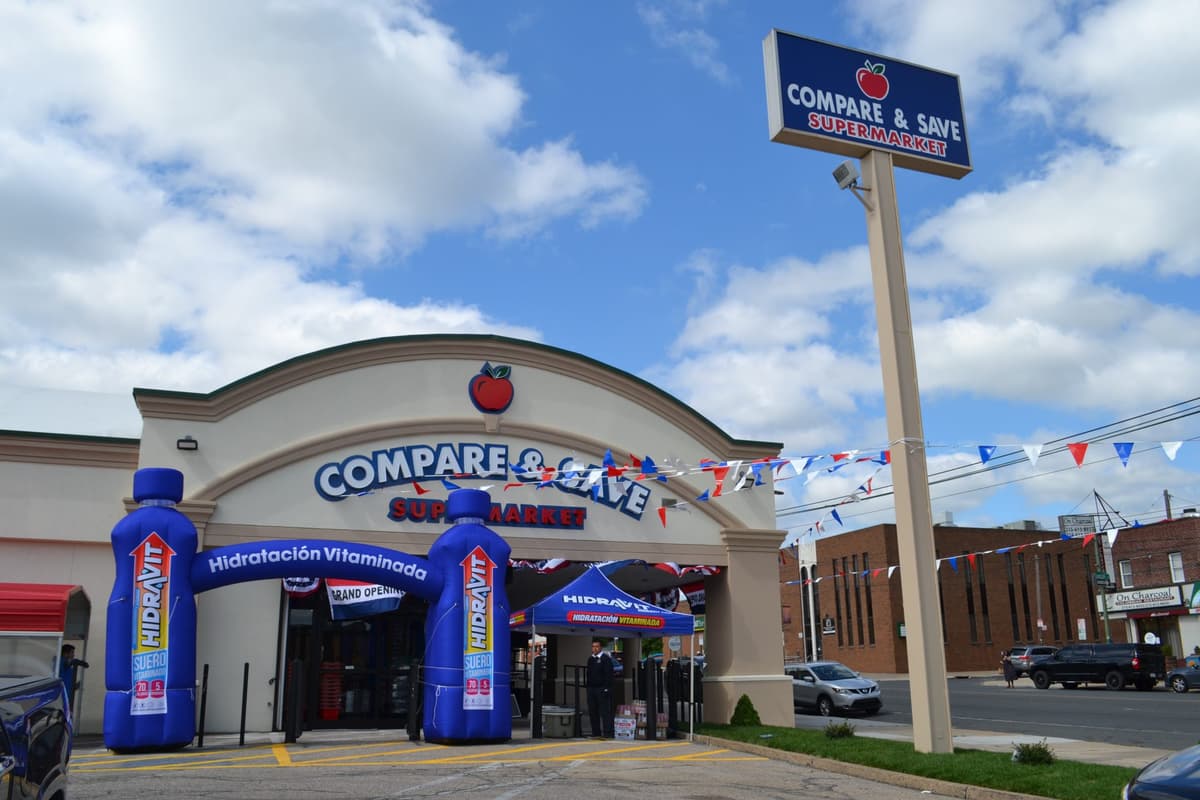
ARS Celebrates Third Supermarket In Philadelphia
Companies Mentioned
Why It Matters
The opening demonstrates how independent grocers can revitalize vacant big‑box spaces while addressing food‑access challenges, offering a scalable model for community‑focused retail in urban markets.
Key Takeaways
- •Third ARS Compare & Save store opens in Northeast Philadelphia.
- •20,000‑sq‑ft former Rite Aid transformed into multicultural supermarket.
- •Assortment includes rabbit, oxtail, goat, celeriac, jicama, global foods.
- •Store creates jobs and addresses local food‑desert gaps.
- •Model shows independents can revitalize vacant big‑box locations.
Pulse Analysis
The new Compare & Save on Castor Avenue reflects a growing trend of hyper‑local grocery concepts that prioritize cultural relevance. By stocking items such as rabbit, oxtail, goat meat, celeriac, and jicama alongside staples from Brazil, Portugal, Central America, and Asia, the store directly answers the culinary preferences of Northeast Philadelphia’s immigrant communities. The addition of a bakery, deli, and outdoor produce stalls creates a market‑like atmosphere that encourages repeat visits and builds neighborhood loyalty, while the modern fixtures and energy‑efficient refrigeration underscore a commitment to a premium shopping experience.
Allegiance Retail Services’ cooperative model equips independent operators like Batista with branding, merchandising, and technology support that rivals national chains. The conversion of a defunct Rite Aid into a full‑service supermarket illustrates how independents can secure favorable lease terms on underutilized real estate, leveraging built‑in foot traffic without the capital outlay of new construction. This approach reduces entry barriers, allowing smaller grocers to compete on assortment depth and community engagement rather than sheer scale, and it showcases the cooperative’s role as an enabler of agile, profit‑driven expansion.
Industry analysts view the Philadelphia opening as a blueprint for addressing food deserts across the United States. By marrying culturally specific product lines with strategic site selection, independents can differentiate themselves from mass‑market retailers and attract a loyal customer base. As urban demographics continue to diversify, the demand for tailored grocery experiences is expected to rise, prompting more cooperatives and independent chains to adopt similar adaptive reuse strategies. The success of this third ARS store could accelerate investment in underserved neighborhoods, reshaping the grocery landscape toward more inclusive, community‑centric models.
ARS Celebrates Third Supermarket In Philadelphia
Comments
Want to join the conversation?
Loading comments...