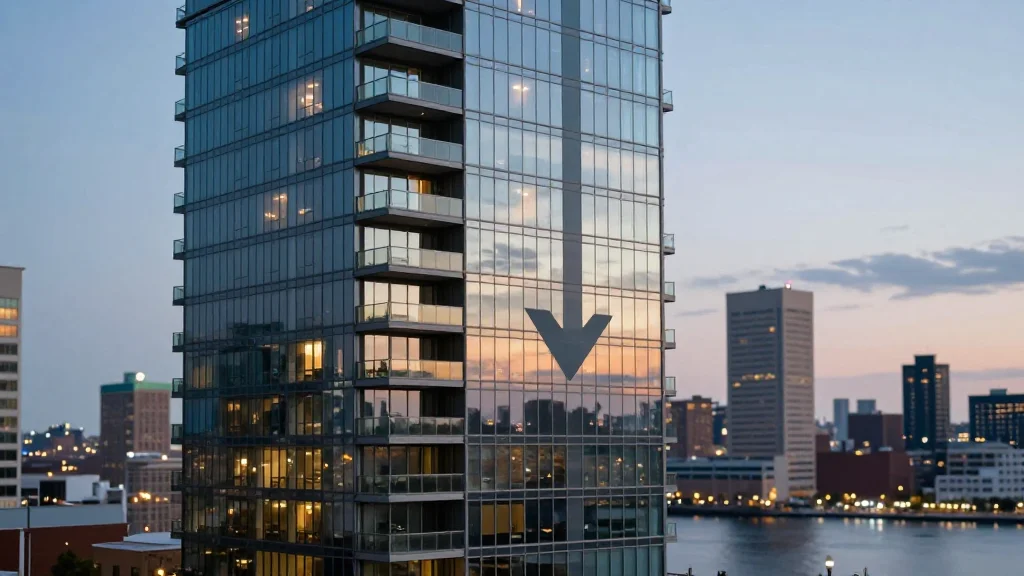
Baltimore Luxury Tower Sees 50% Value Drop as Buyers Shun Harbor East Condos

Companies Mentioned
Why It Matters
The Harbor East downturn signals that even well‑capitalized developers can misread demand dynamics in secondary cities. A 50% collapse in condo values challenges the viability of ultra‑luxury projects that rely on a narrow buyer pool, prompting investors to reassess risk models for similar developments. If the lawsuit forces greater pricing transparency, it could reshape how developers report sales data, influencing financing terms and investor confidence across the broader real‑estate market.
Key Takeaways
- •One‑third of the 62 condos at Four Seasons Private Residences remain unsold
- •Listing prices have fallen from $1 million to the $500,000s, a ~50% drop
- •Three investors sued Harbor East Parcel‑D Residential LLC over alleged price inflation
- •Attorney David J. Shuster called the lawsuit’s claims "without merit"
- •The tower’s struggles mirror other Inner Harbor projects facing weak demand
- •
Pulse Analysis
The Four Seasons tower illustrates a classic case of over‑building in a market that cannot sustain premium pricing. Developers often extrapolate growth trends from larger metros, but Baltimore’s demographic decline—its population now at a century‑low—means fewer high‑income households to fill luxury units. The Paterakis family’s bet on a $1 million entry price ignored the city’s fiscal pressures, rising crime concerns, and a broader exodus of residents to lower‑cost regions.
From a financing perspective, the lawsuit may force lenders to tighten appraisal standards for luxury condos in secondary markets. Historically, lenders have relied on developer‑provided pricing data, but a court‑mandated audit could raise the cost of capital for future projects, slowing the pipeline of high‑end construction. Moreover, the case could embolden other investors to challenge inflated sale records, leading to a wave of litigation that adds legal risk to real‑estate ventures.
Looking ahead, developers may pivot toward mixed‑use or affordable‑housing components to hedge against market volatility. The Four Seasons experience serves as a cautionary tale: without a robust pipeline of affluent buyers, ultra‑luxury towers risk becoming financial liabilities rather than prestige assets. Stakeholders—from city planners to private equity firms—will need to align development strategies with realistic demographic and economic forecasts to avoid repeating this misstep.
Baltimore Luxury Tower Sees 50% Value Drop as Buyers Shun Harbor East Condos
Comments
Want to join the conversation?
Loading comments...