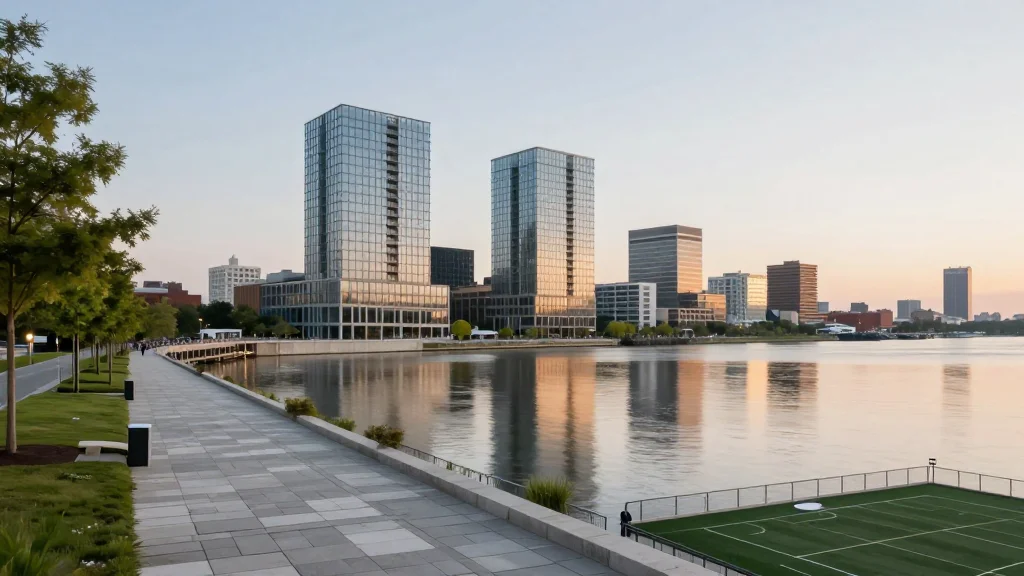
Baton Rouge Master Plan Aims to Triple Downtown Population
Why It Matters
The plan could dramatically expand the city’s tax base and reshape Baton Rouge’s urban core, positioning it as a competitive riverfront destination. Its success would signal how mid‑size cities can leverage mixed‑use projects to drive population and economic growth.
Key Takeaways
- •Plan targets tripling downtown population within a decade
- •Expected $37 million annual tax boost from new development
- •Youth sports complex, promenade, and mixed‑use housing anchor waterfront revitalization
- •Rezoning faces opposition from some property owners
- •Baton Rouge Area Foundation leads implementation and stakeholder outreach
Pulse Analysis
Riverfront revitalization has become a cornerstone of urban policy across the United States, offering cities a chance to attract residents, tourists, and businesses by capitalizing on natural assets. From Chicago’s lakefront to San Antonio’s River Walk, municipalities have demonstrated that well‑planned waterfronts can spur mixed‑use development, increase property values, and create vibrant public spaces. Baton Rouge’s new master plan follows this playbook, aiming to transform a historically underutilized stretch of the Mississippi River into a catalyst for dense, livable neighborhoods that blend recreation with housing.
The Baton Rouge Area Foundation’s blueprint sets an ambitious target: triple the downtown population and capture about $37 million in additional sales and property taxes each year. Central to the strategy are a youth sports and entertainment complex, a scenic promenade, and a series of mixed‑use residential projects that promise both affordability and density. By concentrating growth along the river, the city hopes to create a self‑reinforcing cycle where new residents fuel retail demand, which in turn supports further investment. If realized, the tax uplift could fund infrastructure upgrades, public services, and education, enhancing the city’s overall competitiveness in the Gulf South region.
However, the plan is not without friction. Some property owners fear that rezoning for recreational purposes could diminish existing land values or impose unwanted changes on their holdings. The commission’s willingness to engage stakeholders, as highlighted by Vice President Eric Dexter’s outreach pledge, will be crucial to smoothing these tensions. Success in Baton Rouge could serve as a template for other mid‑size cities seeking to balance growth with community buy‑in, illustrating how strategic public‑private partnerships can unlock the economic potential of riverfront corridors.
Baton Rouge master plan aims to triple downtown population
Comments
Want to join the conversation?
Loading comments...