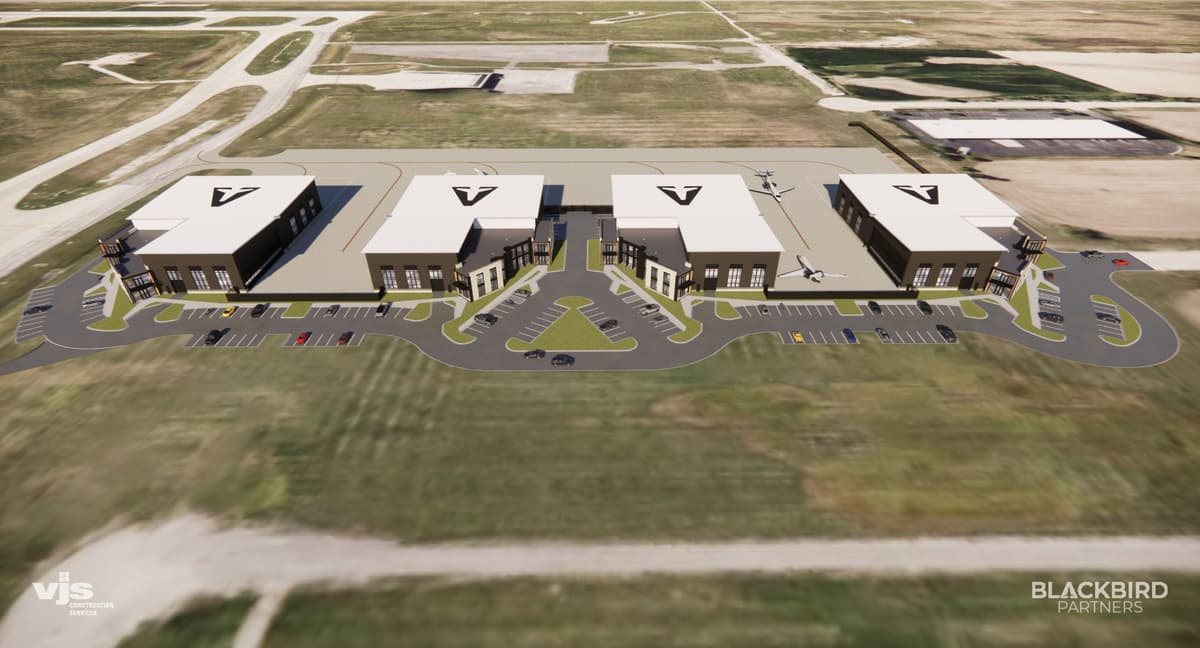
Blackbird Partners Plans Private Hangar Development at Spirit of St. Louis Airport
Why It Matters
Owner‑occupied hangars meet rising demand for bespoke, high‑value aviation facilities, boosting regional airport revenue and attracting affluent jet owners. The development signals confidence in business‑jet traffic growth and could spur ancillary economic activity in the St. Louis area.
Key Takeaways
- •Eight owner‑occupied “Nests” to accommodate largest business jets
- •Project covers 12.7 acres at Missouri’s Spirit of St. Louis Airport
- •Groundbreaking slated for early 2027, with full build-out thereafter
- •Founder Carson Fox, former jet broker, co‑leads development strategy
- •Support secured from airport leadership and St. Louis County officials
Pulse Analysis
The private‑hangar market has accelerated as high‑net‑worth individuals and corporations seek dedicated spaces that combine operational efficiency with lifestyle amenities. Traditional lease‑only models are giving way to owner‑occupied concepts, allowing jet owners to protect asset value, customize interiors, and generate ancillary income through sub‑leasing or shared services. Industry analysts note that this shift aligns with broader trends in business aviation, where flexibility and premium experiences drive purchasing decisions.
Blackbird Partners’ eight‑hangar project at KSUS exemplifies this evolution. Spanning 12.7 acres, the "Nests" are concrete structures built to house the largest business jets currently in production, each featuring integrated offices, lounges, boardrooms, kitchens, and crew‑rest areas. By selling the units outright, Blackbird transfers long‑term operational risk to owners while securing upfront capital. The location offers quick access to St. Louis’s logistics network, and the partnership with VJS Construction Services ensures high‑quality execution. Early community support from airport officials and St. Louis County suggests favorable zoning and potential tax incentives.
Regionally, the development could catalyze economic growth by attracting high‑spending jet owners who contribute to fuel sales, maintenance services, and local hospitality. It also positions the Spirit of St. Louis Airport as a premium hub competing with larger metros for private‑aviation traffic. As more developers adopt the owner‑occupied model, investors may see improved returns through asset appreciation and reduced vacancy risk. The project’s 2027 timeline aligns with projected post‑pandemic rebounds in corporate travel, indicating that Blackbird’s bet on private hangar ownership is both timely and strategically sound.
Blackbird Partners plans private hangar development at Spirit of St. Louis Airport
Comments
Want to join the conversation?
Loading comments...