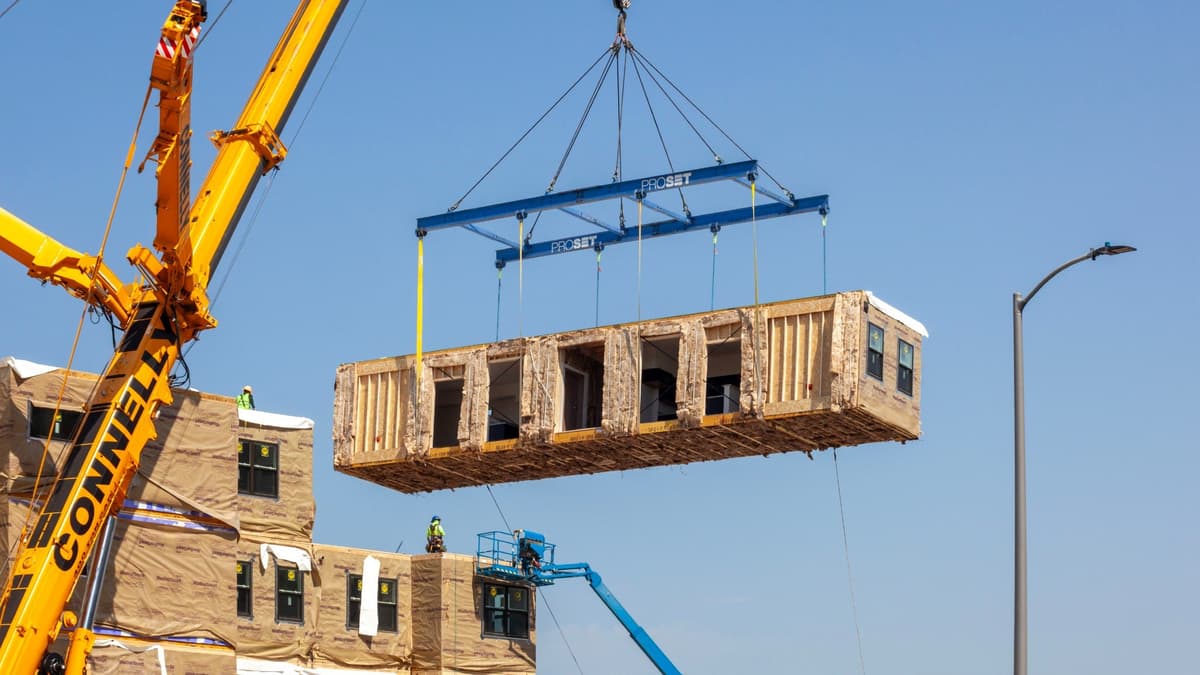
Boom in Modular Home Construction Could Be Just Around the Corner
Companies Mentioned
Why It Matters
The surge in modular construction offers a scalable solution to the housing affordability crisis while preserving builder margins, and regulatory reforms could unlock billions in new activity across the sector.
Key Takeaways
- •Modular construction made up 5.2% of North American building activity in 2023.
- •Industry forecasts 6.3% annual demand growth, reaching $33.2B by 2030.
- •92% of modular factories report excess capacity, enabling rapid scaling.
- •Regulatory complexity and zoning impede broader adoption of factory‑built homes.
- •21st Century Road to Housing Act may streamline pre‑approved modular designs.
Pulse Analysis
Modular construction has moved from a niche curiosity to a mainstream contender in the U.S. and Canadian housing markets. Accounting for $24.5 billion in activity last year, the sector’s share of total construction rose to 5.2%, and analysts expect a compound annual growth rate of roughly 6% through 2030. Builders value the predictability of factory‑built modules, which can be assembled on site in days rather than months, allowing developers to meet tight timelines and mitigate exposure to volatile material costs and tariffs.
Despite the economic upside, the industry’s expansion is throttled by a patchwork of local building codes, zoning restrictions, and lengthy permitting processes. Each state’s certification regime can add thousands of pages of paperwork, deterring developers from scaling designs across jurisdictions. Legislative efforts such as the bipartisan 21st Century Road to Housing Act aim to introduce pre‑approved design catalogs and performance‑based codes, offering a pathway to uniform standards that could dramatically reduce time‑to‑market for modular projects.
For investors and developers, the convergence of excess factory capacity—92% of plants report idle shifts—and supportive policy could translate into a wave of new supply that addresses the chronic housing shortage. Companies like Boxabl, now valued at $3.5 billion, illustrate how modular solutions can serve both affordable‑housing and niche markets such as university data centers. As regulatory reforms gain traction, the modular sector is positioned to become a cornerstone of cost‑effective, rapid‑build housing across the United States.
Boom in Modular Home Construction Could Be Just Around the Corner
Comments
Want to join the conversation?
Loading comments...