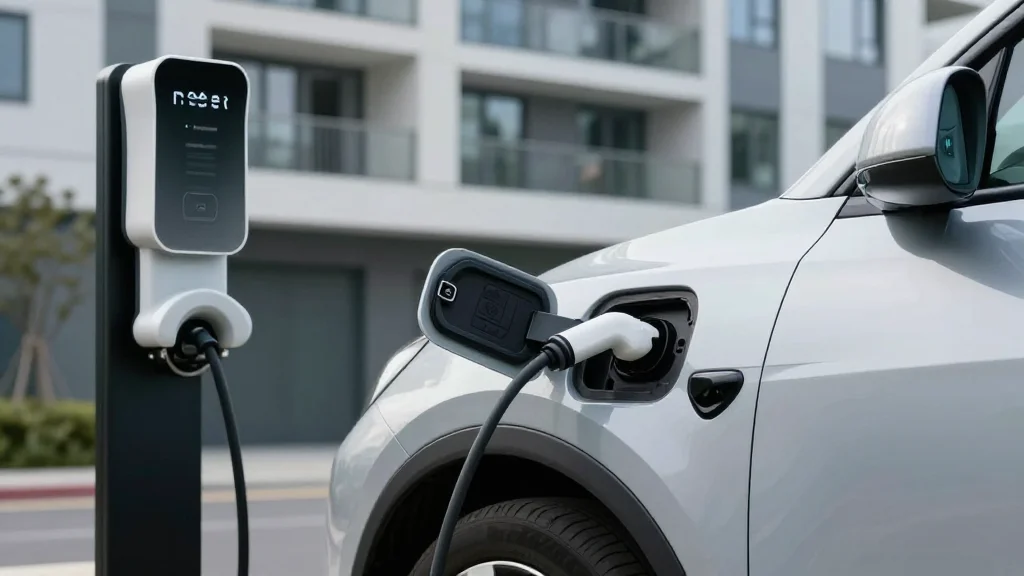
California Bill Would Limit EV-Charging Access in Affordable Housing
Why It Matters
The waiver could slow equitable EV adoption for millions of low‑income residents, undermining California’s climate goals, while developers gain modest cost relief in a market with tight profit margins.
Key Takeaways
- •AB 2748 would waive EV‑charging outlets for affordable housing until 2036.
- •Current requirement adds $1,000‑$2,500 per unit, 0.2‑0.5% of costs.
- •Waiver could affect up to 1 million new low‑income units by 2030.
- •Critics warn it stalls equitable EV adoption in high‑cost California.
- •Developers cite thin margins; council supports exemption to reduce expenses.
Pulse Analysis
California’s 2024 EV‑charging mandate for new multifamily buildings was designed to ensure that renters, especially those in affordable units, can plug in electric vehicles at home. The rule reflects the state’s aggressive climate agenda and acknowledges that home charging cuts driving costs by roughly half, even in a market where electricity rates are high. As EVs accounted for nearly 20% of new car sales in late 2025, the policy positions California as a national leader in equitable clean‑transport infrastructure.
Assembly Bill 2748, introduced by Democrat Sharon Quirk‑Silva, seeks to suspend the charging‑outlet requirement for affordable‑housing projects through 2036. Proponents, including the California Council for Affordable Housing, argue that the mandate adds $1,000‑$2,500 per unit—just 0.2%‑0.5% of total construction costs—but that any added expense can tip projects over razor‑thin profit margins. By reverting to the 2022 building code, developers would be exempt from installing outlets for up to 60% of parking spaces, potentially lowering upfront costs and accelerating the delivery of the state’s goal of one million new low‑income units by 2030.
The debate highlights a clash between climate equity and fiscal pragmatism. If passed, the waiver could delay widespread EV adoption among low‑income Californians, limiting the environmental and consumer‑cost benefits that home charging provides. Conversely, maintaining the requirement could increase housing costs, challenging developers already constrained by high land and labor prices. Stakeholders will watch the April 22 committee hearing closely, as the outcome will shape both California’s housing pipeline and its broader strategy to transition the transportation sector to zero‑emission vehicles.
California bill would limit EV-charging access in affordable housing
Comments
Want to join the conversation?
Loading comments...