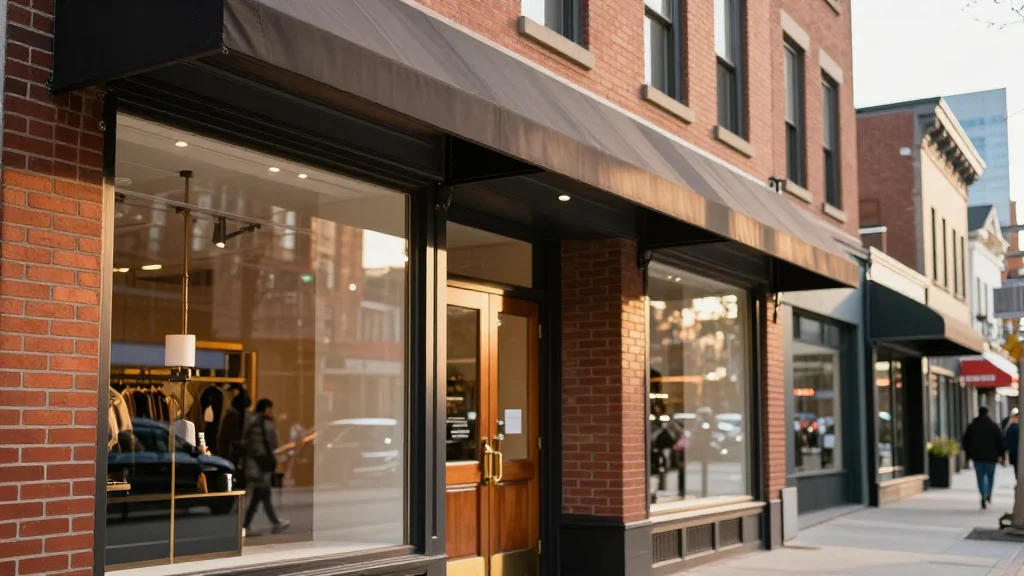
Center City Retail Occupancy Rises to 84.2% as Vacancy Falls

Why It Matters
Higher retail occupancy in Center City signals a tentative revival of urban commercial real estate after the pandemic’s sharp downturn. For landlords and investors, the rise to 84.2% suggests that demand for downtown storefronts is returning, driven by a growing residential base and a shift toward experience‑focused tenants. Yet the gap from the 89% pre‑COVID level highlights ongoing risk, prompting stakeholders to monitor lease structures, tenant mix, and macro‑economic trends closely. The street‑by‑street breakdown reveals that not all corridors are recovering uniformly. Areas like Market Street, with occupancy under 72%, may require targeted incentives or redevelopment strategies to attract higher‑margin tenants. Conversely, streets performing above 85% could become focal points for new investment, potentially reshaping the district’s real‑estate valuation landscape over the next few years.
Key Takeaways
- •Retail occupancy in Center City rose to 84.2% from 82.6% in six months
- •Net increase of 32 occupied storefronts across the district
- •Walnut Street leads with 87.5% occupancy; Market Street lags at 71.6%
- •Occupancy still below 2019 pre‑pandemic level of 89%
- •New experiential tenants like Tidal Force VR and Jordan Brand’s store diversify the market
Pulse Analysis
The modest climb in Center City’s retail occupancy reflects a broader pattern of urban recovery that is uneven and heavily dependent on demographic shifts. The influx of residents who live and work downtown is creating a built‑in customer base, which explains the success of service‑oriented tenants such as salons, restaurants, and boutique coffee shops. However, the persistence of lower occupancy on Market Street suggests that foot traffic alone is insufficient; landlords may need to re‑think space design, incorporate mixed‑use elements, or offer flexible lease terms to attract tenants that can draw regional shoppers.
From an investment perspective, the data repositions Center City as a market with upside potential but also heightened risk. The 1.6‑percentage‑point gain, while statistically meaningful, is modest compared to the steep decline experienced during the pandemic. Capital providers will likely calibrate their risk premiums, favoring properties on high‑performing corridors while demanding higher returns for assets on lagging streets. The emergence of experiential concepts—virtual reality centers, specialty brand stores, and wellness spas—signals a strategic pivot away from traditional retail, aligning with national trends where experience drives footfall.
Looking forward, the district’s reliance on upcoming events to boost traffic introduces a cyclical element to occupancy forecasts. Should those events deliver the expected surge in visitors, we could see occupancy inch toward the 89% pre‑COVID benchmark within the next 12‑18 months. Absent such catalysts, the market may plateau, prompting developers to accelerate mixed‑use projects that blend residential, office, and retail functions to sustain demand. In either scenario, the next CCD survey will be a critical barometer for investors assessing the durability of Center City’s retail resurgence.
Center City Retail Occupancy Rises to 84.2% as Vacancy Falls
Comments
Want to join the conversation?
Loading comments...