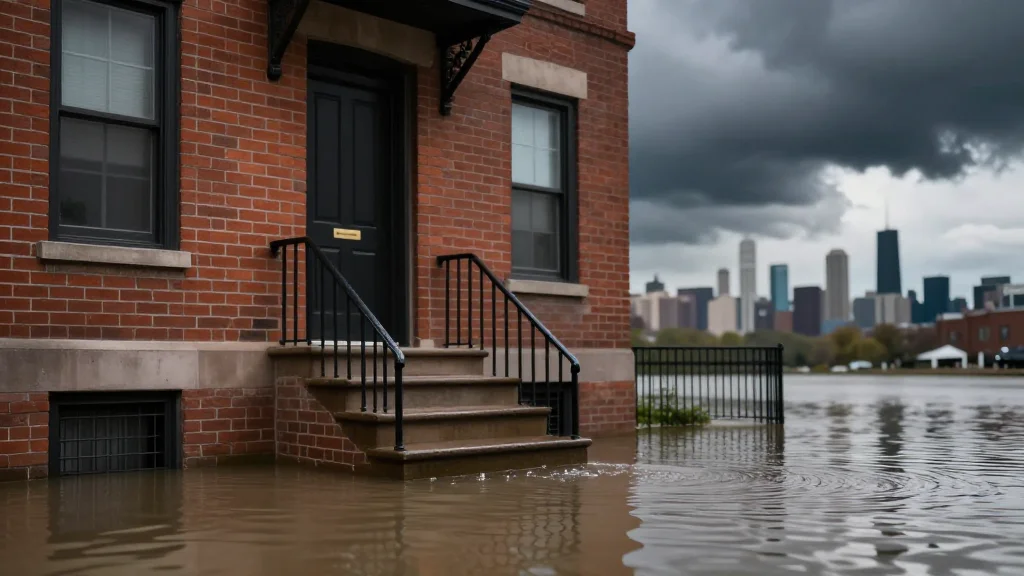
Chicago Flood Risk Soars as Storms Outpace Century‑Old Sewer System

Why It Matters
The surge in flood risk threatens the stability of Chicago’s residential real‑estate market, as homeowners confront rising repair costs and insurers grapple with escalating claims. If the city fails to modernize its storm‑water infrastructure, property values in vulnerable neighborhoods could decline, limiting investment and slowing economic growth. Moreover, repeated basement inundations pose public‑health challenges, increasing the burden on municipal services and potentially prompting stricter building regulations that affect developers and buyers alike. Addressing the issue now could set a precedent for other legacy cities facing similar climate‑driven pressures. By investing in resilient infrastructure, Chicago can protect its housing stock, maintain affordable homeownership, and safeguard the tax base that funds essential city services.
Key Takeaways
- •Heavy storms now 7× more likely than a century ago, according to Sun‑Times analysis
- •Storms can exceed 8.5 inches of rain in 24 hours, overwhelming the sewer system
- •Chicago’s sewers are designed for only 2 inches of rain before flooding risk spikes
- •The Deep Tunnel, a multibillion‑dollar project, cannot fully prevent basement floods
- •Every Chicago neighborhood faces increased flood exposure, impacting homeowners and insurers
Pulse Analysis
Chicago’s flood dilemma illustrates a broader national challenge: aging infrastructure meeting a new climate reality. The city’s Deep Tunnel, once hailed as a marvel of engineering, now appears as a relic of a bygone era when rainfall patterns were milder. The sevenfold rise in heavy‑storm frequency signals that many U.S. municipalities will soon confront similar mismatches between capacity and demand.
Historically, combined‑sewer systems were a cost‑effective solution for early 20th‑century cities, but they are ill‑suited for the rapid, high‑volume precipitation events projected for the next several decades. Chicago’s experience suggests that piecemeal upgrades—such as adding green roofs or permeable pavements—must be paired with large‑scale investments in storage and conveyance. The city’s reluctance to disclose a clear funding roadmap may reflect political hesitancy to raise taxes or reallocate budget resources.
Looking ahead, the real estate market will likely price flood risk more explicitly. Lenders may demand higher down‑payment ratios for homes in vulnerable zones, while insurers could raise premiums or withdraw coverage altogether. Developers who integrate flood‑resilient design—elevated foundations, waterproofing, and onsite detention—will gain a competitive edge. For policymakers, the urgency is clear: without decisive action, Chicago risks a cascade of property devaluation, public‑health crises, and fiscal strain that could reverberate across the Midwest.
Chicago Flood Risk Soars as Storms Outpace Century‑Old Sewer System
Comments
Want to join the conversation?
Loading comments...