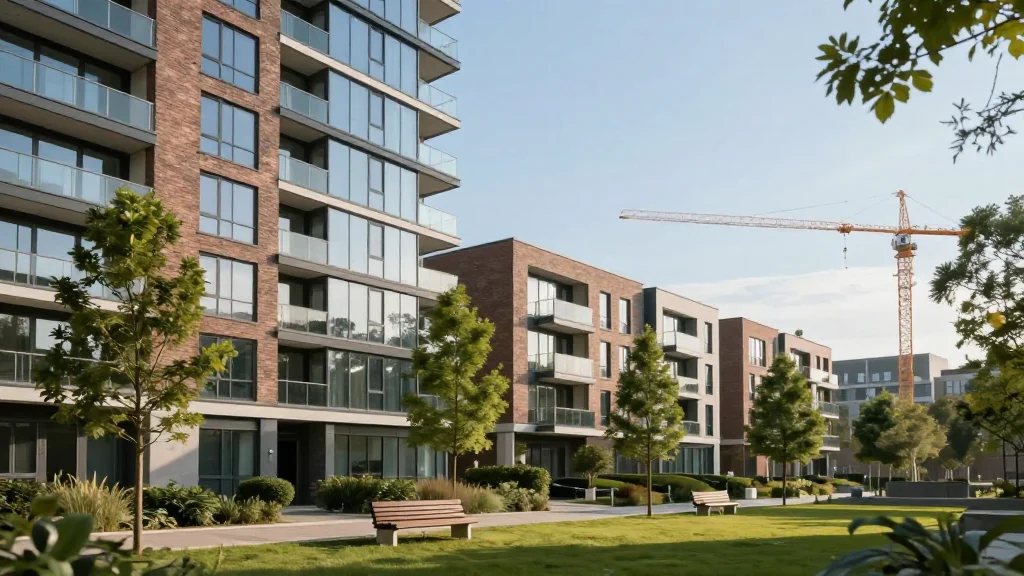
Cleveland Approves Mixed‑Income Redevelopment of Former Woodhill Homes Site

Why It Matters
The Woodhill Homes redevelopment illustrates a growing national shift from monolithic public housing toward mixed‑income, higher‑density neighborhoods that blend market‑rate and affordable units. By integrating townhomes, retail and public spaces, Cleveland hopes to avoid the social isolation that historically plagued large public‑housing projects, while also addressing a regional shortage of affordable housing. If the project meets its targets, it could demonstrate a replicable model for other municipalities seeking to revitalize aging housing stock without displacing low‑income residents. The inclusion of through‑streets and transit‑oriented design also aligns with broader urban planning goals of reducing car dependence and fostering walkable, transit‑friendly communities.
Key Takeaways
- •Cleveland City Planning Commission approved Phase 4 of Woodhill Homes redevelopment on Friday.
- •Phase 4 adds a 51‑unit apartment building, 31 townhomes, ground‑floor retail and three new parks.
- •Earlier phases delivered 250 off‑site units to relocate existing residents before demolition in 2025.
- •Full project could exceed 600 residential units, mixing affordable and market‑rate housing.
- •Community feedback prompted the shift from dense multifamily to townhome design and added public spaces.
Pulse Analysis
Cleveland’s Woodhill Homes project is emblematic of a broader policy pivot toward mixed‑income, transit‑oriented redevelopment of legacy public‑housing sites. Historically, large public‑housing complexes have suffered from concentrated poverty, underinvestment and social stigma. By dispersing residents across a blend of apartment units, townhomes and market‑rate rentals, the city is attempting to dilute those negative externalities while preserving affordability. The inclusion of retail and park space further aligns the development with New Urbanist principles, aiming to create a self‑sustaining micro‑neighborhood that encourages street‑level activity and reduces reliance on automobiles.
Financially, the project leverages public‑sector land assets while attracting private construction capital, a model that mitigates fiscal risk for the Cuyahoga Metropolitan Housing Authority. The off‑site relocation strategy—delivering 250 units before demolition—demonstrates a pragmatic approach to resident displacement, a common criticism of large‑scale urban renewal. However, the success of the mixed‑income mix will hinge on the allocation of units: if market‑rate apartments dominate, the affordability goal could be undermined. Ongoing oversight by the city’s planning staff will be crucial to ensure that a meaningful share of the 600‑plus future units remains accessible to low‑income households.
Looking ahead, Woodhill could serve as a template for other Rust Belt cities confronting similar housing stock challenges. Its emphasis on community‑driven design revisions—particularly the shift to townhomes after resident input—highlights the importance of participatory planning in securing public buy‑in. If the project delivers on its promise of integrated, diverse housing, it may catalyze further investments in mixed‑income redevelopment across the region, reshaping the narrative around public‑housing revitalization from one of demolition to one of reinvention.
Cleveland Approves Mixed‑Income Redevelopment of Former Woodhill Homes Site
Comments
Want to join the conversation?
Loading comments...