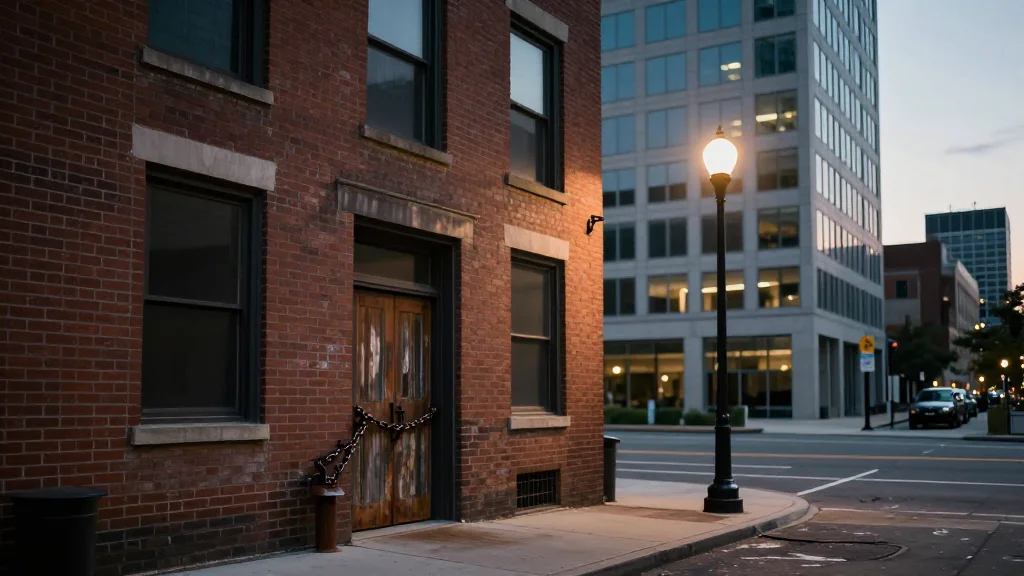
Downtown Baltimore CRE Crash Erases Over $1 Billion in Property Value Since 2020

Companies Mentioned
Why It Matters
The $1 billion erosion in downtown Baltimore’s commercial property values threatens the city’s fiscal health, as property taxes fund essential services. A shrinking tax base forces officials to consider unpopular revenue measures, potentially burdening low‑income residents. Moreover, the decline signals broader structural challenges—crime, remote‑work adoption, and demographic outflow—that could reshape the regional office market and deter future investment. For investors and developers, the crash serves as a cautionary tale about over‑reliance on legacy office demand in mid‑size cities. It underscores the need for diversified asset strategies, adaptive reuse of vacant spaces, and proactive public‑private partnerships to revitalize distressed urban cores.
Key Takeaways
- •Downtown Baltimore commercial property values fell $496.3 M, Inner Harbor $363.4 M, Downtown West $214.6 M since 2020.
- •Total assessed loss exceeds $1.07 billion, wiping out about 29% of the city’s commercial parcels.
- •4,085 of 14,027 commercial properties saw average devaluation of 28.7%.
- •High‑profile assets like 100 Pratt Street E lost $138.9 M; 1 Light Street lost $87.3 M.
- •Crime, remote‑work trends, and fiscal strain are cited as primary drivers of the downturn.
Pulse Analysis
Baltimore’s CRE collapse is emblematic of a broader shift in the office‑centric economy of secondary cities. Historically, downtown cores thrived on dense office clusters, but the pandemic accelerated a structural reallocation of work, leaving legacy office stock under‑utilized. In Baltimore, the problem is amplified by a persistent crime narrative that erodes confidence among tenants and employees alike. The $1 billion valuation loss is not merely a balance‑sheet issue; it translates into a tangible revenue gap that forces municipal budgets to either cut services or raise taxes, both politically volatile moves.
Comparatively, other Mid‑Atlantic cities such as Philadelphia and Washington, D.C., have managed to cushion office declines through aggressive rezoning and conversion of office space to residential or mixed‑use projects. Baltimore’s slower policy response—evidenced by out‑of‑cycle reassessments rather than proactive zoning reforms—suggests a lag in adapting to the new reality. Without a concerted effort to repurpose vacant office floors into housing, hotels, or life‑science labs, the city risks cementing a vacancy spiral that further depresses property values.
Looking ahead, the city’s ability to reverse the trend hinges on three levers: public safety improvements, incentives for adaptive reuse, and targeted attraction of growth industries such as biotech and fintech. If Baltimore can stabilize crime and offer developers clear pathways to convert under‑performing assets, the CRE market could stabilize within the next 3‑5 years. Absent such measures, the fiscal strain may deepen, prompting more aggressive tax policies that could exacerbate the exodus of residents and businesses, entrenching the city’s economic challenges for a decade or longer.
Downtown Baltimore CRE Crash Erases Over $1 Billion in Property Value Since 2020
Comments
Want to join the conversation?
Loading comments...