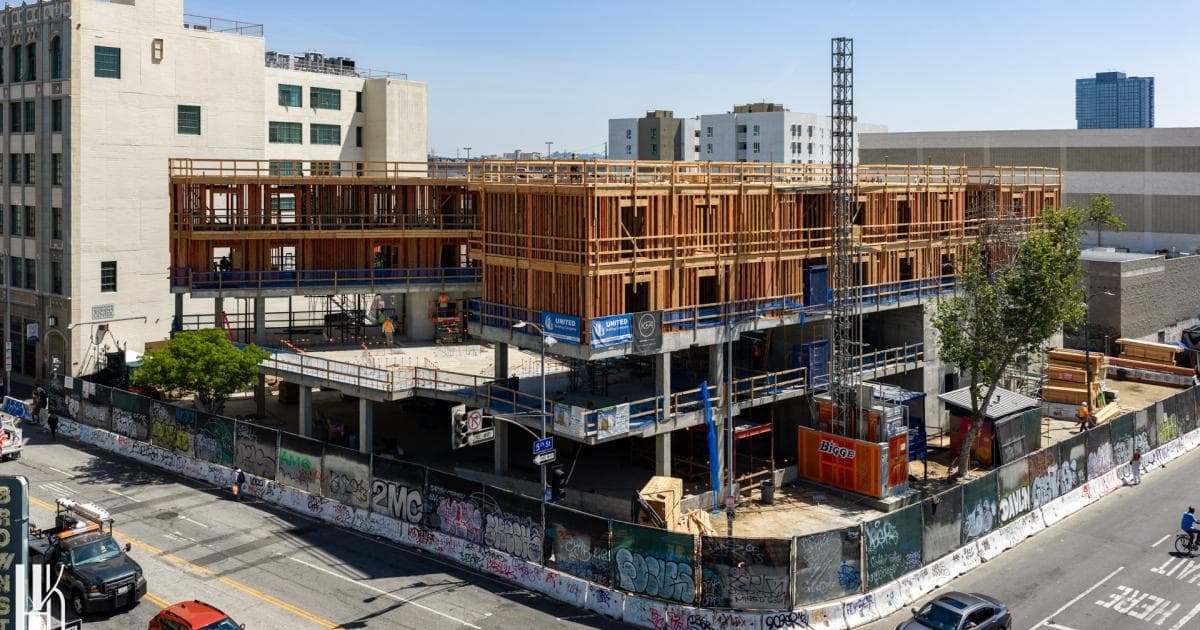
Downtown Women's Center Project Rises at 501 E. 5th Street
Why It Matters
Adding nearly a hundred affordable units tackles a pressing housing gap for low‑income women in Los Angeles and showcases a financing model that could be replicated across the city.
Key Takeaways
- •97 supportive housing units added at 501 E. 5th St.
- •Project lifts Downtown Women Center portfolio 80% to 216 homes.
- •Completion slated for Fall 2027 with V‑shaped design.
- •Funding includes state sources, Apple, LA city, county, Century, Citi.
- •Units target households earning 30‑50% of area median income.
Pulse Analysis
Los Angeles continues to grapple with a severe shortage of affordable housing, especially for women experiencing homelessness or low‑income instability. The Downtown Women Center, a long‑standing service provider, has relied on a modest inventory of supportive units, leaving many vulnerable families without stable shelter. By introducing 97 new units at Rosa’s Place, the city not only expands the Center’s capacity but also creates a critical safety net for households earning between 30 and 50 percent of the area median income, a segment traditionally underserved by market housing.
The project’s design reflects a blend of functionality and human‑centered architecture. KFA Architecture and Gensler opted for a V‑shaped footprint that maximizes natural light and provides communal open spaces, enhancing residents’ quality of life. Partnerships with Daylight Community Development and GTM Holdings bring development expertise, while a diversified funding mix—state allocations, corporate philanthropy from Apple, and contributions from the City and County of Los Angeles, Century, and Citi—demonstrates how public‑private collaboration can unlock capital for large‑scale affordable projects. The inclusion of a market‑rate manager’s apartment and on‑site service offices further integrates support services directly into the building.
Beyond the immediate impact, Rosa’s Place signals a scalable template for future affordable housing initiatives. The reliance on multiple funding streams reduces dependence on any single source, mitigating financial risk and accelerating timelines. As other municipalities observe the successful alignment of design, financing, and service integration, they may adopt similar models to address their own housing deficits. Moreover, the involvement of high‑profile private donors underscores a growing trend of corporate social responsibility targeting systemic urban challenges, potentially reshaping the funding landscape for affordable housing nationwide.
Downtown Women's center project rises at 501 E. 5th Street
Comments
Want to join the conversation?
Loading comments...