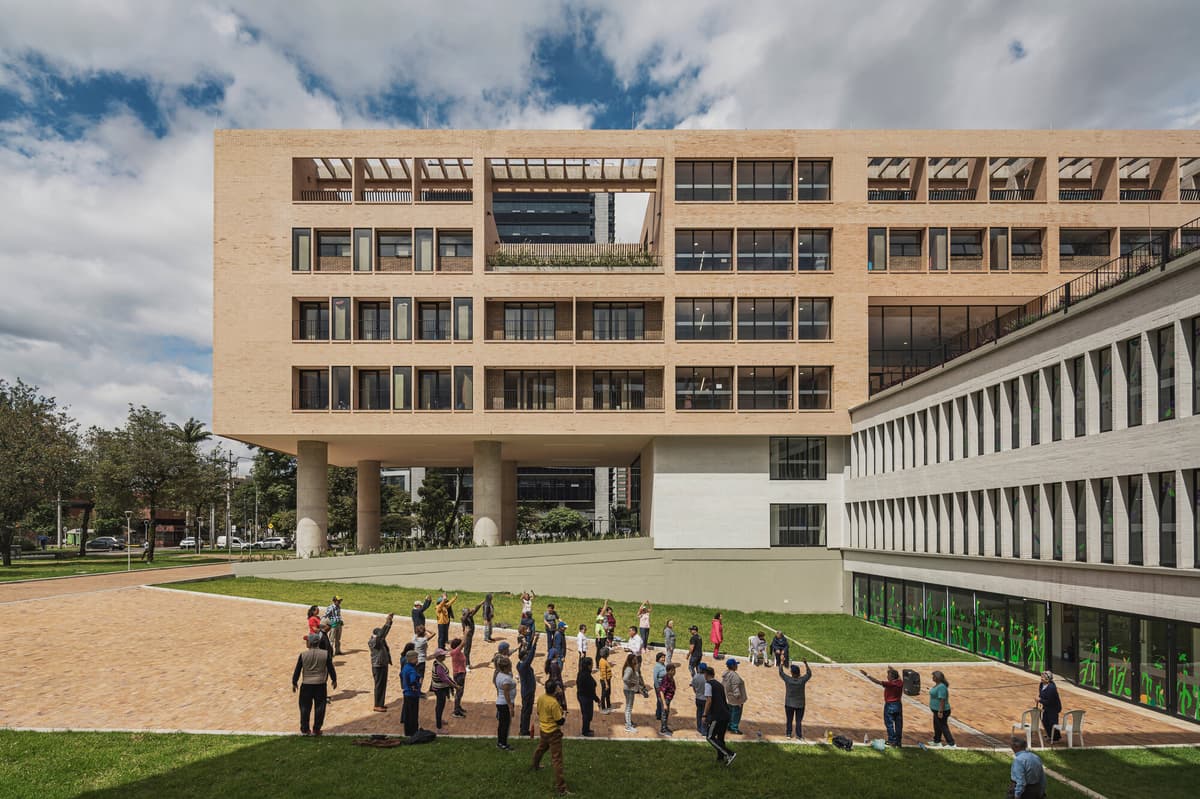
El Camino: Housing Complex for Older Adults and Formerly Unhoused People / FP Arquitectura
Why It Matters
The project demonstrates how large‑scale, socially‑focused architecture can address homelessness and elder care while revitalizing public space, setting a model for inclusive urban development worldwide.
Key Takeaways
- •118 rooms serve older adults and formerly unhoused residents
- •H‑shaped layout creates public plaza and internal courtyard
- •Preserves heritage Urapán tree within the courtyard
- •Ground‑level glazed base hosts workshops, dining, and art spaces
- •Open street buffers turn former fences into green public zones
Pulse Analysis
Bogotá’s El Camino complex marks a significant shift in how cities tackle two pressing social challenges: homelessness and aging populations. By consolidating 118 residential units with three dedicated service centers, the development offers a continuum of care—from permanent reintegration programs for formerly unhoused individuals to daily support and protection for seniors living in poverty. This integrated approach reduces fragmentation of services, cuts administrative overhead, and creates a supportive community environment that encourages long‑term stability.
Architecturally, the H‑shaped plan serves both functional and symbolic purposes. The twin open spaces—a public plaza that engages the street and an internal courtyard preserving a heritage Urapán tree—forge a seamless connection between the building and its neighborhood. The stepped back façades and pedestrian buffers replace former fences with green corridors, enhancing urban permeability and encouraging spontaneous social interaction. Large glazed volumes at ground level house art workshops, music classrooms, and dining areas, reinforcing transparency and inviting city dwellers to participate in the complex’s daily life.
From a policy perspective, El Camino illustrates the potential of public‑sector investment in socially responsible infrastructure to generate broader urban benefits. The project’s emphasis on natural light, communal terraces, and material warmth fosters a sense of belonging, which research links to improved mental health outcomes for vulnerable populations. As cities worldwide grapple with rising housing costs and aging demographics, the El Camino model offers a replicable blueprint that blends humane design, environmental stewardship, and community integration, positioning Bogotá as a leader in inclusive urban planning.
El Camino: Housing Complex for Older Adults and Formerly Unhoused People / FP Arquitectura
Comments
Want to join the conversation?
Loading comments...