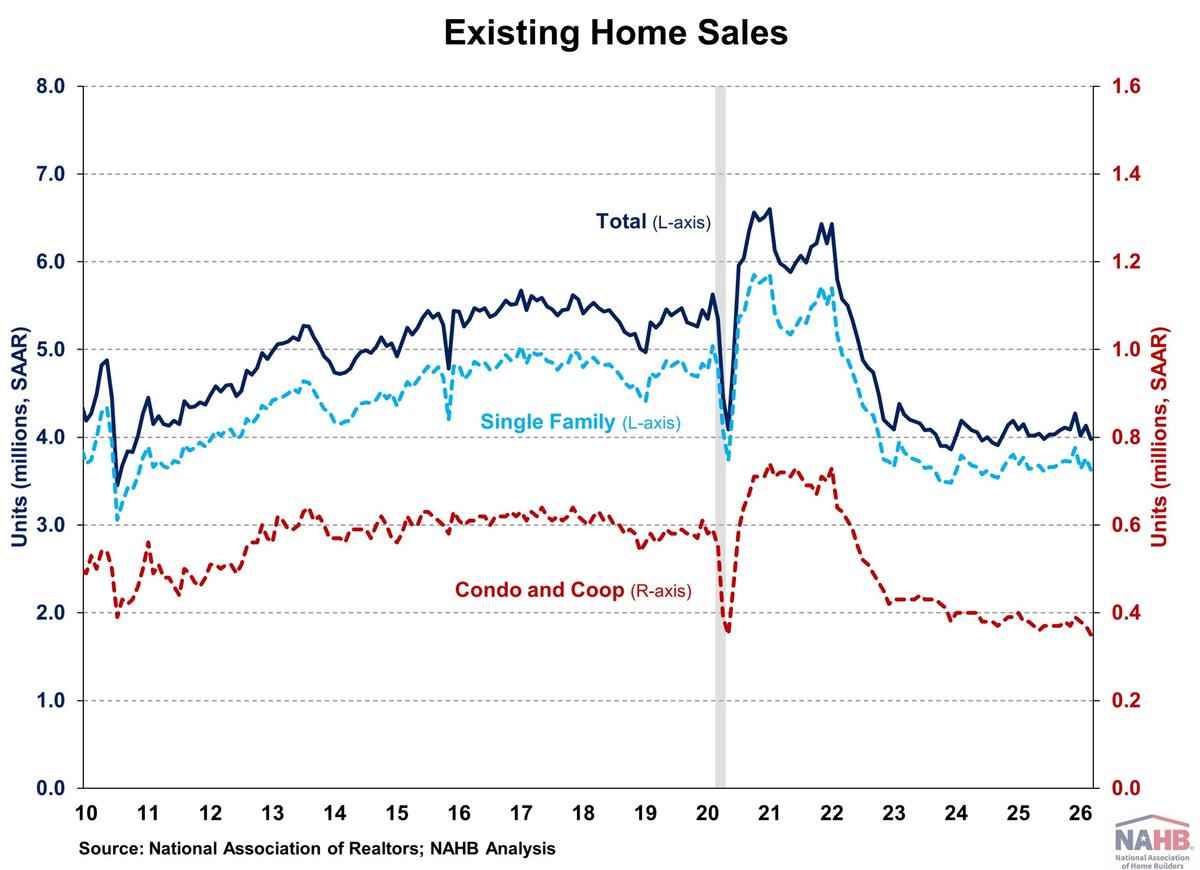
Existing Home Sales Fell in March
Why It Matters
The decline signals weakening demand amid rising borrowing costs and limited supply, which could curb price appreciation and strain housing affordability. Builders and lenders will watch these trends closely as they shape inventory strategies and credit policies.
Key Takeaways
- •Existing home sales fell 3.6% to 3.98 million units in March.
- •Inventory rose 3% to 1.4 million, yielding 4.1‑month supply.
- •Median home price hit $408,800, up 1.4% YoY, 33 months rising.
- •Mortgage rates jumped to 6.37% amid Iran conflict, pressuring demand.
- •First‑time buyer share slipped to 32%, all‑cash sales at 27%.
Pulse Analysis
The March dip in existing home sales underscores how a confluence of macro‑level forces is reshaping the U.S. housing market. While inventory modestly increased to 1.4 million units, it still reflects a sub‑balanced 4.1‑month supply, keeping upward pressure on prices. Median resale values rose to $408,800, extending a 33‑month streak of year‑over‑year gains, yet the surge in mortgage rates to 6.37%—spurred by geopolitical tension in the Middle East—has eroded buyer purchasing power and amplified affordability concerns.
Regional dynamics add nuance to the national picture. The Northeast experienced the steepest sales contraction at 8.5%, whereas the West and South posted modest year‑over‑year growth, highlighting divergent local labor markets and price sensitivities. First‑time buyers now represent only 32% of transactions, down from 34% a month earlier, indicating that higher financing costs are deterring entry‑level purchasers. Conversely, all‑cash transactions held steady at 27%, reflecting the continued advantage of investors and high‑net‑worth buyers who are insulated from rate fluctuations.
Looking ahead, the interplay between inventory levels, rate trajectories, and buyer composition will dictate market momentum. If mortgage rates remain elevated, the pace of price appreciation may decelerate, prompting sellers to adjust expectations and potentially easing affordability pressures. Lenders, developers, and policymakers should monitor the Pending Home Sales Index and inventory trends as leading indicators, while investors may find opportunities in markets where inventory growth begins to outpace demand, creating a more balanced environment for resale activity.
Existing Home Sales Fell in March
Comments
Want to join the conversation?
Loading comments...