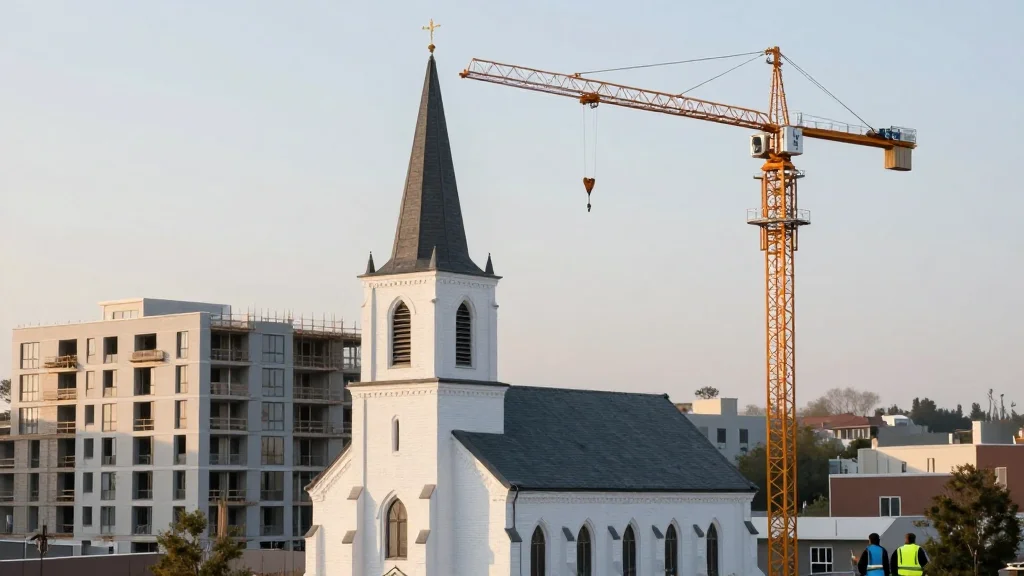
Faith-Based Organizations Turn Underused Land Into Affordable Housing in Nashville
Why It Matters
These collaborations unlock scarce land, expand senior‑focused affordable units, and provide a replicable playbook for other cities facing housing affordability gaps.
Key Takeaways
- •Churches leverage owned land for senior affordable units
- •Federal Section 202 funds enabled 80‑unit project
- •Pathways grant links congregations with developers
- •101‑201‑301 framework educates congregations on development
- •Projects incorporate solar panels and green roofs
Pulse Analysis
Nashville’s affordable‑housing crunch is driven by soaring land prices and limited annexation options, forcing cities to look beyond traditional developers for solutions. Faith‑based organizations, which often sit on parcels of underused property, are uniquely positioned to fill this gap. By partnering with seasoned developers and leveraging city resources, churches can transform dormant sites into vibrant, mixed‑income communities while staying true to their mission. The recent panel at the Lewis Center Sustainability Forum underscored this shift, showcasing projects that blend senior housing with sustainability features such as solar arrays and green roofs.
Financing remains the toughest hurdle, but federal tools like Section 202 senior housing tax credits and the Metro’s Pathways to Removing Obstacles to Housing grant are bridging the gap. The 80‑unit Germantown project, backed by Section 202 capital advances and rental subsidies, demonstrates how layered funding can de‑risk projects for both congregations and private partners. Meanwhile, the city’s dedicated housing office provides technical assistance, streamlining zoning approvals and mitigating legal complexities that arise when religious land use intersects with tax‑credit financing.
The broader implication is a scalable playbook for municipalities nationwide. The 101‑201‑301 framework equips faith groups with the terminology, feasibility analysis, and execution strategies needed to engage confidently with developers. As more churches adopt this approach, the cumulative effect could add thousands of affordable units, especially for seniors, without requiring new land acquisition. Policymakers should consider expanding grant programs and clarifying zoning exemptions to accelerate these partnerships, turning mission‑driven stewardship into a cornerstone of urban housing strategy.
Faith-Based Organizations Turn Underused Land into Affordable Housing in Nashville
Comments
Want to join the conversation?
Loading comments...