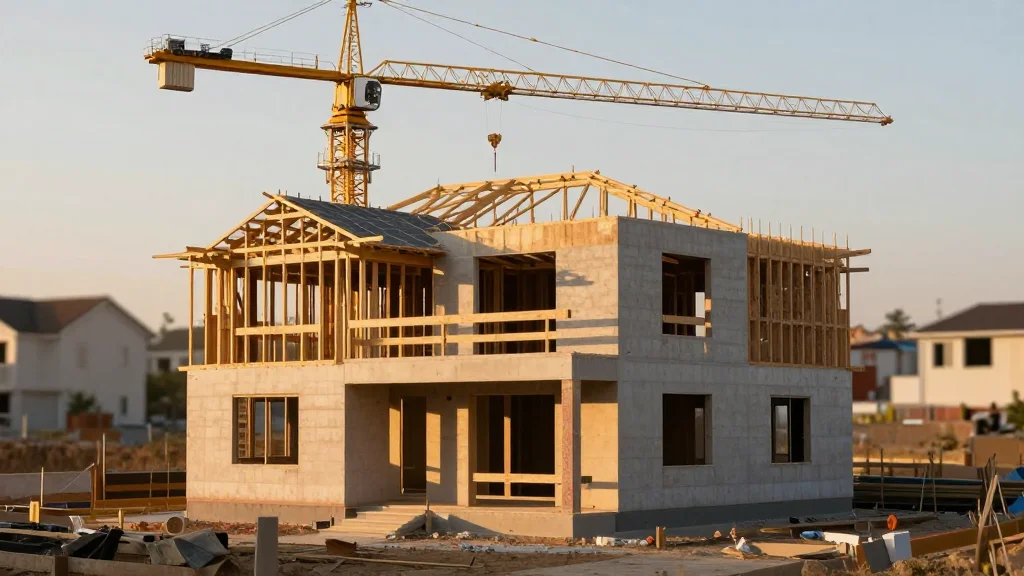
Falling Approvals Shatter Housing Targets
Key Takeaways
- •81,000 homes missing in first 15 months, 27% shortfall
- •National target: 1.2 million homes by 2029
- •NSW and Queensland face deepest construction gaps
- •January approvals fell 0.1%, indicating slowing pace
- •Shortfall threatens housing affordability and GDP growth
Pulse Analysis
The Australian government’s National Housing Accord, launched on 1 July 2024, set an ambitious goal of delivering 1.2 million new dwellings within five years. The plan was designed to ease chronic affordability pressures, stimulate the construction sector, and generate jobs across the supply chain. However, the latest Australian Bureau of Statistics (ABS) quarterly dwelling‑completion figures reveal that only about 1.119 million homes have been built after 15 months, leaving a 27 % deficit of roughly 81,000 units. This gap already undermines the policy’s core objectives and reduces the anticipated contribution of housing to GDP, estimated at 0.4 percentage points annually.
The shortfall is not evenly distributed. New South Wales and Queensland, the two largest state markets, account for the bulk of missed units, reflecting weaker approvals and tighter credit conditions in those regions. January’s dwelling‑approval data showed a modest 0.1 % month‑on‑month decline, signalling a slowdown that could cascade into reduced site starts and delayed project pipelines. Contractors report rising material costs and labor shortages, further eroding profit margins and discouraging new investment, which together exacerbate the supply deficit. Additionally, the slowdown has pressured mortgage lenders to tighten underwriting, further dampening demand.
Policymakers now face pressure to recalibrate the Accord. Options include accelerating infrastructure funding, offering targeted tax incentives for first‑time homebuilders, and loosening zoning restrictions to unlock underutilised land. State governments are already piloting fast‑track approval schemes to test whether procedural reforms can close the gap faster. Without corrective action, the housing shortage could deepen, pushing median house prices higher and stalling broader economic growth. Analysts caution that sustained under‑performance may also dent investor confidence in Australia’s construction market, prompting a shift toward overseas projects. A timely policy response will be critical to restoring the trajectory toward the 1.2 million‑home target.
Falling approvals shatter housing targets
Comments
Want to join the conversation?