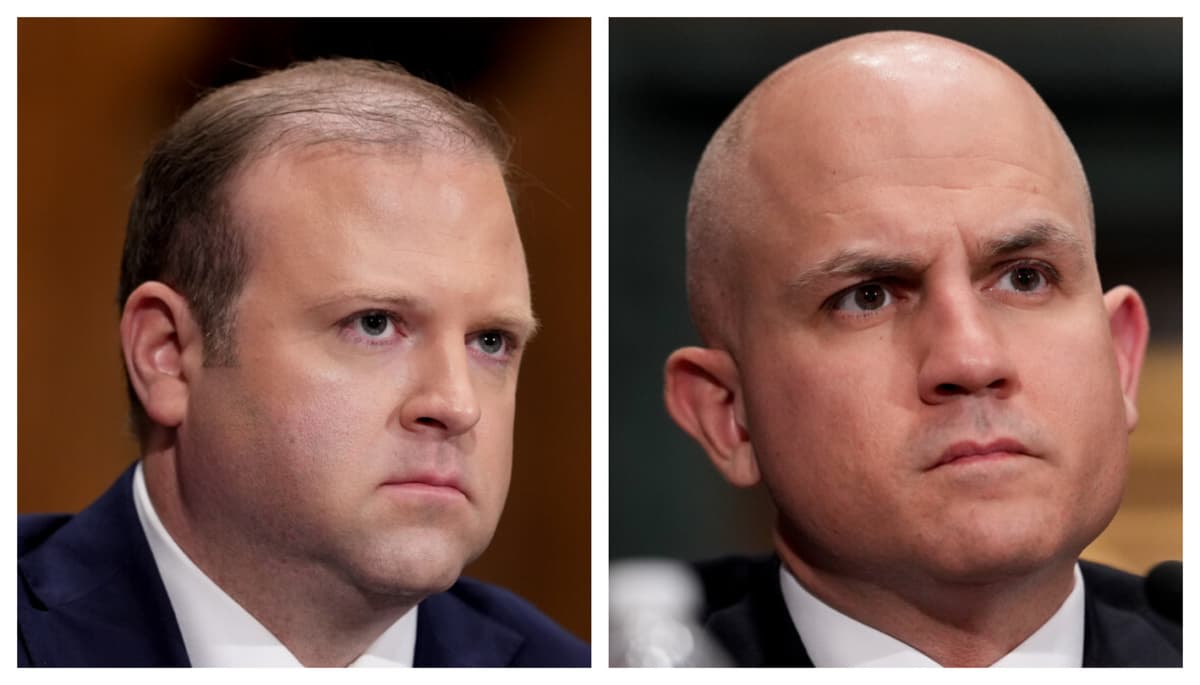
FHA's Cassidy on Leave, Ginnie Mae's Gormley Filling In
Why It Matters
The leadership transition occurs amid steady budget levels and rising delinquency concerns, affecting the stability of the nation’s largest mortgage‑insurance program and the broader secondary‑market securities backed by Ginnie Mae.
Key Takeaways
- •FHA Commissioner Frank Cassidy on family‑related leave through end of April.
- •Ginnie Mae President Joe Gormley appointed acting FHA commissioner.
- •FHA budget holds $400 billion loan‑guarantee authority unchanged.
- •Ginnie Mae FY2027 budget remains at $56 million, self‑funded.
- •MMI fund ratio at 11.47% far exceeds 2% statutory minimum.
Pulse Analysis
Frank Cassidy’s unexpected leave from the Federal Housing Administration creates a brief leadership vacuum at the agency that oversees the nation’s most widely used mortgage‑insurance program. By appointing Ginnie Mae President Joe Gormley as acting commissioner, the Department of Housing and Urban Development ensures continuity; Gormley previously served as deputy assistant secretary for single‑family mortgages, giving him intimate knowledge of FHA operations. This move signals a seamless transition, reassuring lenders, insurers, and investors that the day‑to‑day administration of FHA loan guarantees will remain uninterrupted during Cassidy’s absence.
The FY2027 budget proposals for both agencies underscore a “steady‑state” approach. The FHA requests $400 billion in loan‑guarantee commitment authority, unchanged from the prior year, while allocating $160 million for administrative contracts and a modest $1 million for direct loan authority. Ginnie Mae’s budget remains at $56 million, reflecting its self‑funded model that generates fees passed to the Treasury. Most notably, the FHA projects $9.4 billion in negative subsidy receipts, which will be funneled into the Mutual Mortgage Insurance fund, bolstering its 11.47% reserve ratio well above the 2% statutory floor.
Higher delinquency rates have surfaced recently, largely tied to a temporary shift in servicing rules that may ease once the rules are revised. Nonetheless, the robust MMI fund ratio provides a cushion against potential losses, mitigating systemic risk for investors in Ginnie Mae‑guaranteed securities, which are 62% FHA‑backed. Market participants will watch how the acting commissioner balances short‑term delinquency pressures with long‑term affordability goals, especially as HUD evaluates broader spending cuts. Stability in leadership and budget certainty are therefore critical to maintaining confidence in the secondary‑market pipeline that fuels U.S. homeownership.
FHA's Cassidy on leave, Ginnie Mae's Gormley filling in
Comments
Want to join the conversation?
Loading comments...