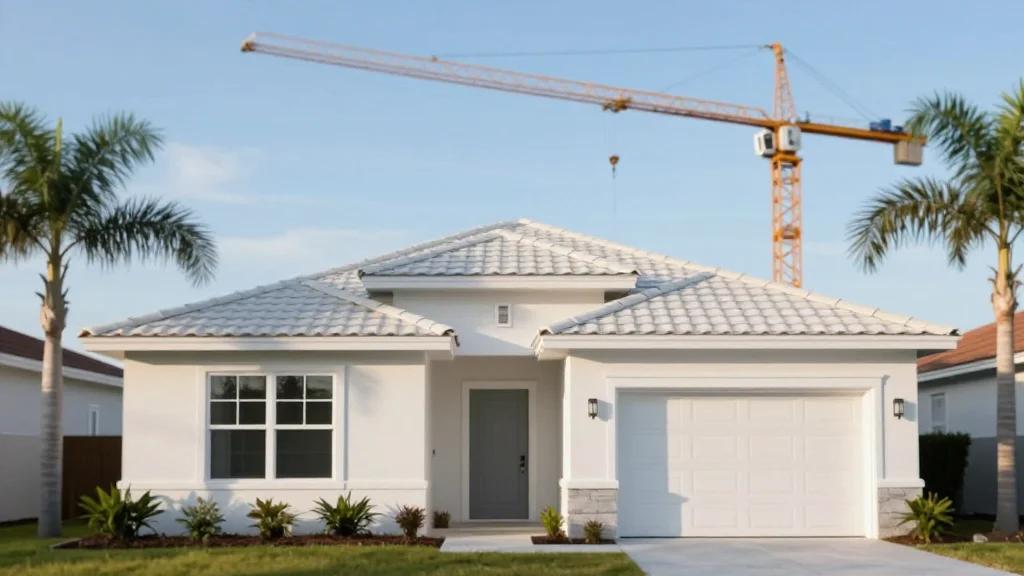
Florida Homebuilding Outlook: GL Homes Targets Surge of 300,000 New Residents Annually

Why It Matters
Florida’s demographic boom is reshaping the national housing outlook, as the state’s 300,000‑a‑year net migration rate outpaces most other regions. The ability of builders like GL Homes to deliver large‑scale, community‑focused projects will determine whether supply can keep up with demand, influencing price stability and affordability across the Southeast. Moreover, the integration of infrastructure and public‑private partnerships sets a template for other fast‑growing states grappling with similar pressures. If GL Homes succeeds in scaling its model, it could accelerate the shift toward master‑planned, amenity‑rich neighborhoods that reduce reliance on fragmented suburban sprawl. Conversely, any slowdown—whether from financing constraints, insurance costs, or regulatory delays—could exacerbate housing shortages, driving up prices and prompting policymakers to intervene with zoning reforms or incentive programs.
Key Takeaways
- •Florida adds roughly 300,000 new residents each year, driving housing demand.
- •GL Homes delivers hundreds of homes annually across five major growth markets.
- •Company’s smart‑planning process emphasizes green space, storm‑water management and native landscaping.
- •Public‑private partnerships support roadway improvements and civic infrastructure.
- •Projected need for hundreds of thousands of additional housing units statewide.
Pulse Analysis
The Florida market is entering a phase where sheer volume of new residents forces developers to rethink traditional subdivision models. GL Homes’ emphasis on master‑planned communities mirrors a broader industry pivot toward integrated living environments that can command premium pricing while offering economies of scale in construction and infrastructure. By front‑loading planning and securing public‑sector support, the builder reduces risk and accelerates time‑to‑market, a critical advantage in a climate where land costs and insurance premiums are rising sharply.
Historically, Florida’s housing booms have been cyclical, with periods of overbuilding followed by corrections. However, the current demographic engine—driven by retirees, remote workers and displaced families from higher‑cost states—appears more durable. GL Homes’ strategy of embedding amenities and long‑term community services may help insulate its projects from price volatility, as buyers increasingly value lifestyle components alongside affordability. The company’s ability to lock in land and infrastructure commitments early could also set a benchmark for competitors, prompting a wave of similar community‑centric developments.
Looking forward, the key variables will be financing conditions and the evolving insurance landscape. If mortgage rates stay moderate and insurers adapt to climate risk, developers can sustain the aggressive delivery pace outlined by Ezratti. Should rates climb or coverage become prohibitively expensive, the market could see a slowdown, forcing builders to pivot toward smaller, more affordable units. GL Homes’ current pipeline and partnership model position it to weather these headwinds, but the broader sector will need to monitor policy shifts and climate resilience measures closely.
Florida Homebuilding Outlook: GL Homes Targets Surge of 300,000 New Residents Annually
Comments
Want to join the conversation?
Loading comments...