Why It Matters
The project showcases how strategic elevation and material choices can overcome dense urban constraints, setting a benchmark for sustainable, high‑design infill housing in tropical megacities.
Key Takeaways
- •Elevated living spaces 1.2 m above ground address narrow site constraints
- •Double‑height glazed façade leverages shared garden view for daylight
- •Rustic grey mortar contrasts with warm oak, creating tactile tropical aesthetic
- •Curved mezzanine balcony adds surprise while softening geometric exterior
Pulse Analysis
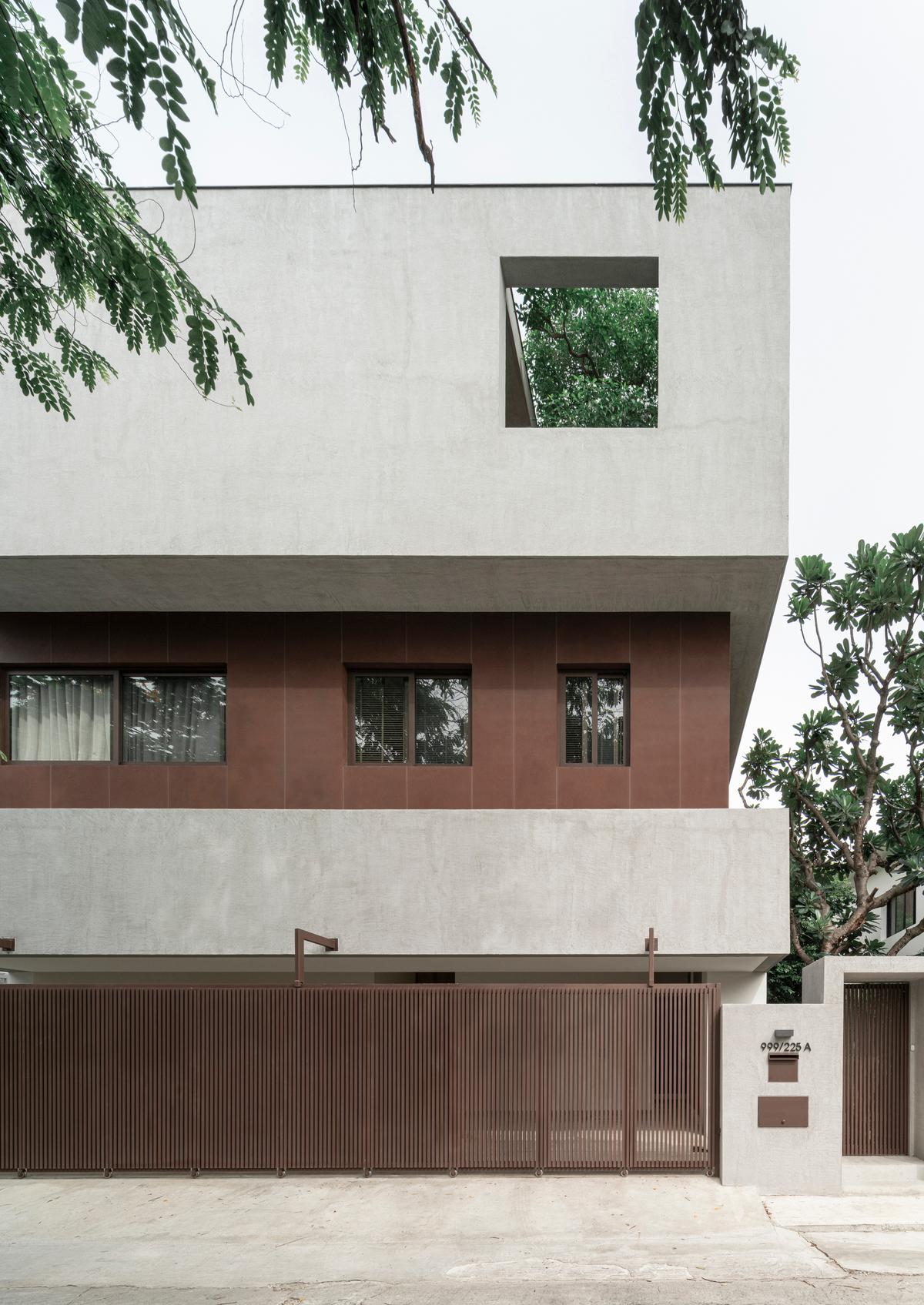
Bangkok’s relentless urban density forces architects to rethink infill housing, and FN House exemplifies that shift. Completed in 2024, the 650 m² residence occupies a slender 500 m² plot on Prachauthit Road, a typical narrow lot in the city’s older neighborhoods. Lead architect Phongphat Ueasangkhomset responded by lifting the primary living zones 1.2 m off the ground, a move that not only respects the adjacent fence line but also opens a visual corridor to the neighbour’s garden, turning a limitation into a design asset.
The house’s double‑height glazed façade on the northern side exploits the shared garden view, flooding the interior with daylight and promoting cross‑ventilation—critical for tropical comfort. Materiality plays a central role: grey polished mortar and rust‑coloured finishes evoke a raw, rustic tropical aesthetic, while warm‑white paneling, white travertine tile, and natural oak introduce softness and tactile richness. A curved mezzanine balcony interrupts the rigid stacked geometry, offering a sculptural focal point that bridges interior and exterior spaces. These decisions create a layered ambience that shifts with the time of day and season, reinforcing the home’s connection to its environment.
Beyond its visual impact, FN House illustrates a forward‑looking approach to longevity in tropical architecture. The selected materials are intended to age gracefully under monsoon rains and intense western sun, allowing the house to evolve with its occupants. This philosophy aligns with growing market demand for sustainable, low‑maintenance residences that respect local climate while delivering high‑design quality. As Bangkok and similar megacities grapple with land scarcity, the project’s blend of elevation, glazing, and material aging offers a replicable template for future infill developments, influencing both regional architects and global discourse on resilient urban housing.
FN House / Anonym
Comments
Want to join the conversation?
Loading comments...