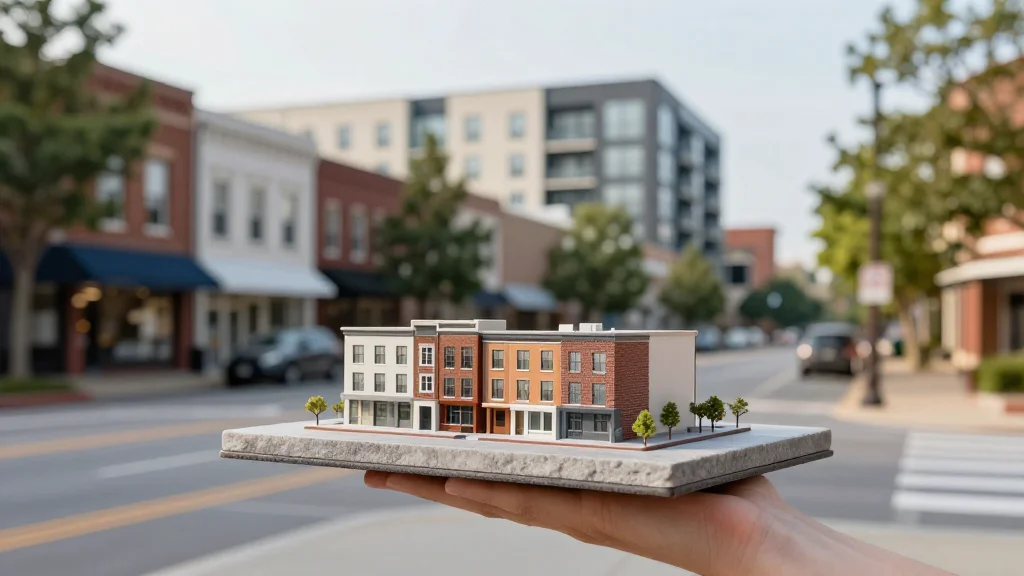
Greenville, SC Pushes for Missing Middle Housing
Why It Matters
The initiative tackles Greenville’s housing shortage while preserving neighborhood character, offering a replicable model for mid‑size cities facing affordability pressures.
Key Takeaways
- •Greenville adopted GVL2040 plan targeting missing‑middle housing zones
- •New Neighborhood‑Scale Zoning permits 2.5‑3‑story buildings, 4‑12 units
- •Up to 16 units allowed with development bonus incentives
- •City explores pilot projects on municipal land to overcome financing hurdles
Pulse Analysis
Missing‑middle housing has emerged as a pragmatic response to the affordability crisis in many U.S. cities, offering a middle ground between single‑family homes and high‑rise apartments. Greenville, a fast‑growing hub in the Upstate region, has seen its population swell by roughly 15 % over the past decade, intensifying pressure on the limited housing stock. By focusing on gentle density—typically 2‑ to 3‑story structures that blend into existing neighborhoods—the city aims to increase supply without altering its historic streetscapes. This approach aligns with national trends that prioritize infill development to curb sprawl and preserve open space.
The GVL2040 Comprehensive Plan, approved by both city and county councils, earmarks specific corridors such as downtown, Augusta Street, and the Village of West Greenville for missing‑middle projects. The 2023 zoning overhaul introduced Neighborhood‑Scale Zoning Districts, permitting buildings of up to three stories and accommodating four to twelve residential units per site, with a 16‑unit ceiling when developers apply a density bonus. These regulatory tweaks reduce the permitting timeline and lower construction costs, making projects financially viable for smaller builders. Early data from comparable markets suggest that such zoning flexibility can lift housing production by 10‑15 % within five years.
Despite the regulatory wins, Greenville officials acknowledge that financing, utility connection fees, and land acquisition remain significant obstacles. To address these gaps, the planning department is evaluating a pilot development on city‑owned property, partnering with a local home builder to showcase a cost‑effective prototype. If successful, the pilot could unlock public‑private financing mechanisms and set a precedent for other mid‑size municipalities. Moreover, the city’s proactive stance signals to investors that Greenville is committed to sustainable growth, potentially attracting capital for broader urban redevelopment initiatives.
Greenville, SC pushes for missing middle housing
Comments
Want to join the conversation?
Loading comments...