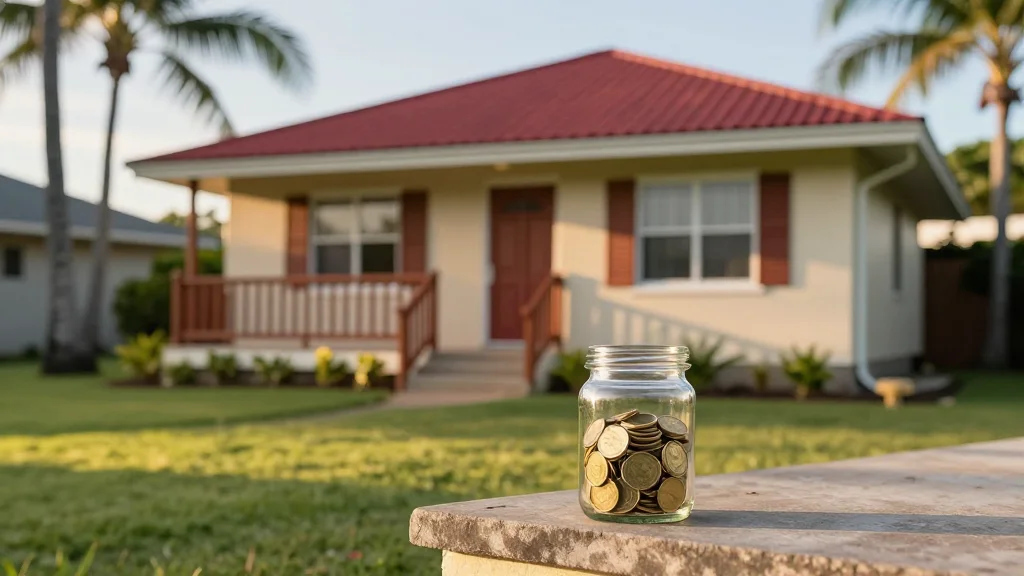
Hawaii County Council Proposes Property‑Tax Hike to Bridge $15 M Deficit

Why It Matters
The tax proposal directly affects the island’s real‑estate market, especially investors and second‑home owners who comprise a sizable share of high‑value properties. By raising rates on non‑resident holdings, the council aims to capture revenue from owners who benefit from public services—such as water, emergency response, and infrastructure—without contributing to the local tax base. The modest relief for owner‑occupied homes seeks to mitigate the cost‑of‑living crisis for local families, a key political priority in a state where housing affordability is a chronic challenge. If implemented, the new luxury tier could dampen demand for high‑end vacation homes, potentially slowing price appreciation and altering development patterns on the Big Island. Additionally, earmarking revenue for affordable housing and homelessness aligns fiscal policy with broader social goals, offering a template for other Hawaiian counties facing similar budget pressures. The outcome will signal how local governments balance revenue needs with housing market stability in a tourism‑dependent economy.
Key Takeaways
- •Council proposes raising tier‑two property tax from $13.60 to $15 per $1,000 for homes $2 M+
- •New tier‑three luxury rate of $17 per $1,000 for properties over $4 M
- •Tier‑one rate climbs from $11.10 to $12.10 per $1,000 for homes under $2 M
- •Owner‑occupied homes see a 20‑cent cut, from $5.95 to $5.75 per $1,000
- •Revenue aimed at closing a $15 M budget shortfall and funding affordable‑housing programs
Pulse Analysis
Hawaii County’s tax proposal reflects a pragmatic shift toward a more progressive property‑tax structure, mirroring moves in other high‑cost locales that target wealthier, non‑resident owners. Historically, the island’s tax base has relied heavily on tourism‑related revenues, which are volatile and susceptible to external shocks—evident in recent pandemic downturns. By anchoring part of the budget to property taxes, the council reduces dependence on fluctuating visitor spending.
The introduction of a distinct luxury tier is particularly noteworthy. It acknowledges that high‑value second homes generate disproportionate demand on public services—especially water and waste management—while contributing little to the local economy beyond occasional tourism spend. This could deter speculative purchases and encourage a more balanced ownership mix, potentially easing pressure on the limited housing supply for residents.
However, the plan also risks unintended consequences. Higher taxes on non‑resident properties may depress demand, leading to price corrections that could affect local construction firms and related industries. Moreover, the modest rate cut for owner‑occupied homes may not translate into lower bills for many residents due to the assessment cap, limiting the relief’s effectiveness. The council will need to monitor revenue outcomes closely and be prepared to adjust rates or exemptions to avoid over‑burdening any single segment of the market.
Overall, the proposal is a test case for how island jurisdictions can leverage property taxation to address fiscal gaps while pursuing social objectives. Its success or failure will likely influence policy debates across the Hawaiian archipelago and other tourism‑dependent regions facing similar budgetary strains.
Hawaii County Council Proposes Property‑Tax Hike to Bridge $15 M Deficit
Comments
Want to join the conversation?
Loading comments...