Why It Matters
The project demonstrates how heritage‑sensitive, eco‑friendly design can attract remote‑work tourists while bolstering regional economies. It sets a precedent for low‑impact, high‑value rural tourism developments in Eastern Europe.
Key Takeaways
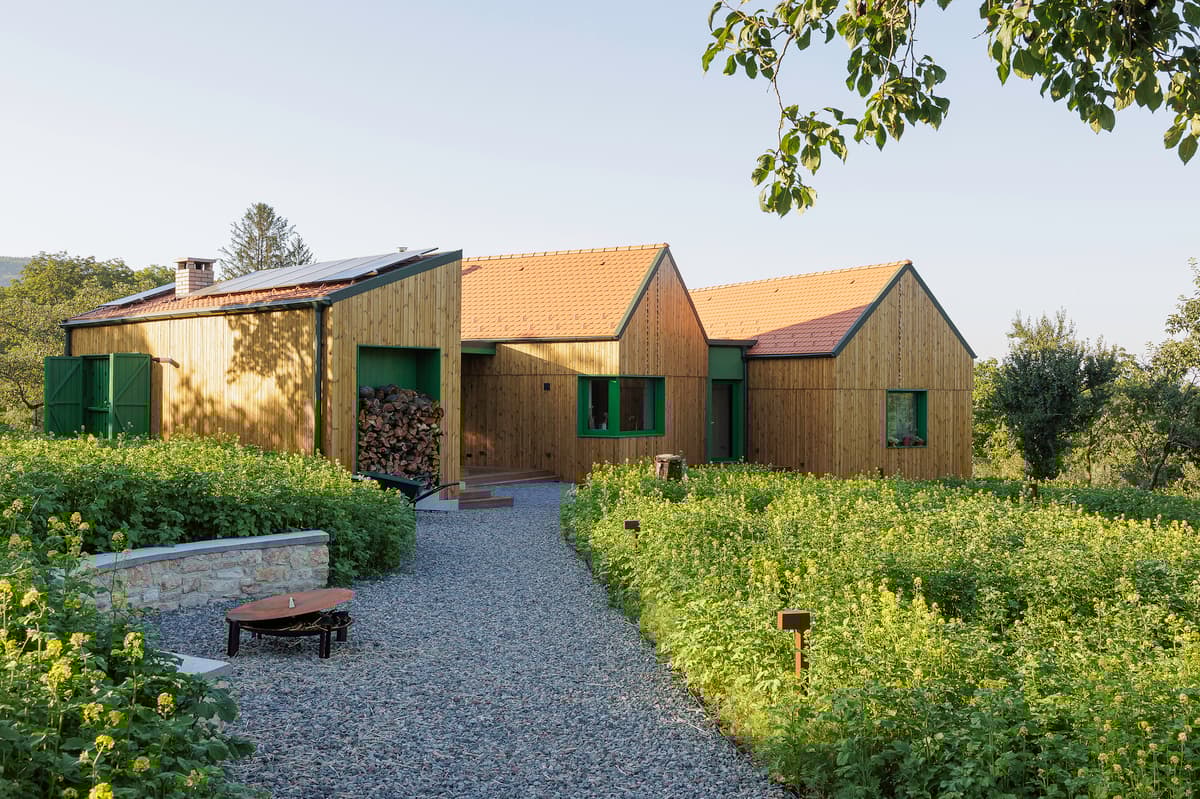
- •Project blends traditional courtyard layout with modern holiday home functions.
- •Prefab timber structures use hay insulation and reclaimed limestone cladding.
- •Photovoltaic panels and well provide off‑grid energy and water.
- •Separate guest house and barn conversion create flexible remote‑work spaces.
- •Minimal site disturbance preserves orchard and village character.
Pulse Analysis
Transylvania’s tourism sector is experiencing a surge as travelers seek authentic, nature‑rich experiences, and remote‑work professionals look for tranquil retreats. The Moldoveniști holiday‑home cluster taps into this trend, offering a destination that combines cultural heritage with modern comforts. By situating the main house on a hilltop with views of Cheile Turzii and Jósika Castle, the project leverages iconic landscapes to command premium rental rates, while the dispersed layout respects the region’s historic settlement patterns.
The architectural approach marries tradition and sustainability. Prefabricated timber frames rest on concrete footings, insulated with compressed hay—a low‑embodied‑energy material that meets modern thermal standards. Reused limestone and thermo‑treated pine echo local building vocabularies, while reclaimed ceramic tiles on the barn roof preserve material continuity. Photovoltaic arrays and a private well enable off‑grid operation, reducing utility costs and appealing to eco‑conscious guests. The courtyard‑centric plan, with a central fireplace and shaded terraces, fosters social interaction without compromising privacy.
From a business perspective, the development illustrates a scalable model for rural investment. The inclusion of a dedicated remote‑working space broadens the target market beyond seasonal vacationers to digital nomads, extending occupancy throughout the year. Minimal site disturbance maintains agricultural productivity, allowing the orchard to generate supplemental income. As investors recognize the profitability of sustainable, heritage‑aligned tourism, similar projects are likely to emerge across the Carpathian region, reshaping the rural real‑estate landscape and reinforcing local economies.
Holiday Homes in Moldovenești / MVAA
Comments
Want to join the conversation?
Loading comments...