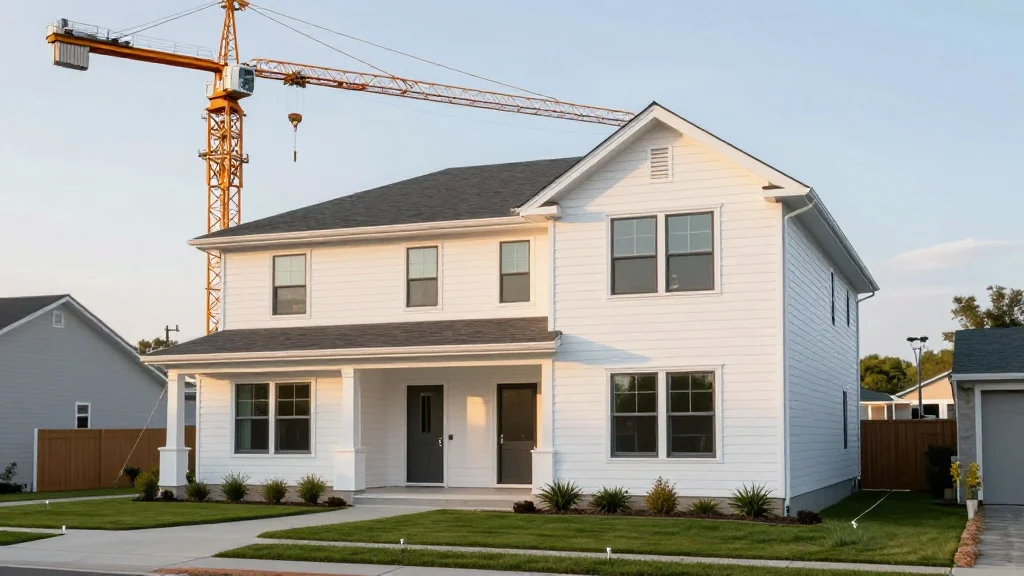
House Passes Build‑to‑Rent Relief in 21st Century ROAD to Housing Act

Why It Matters
The House’s removal of the dispossession requirement could revive financing for BTR projects that have been on hold since the Senate’s stricter draft. Lenders and developers see a clearer path to fund new single‑family rental communities, which are a critical source of affordable housing in many suburban markets. At the same time, the retained investor cap signals that policymakers remain wary of corporate concentration, preserving a modest level of market competition. If the bill becomes law, the BTR sector may see a resurgence of construction activity, potentially adding tens of thousands of rental units annually. This could ease pressure on the tight rental market, moderate rent growth, and provide a new asset class for institutional investors seeking long‑term, stable cash flows. Conversely, the cap on investor holdings may limit the scale of some projects, prompting developers to explore joint‑venture structures or diversify ownership to stay within the 350‑home limit.
Key Takeaways
- •House passed the 21st Century ROAD to Housing Act 396‑13, dropping the forced dispossession rule for BTR communities.
- •Build‑to‑rent homes have comprised up to 10% of new single‑family construction in recent years.
- •The bill retains a ban on investors buying existing single‑family homes and caps ownership at 350 homes per investor.
- •Will Poff‑Webster (Institute for Progress) praised the removal of the dispossession requirement as a clear win for housing supply.
- •Jay Parsons (rental housing economist) warned the bill still favors wealthier buyers and perpetuates myths about investor impact.
Pulse Analysis
The House’s amendment marks a pragmatic shift from ideological purity to market‑friendly policy. By eliminating the dispossession clause, lawmakers acknowledge the operational realities that have stalled BTR projects—legal fragmentation, financing uncertainty, and the risk of stranded assets. This move aligns with a broader trend of re‑engaging private capital in affordable‑housing solutions after a period of heightened regulatory risk.
Historically, BTR has been a niche but growing segment, buoyed by demographic shifts such as delayed homeownership among millennials and Gen Z. The 10% share of new single‑family builds underscores its emerging importance. However, the sector’s reliance on large institutional investors makes it vulnerable to policy swings. The retained 350‑home cap is a political concession that may limit economies of scale but also prevents the concentration of ownership that critics argue drives up home prices.
Looking ahead, the bill’s fate in the Senate will determine whether the sector can capitalize on this window of opportunity. If the Senate restores the dispossession requirement, developers could face renewed financing constraints, potentially slowing the pipeline of new rentals. Conversely, a clean passage would likely trigger a wave of new BTR projects, boosting construction activity, creating jobs, and adding much‑needed rental inventory. Investors will be watching the final language closely, as it will shape the risk‑return calculus for future BTR investments.
House Passes Build‑to‑Rent Relief in 21st Century ROAD to Housing Act
Comments
Want to join the conversation?
Loading comments...