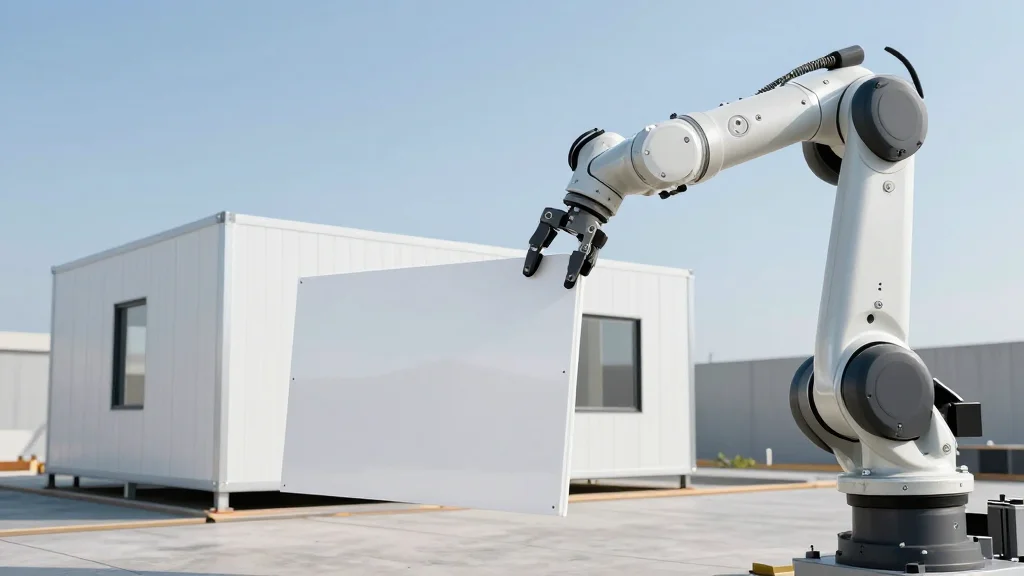
HUD Seeks Data on Robotics-Built Homes, Automated Permitting
Why It Matters
By funding robotics‑driven construction and digital permitting, HUD seeks to alleviate the housing supply crunch, lower costs, and create a data‑backed roadmap for nationwide regulatory reforms.
Key Takeaways
- •HUD offers $10M for robotics‑AI housing manufacturing trials
- •$3M grants support automated building‑code permitting in jurisdictions
- •Funding targets labor shortage, cost reduction in home construction
- •Data from pilots will inform nationwide permitting reforms
- •Program aligns with federal push for affordable manufactured homes
Pulse Analysis
The United States faces a chronic housing shortage amplified by a looming construction‑labor crisis, with roughly 40 % of the workforce expected to retire within a decade. Robotics and artificial‑intelligence technologies promise to offset this gap by automating repetitive tasks, improving precision, and shortening build cycles for factory‑produced homes. Industry players such as Reframe Systems see these tools not only as cost savers but also as a way to attract younger talent to a sector traditionally viewed as physically demanding.
HUD’s $10 million grant stream focuses on pilots that test everything from panelized wall systems to fully volumetric 3‑D‑printed modules. By subsidizing early‑stage development, the agency hopes to demonstrate tangible cost reductions and faster delivery times, making manufactured housing a more viable solution for low‑income families. The parallel $3 million program encourages local jurisdictions to digitize permitting workflows, capturing metrics on processing speed, staff workload, and applicant experience. These data points will feed a federal playbook, helping municipalities replicate successful models and reduce bureaucratic delays that have historically slowed construction projects.
The broader market outlook reinforces HUD’s timing: Mordor Intelligence projects the manufactured‑housing sector to grow from $30.5 billion this year to $42.7 billion by 2031. Successful robotics and permitting pilots could accelerate that trajectory, delivering affordable units at scale while reshaping regulatory frameworks. As the federal government continues to prioritize affordable housing, the outcomes of these grants will likely influence future funding allocations, private‑sector investment, and the evolution of construction standards across the United States.
HUD seeks data on robotics-built homes, automated permitting
Comments
Want to join the conversation?
Loading comments...