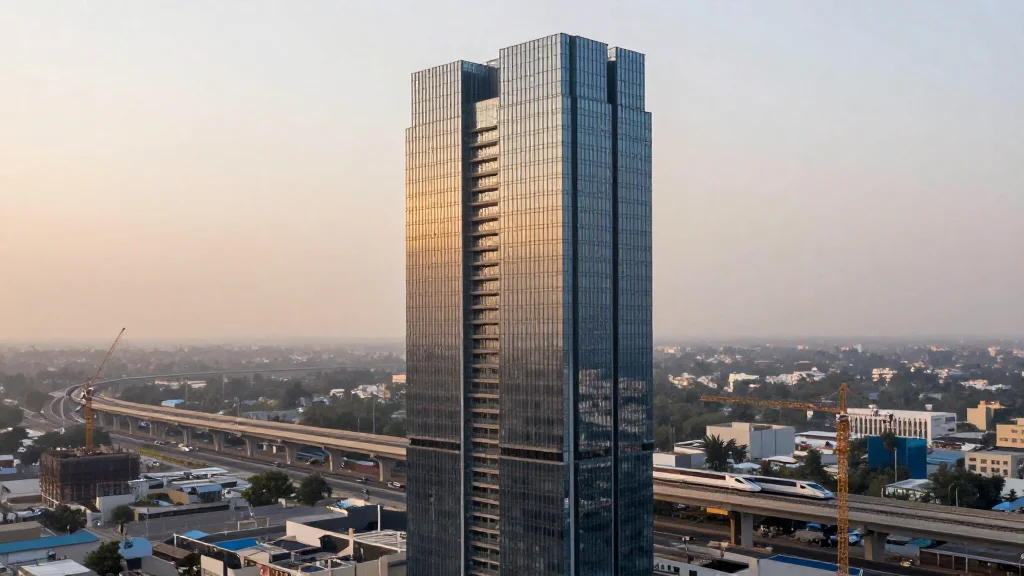
India's Premium Home Sales Surge as Infrastructure Corridors Drive Demand

Companies Mentioned
Why It Matters
The shift toward infrastructure‑centric premium housing reshapes investment flows, pricing dynamics and urban form across India's fastest‑growing cities. By treating connectivity and sustainability as core value drivers, developers are creating assets that promise higher long‑term returns, influencing everything from mortgage underwriting standards to municipal planning priorities. Globally, the $151 trillion infrastructure gap highlighted by PwC underscores the scale of opportunity for real estate players that can align projects with upcoming transport, energy and digital networks. India's experience offers a template for other emerging markets where rapid urbanisation meets mounting climate expectations, suggesting that the premium‑home model could become a universal benchmark for future‑ready development.
Key Takeaways
- •Premium homes above ₹1 crore (≈ $120,000) accounted for 63% of sales in India's top seven markets in 2025, up from 53% in 2024.
- •Over 270,000 housing units were sold across Bengaluru, Mumbai, Pune and other leading cities in 2025.
- •PwC estimates $151 trillion in global infrastructure investment needed by 2050, with Asia‑Pacific representing more than half.
- •Developers are embedding energy‑efficiency, water‑conservation and green‑building practices to meet buyer demand for sustainable living.
- •Future‑ready corridors—expressways, metro lines, airport links—are now the primary factor influencing premium home pricing.
Pulse Analysis
The premium‑home surge in India reflects a broader redefinition of real estate value, where location is no longer measured solely by present-day amenities but by projected infrastructure upgrades and sustainability credentials. Historically, Indian buyers prioritized central business districts; today, the calculus includes anticipated transit nodes and climate‑resilient design, echoing a global pivot toward asset longevity.
This evolution is being fueled by three converging forces. First, massive public and private infrastructure commitments create a pipeline of connectivity that developers can monetize early. Second, heightened awareness of climate risk and regulatory pressure push builders to adopt green standards, turning sustainability from a compliance checkbox into a market differentiator. Third, capital markets are rewarding projects that combine these attributes with digital infrastructure, viewing them as lower‑risk, higher‑yield investments.
Looking ahead, the premium segment will likely bifurcate further. On one side, ultra‑high‑end projects will integrate smart‑city technologies, offering residents real‑time energy monitoring and seamless mobility services. On the other, mid‑tier developers will chase the same infrastructure advantage but must balance cost pressures, potentially leading to modular, prefabricated construction that meets green certifications without inflating prices. The winners will be those who can accurately forecast corridor roll‑outs and embed sustainability at the design stage, ensuring that today’s premium homes remain tomorrow’s resilient assets.
India's Premium Home Sales Surge as Infrastructure Corridors Drive Demand
Comments
Want to join the conversation?
Loading comments...