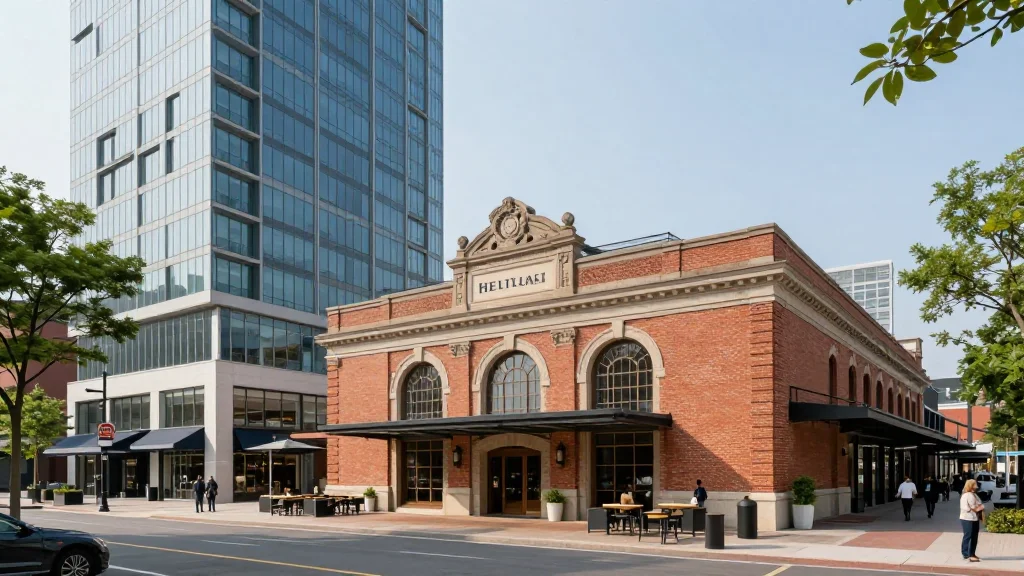
Inside Salt Lake City’s Gateway District
Companies Mentioned
Why It Matters
The Gateway’s successful repositioning shows how legacy retail assets can be turned into profitable, walkable urban hubs, offering a blueprint for other midsize markets facing similar retail decline.
Key Takeaways
- •Vestar acquired Gateway in 2016, pivoting to entertainment‑focused mixed use.
- •Asher Adams Hotel repurposes historic Union Pacific Depot, preserving architecture.
- •District now exceeds 1 million sq ft across retail, office, residential, hospitality.
- •Salt Lake City has attracted over $10 billion in metro‑area investment.
- •Adaptive reuse demonstrates viable model for underperforming retail centers.
Pulse Analysis
The Gateway District exemplifies a broader shift in commercial real estate, where developers are moving away from pure‑play shopping malls toward integrated, experience‑centric environments. By combining dining, entertainment, office space, and residential units within a walkable footprint, the district meets evolving consumer preferences for convenience and lifestyle. This mixed‑use formula also spreads risk across asset classes, making the project more resilient to sector‑specific downturns such as the recent e‑commerce surge that has pressured traditional retailers.
Central to the district’s renaissance is the adaptive reuse of the 1909 Union Pacific Depot, now operating as the Asher Adams Hotel. Vestar’s 2016 acquisition triggered a strategic pivot: preserving the depot’s French Renaissance details while converting the structure into a boutique hospitality anchor. The hotel not only draws visitors but also generates foot traffic for surrounding retailers and restaurants, creating a virtuous cycle of activity. By retaining historic character, the project satisfies community preservation goals and leverages the growing demand for authentic, place‑based experiences.
Salt Lake City’s broader economic momentum amplifies the Gateway’s impact. Over $10 billion in recent metro‑area investment, a surge of more than 10,000 housing units, and infrastructure upgrades tied to the 2034 Winter Olympics are reshaping the urban core. The district serves as a proof point that underperforming retail sites can be reimagined through thoughtful placemaking, transit‑oriented design, and strategic asset diversification. Other midsize cities can replicate this model to revitalize legacy properties, attract new tenants, and stimulate local economies.
Inside Salt Lake City’s Gateway District
Comments
Want to join the conversation?
Loading comments...