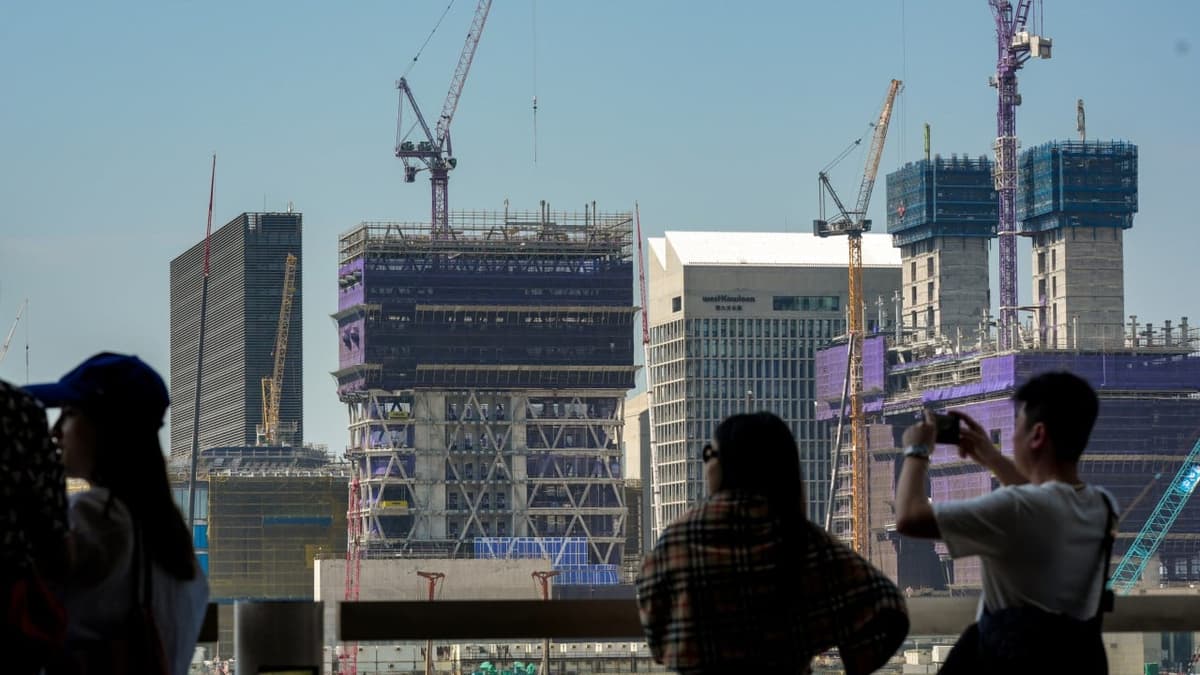
Is Hong Kong’s Cultural Hub of West Kowloon Emerging as ‘Central 2.0’?
Companies Mentioned
Why It Matters
The shift consolidates Hong Kong’s finance and insurance activity around a highly connected sub‑market, reshaping office supply dynamics and highlighting the city’s reliance on mainland linkages for future growth.
Key Takeaways
- •UBS anchors 460k sq ft IGC tower
- •JPMorgan leases 250k sq ft Artist Square
- •Santander occupies 37k sq ft floor in IGC
- •West Kowloon vacancy at 13.5%, Kowloon East 20.4%
- •High‑speed rail links 520 million people, 14‑minute Shenzhen ride
Pulse Analysis
West Kowloon’s emergence as a "Central 2.0" reflects a strategic pivot in Hong Kong’s office market. By leveraging the high‑speed rail terminus and Airport Express, the district offers unparalleled access to the Greater Bay Area’s 520 million‑person market, making it a magnet for banks and insurers with mainland exposure. Developers such as Sun Hung Kai Properties have responded with flagship projects—International Gateway Centre’s 2.6 million sq ft of Grade A space and the mixed‑use Artist Square Towers—providing modern, ESG‑ready workplaces that outclass older Central towers.
The tenant roster underscores the shift. UBS will consolidate five dispersed Hong Kong offices into a single 460,000‑sq‑ft tower, while JPMorgan’s 250,000‑sq‑ft lease secures a long‑term foothold in a mixed‑use complex slated for 2028. Banco Santander’s early move into IGC signals confidence in the district’s connectivity and sustainability credentials. Yet the broader market shows strain: JLL data reveal a modest rise in overall premium vacancy to 13.5% and a sharp 20.4% vacancy in Kowloon East, suggesting that West Kowloon’s growth is cannibalising demand elsewhere rather than expanding the city’s net office inventory.
Analysts predict a complementary relationship between Central and West Kowloon rather than outright competition. Dual‑site strategies will allow firms to maintain a prestige address in Central while exploiting West Kowloon’s logistical advantages for mainland‑focused operations. Over the next decade, the district’s role as a finance and insurance hub is likely to solidify, reinforcing Hong Kong’s position as a gateway to China, but policymakers will need to address the resulting market polarization to ensure balanced growth across all business districts.
Is Hong Kong’s cultural hub of West Kowloon emerging as ‘Central 2.0’?
Comments
Want to join the conversation?
Loading comments...