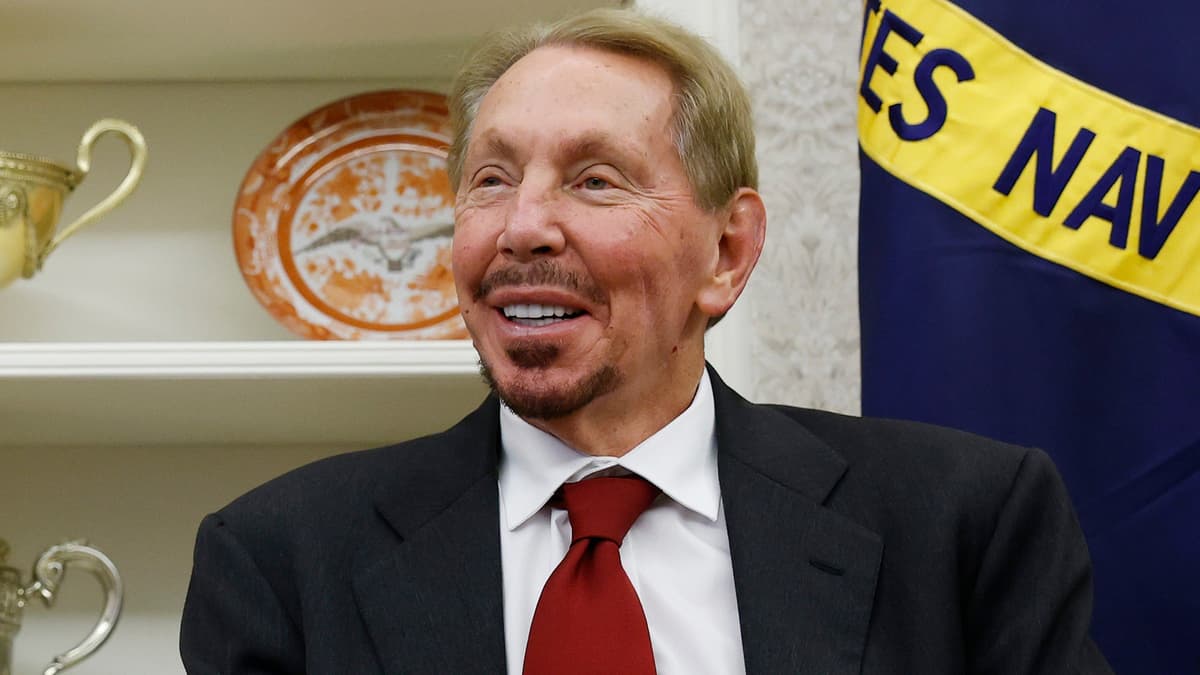
Larry Ellison Makes $173 Million Palm Beach Estate Near Trump’s Mar-a-Lago His Official Residence
•February 27, 2026
0
Why It Matters
Ellison’s move deepens his political and social ties in Florida, a key swing state, while his media acquisition could reshape the entertainment industry landscape. The relocation signals how ultra‑wealthy executives leverage geography for tax, influence, and strategic business positioning.
Key Takeaways
- •Ellison declared Florida residence in May 2023
- •Purchased Manalapan estate for $173 million
- •Estate sits 18 minutes from Trump’s Mar‑a‑Lago
- •Paramount Skydance outbid Netflix for Warner Bros. Discovery
- •Ellison’s real‑estate holdings total roughly $3 billion
Pulse Analysis
Florida has become a magnet for tech magnates seeking favorable tax regimes, privacy, and proximity to political power. Larry Ellison’s high‑profile relocation mirrors moves by other billionaires who cite the state’s lack of income tax and business‑friendly environment. By filing a Declaration of Domicile and registering to vote, Ellison not only secures personal tax benefits but also positions himself within a network of influential donors and policymakers that can shape regulatory outcomes.
The estate’s location on Billionaires Row, a stone’s throw from Mar‑a‑Lago, amplifies Ellison’s visibility in the political arena. Proximity to the former president’s club facilitates informal interactions that can translate into lobbying leverage, especially as Florida’s electoral significance grows. Ellison’s voter registration without party affiliation suggests a strategic, perhaps bipartisan, approach to influence, aligning with his history of supporting Trump‑friendly initiatives while maintaining a low‑profile donation record.
Beyond real estate, Ellison’s aggressive expansion into media through Paramount Skydance signals a diversification strategy that could reshape content distribution. The $111 billion bid for Warner Bros. Discovery, backed by a personal guarantee of $40.4 billion, would place HBO, CNN, and a vast studio library under his control, challenging Netflix’s dominance. Coupled with a $2.9 billion property portfolio spanning California, Hawaii, and the East Coast, Ellison’s moves illustrate how tech wealth is being redeployed into media assets and political footholds, reshaping both industry competition and policy influence.
Larry Ellison Makes $173 Million Palm Beach Estate Near Trump’s Mar-a-Lago His Official Residence
0
Comments
Want to join the conversation?
Loading comments...