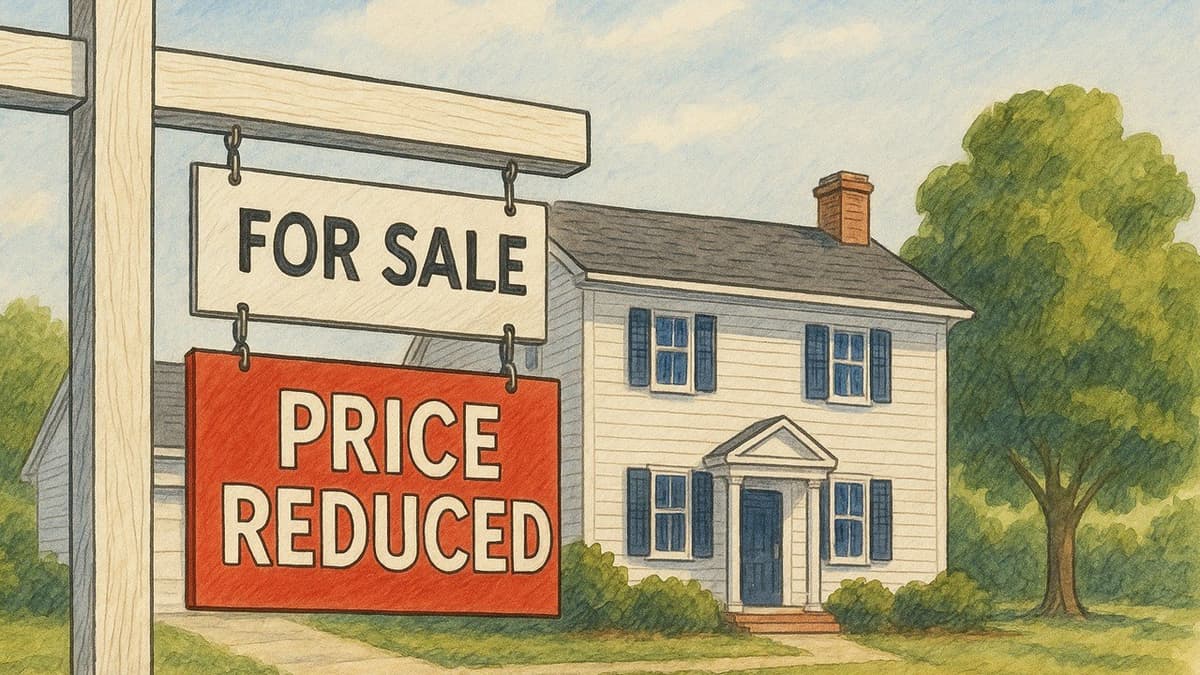
Listing Prices Are Falling, but Resurgent Mortgage Rates Have Buyers Spooked
Companies Mentioned
Why It Matters
Falling prices alone aren’t reigniting demand because higher rates erode affordability, prompting buyers to seek riskier loan products and potentially slowing the housing market’s recovery.
Key Takeaways
- •Median listing price down 2.3% YoY, 18 weeks of declines.
- •30‑year fixed mortgage rate rose to 6.51%, adding $230/month.
- •Active inventory up 2.2% YoY, expanding buyer options.
- •Mortgage applications fell 4% week‑over‑week despite price cuts.
- •Adjustable‑rate mortgage applications hit 10%, highest since Oct 2025.
Pulse Analysis
The latest Realtor.com data shows the national median listing price slipped 2.3% year‑over‑year for the week ending May 16, extending an 18‑week streak of price reductions. At the same time, active listings rose 2.2% YoY, giving buyers a broader selection of homes across price tiers. Yet the softening of list prices appears to reflect sellers resetting expectations rather than a surge in demand. Analysts note that lower asking prices can improve affordability on paper, but the market’s momentum remains fragile as buyers weigh the cost of financing against the apparent bargains.
Mortgage financing conditions have deteriorated sharply. The average 30‑year fixed rate climbed to 6.51%, a 15‑basis‑point jump from the prior week and roughly half a percentage point higher than in early March. For a median‑priced home, that increase translates into about $230 more in monthly payments assuming a 10% down payment. Consequently, the Mortgage Bankers Association reported a 4% week‑over‑week decline in purchase applications, even as year‑over‑year applications remain modestly higher. The rate surge, driven by higher Treasury yields and geopolitical tension, is re‑igniting affordability concerns that offset the benefit of lower prices.
Facing steeper rates, a growing slice of borrowers is turning to adjustable‑rate mortgages (ARMs). Nearly 10% of all mortgage applications now involve ARMs, the highest share since October 2025, because the 5/1 ARM rate sits around 5.7%—about 80 basis points below the 30‑year fixed. While ARMs can lower upfront costs and bring homeownership within reach, they expose borrowers to future rate resets that could raise payments if market rates stay elevated. Lenders have added caps and disclosure safeguards, but the rising reliance on ARMs signals heightened risk appetite among price‑sensitive buyers and could shape the housing market’s trajectory in the coming months.
Listing Prices Are Falling, but Resurgent Mortgage Rates Have Buyers Spooked
Comments
Want to join the conversation?
Loading comments...