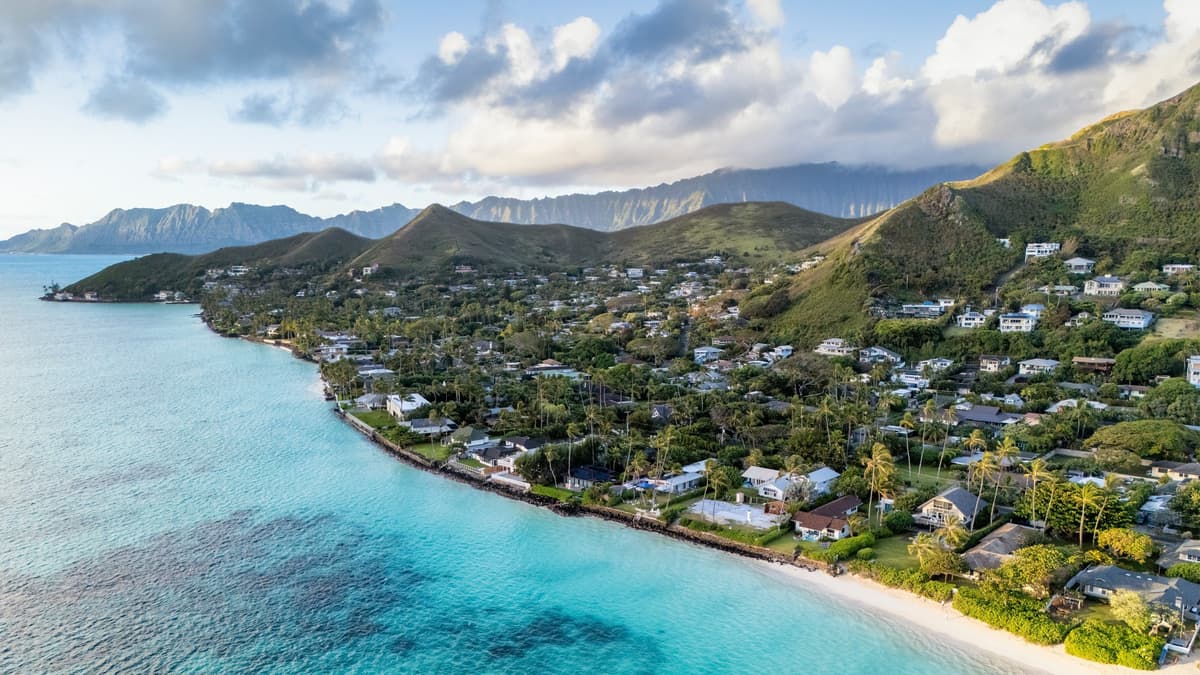
Living in Hawaii Is Becoming a Luxury Local Families Can No Longer Afford
Why It Matters
The crisis erodes home‑ownership‑driven wealth accumulation for Hawaiians and fuels a talent drain that could hamper the state’s long‑term economic vitality.
Key Takeaways
- •Median home price $767,360, nearly double national median
- •Three‑quarters of Hawaiian households can’t afford a single‑family home
- •95% of land is conservation or agricultural, blocking new builds
- •Out‑migration of younger adults driven by high costs and low wages
- •Hawaii needs 60,000 new units by 2050 to meet demand
Pulse Analysis
Hawaii’s housing market illustrates how geographic constraints can amplify a national affordability problem. While the United States faces a shortage of roughly 4 million homes, the islands’ unique land‑use policies—where 95% of terrain is classified as conservation or agricultural—drastically limit new construction. With only 0.2% of the nation’s building permits issued in 2024 despite housing 0.4% of the population, supply cannot keep pace with demand, pushing median prices to $767,360, well above the $403,000 national median.
The scarcity of affordable housing is reshaping demographic trends. Younger households, who are most sensitive to price, are leaving at unprecedented rates; UHERO data shows they account for the bulk of out‑migration between 2019 and 2023. Those who stay face a stark wealth gap: homeowners hold nearly 38 times the net worth of renters and are 1.3 times more likely to pass assets to the next generation. As entry‑level homes vanish, the state’s ability to build intergenerational wealth erodes, prompting families like Johnette Fagaale’s to relocate to markets where a median home costs under $440,000.
Policy makers must address both supply and income dimensions to reverse the trend. Streamlining permitting, reallocating underused land, and incentivizing affordable‑unit construction could alleviate the bottleneck, while targeted wage growth and tax relief would improve purchasing power. Without coordinated action, Hawaii risks a continued exodus of its younger workforce, further weakening the tax base and limiting economic diversification. The stakes extend beyond real estate; they touch on the very fabric of Hawaiian society and its long‑term prosperity.
Living in Hawaii Is Becoming a Luxury Local Families Can No Longer Afford
Comments
Want to join the conversation?
Loading comments...