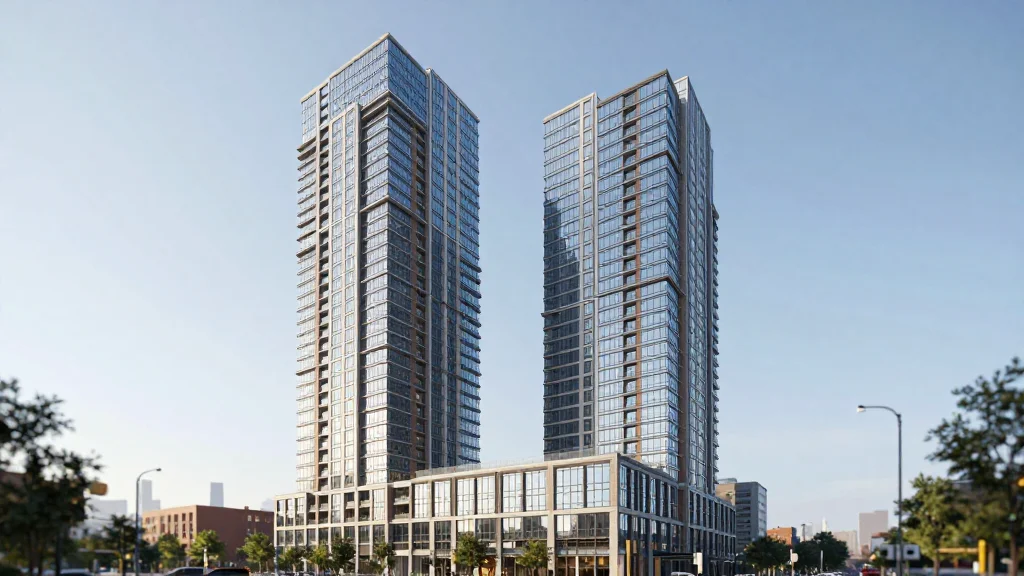
Local Developer Plans Pair of 99-Unit Resi Buildings on Brooklyn’s Atlantic Avenue
Why It Matters
By exploiting the sub‑100 unit threshold, developers can tap lucrative tax breaks without incurring higher labor costs, shaping the supply of affordable housing in NYC’s high‑density neighborhoods.
Key Takeaways
- •Two 99‑unit towers total 198 units planned on Atlantic Avenue.
- •Buildings will be 18 stories with mixed residential and ground‑floor commercial space.
- •99‑unit cap lets developer qualify for 485‑x tax break, avoiding higher wages.
- •Project reflects NYC trend of sub‑100 unit builds to sidestep wage rules.
- •Potential affordable housing impact remains uncertain pending designation.
Pulse Analysis
The 485‑x tax incentive was introduced to spur affordable‑housing construction across New York City, offering developers a property‑tax credit in exchange for meeting income‑targeted unit ratios. However, the program also imposes a higher prevailing‑wage floor on projects with 100 or more units, prompting a wave of sub‑100‑unit developments that can sidestep those labor costs while still capturing the credit. This loophole has become a strategic tool for developers seeking to maximize profit margins in a market where construction expenses and wage mandates are rapidly rising.
Karpen’s twin‑tower proposal at 1029 and 1035 Atlantic Avenue exemplifies the tactic. The 18‑story structures will host 99 apartments each, complemented by a resident lobby, recreation areas, rooftop amenities, and commercial storefronts on the ground floor. Situated on a former Meineke Car Care Center site in Bedford‑Stuyvesant, the project taps a neighborhood undergoing rapid rezoning and demographic shifts. While the filings do not specify an affordable‑housing designation, the 99‑unit configuration strongly suggests the developer is positioning the towers to benefit from the 485‑x credit while potentially delivering below‑market rents.
The broader market implication is a growing tension between policy intent and developer behavior. If the sub‑100 strategy proliferates, the city may see a surge in tax‑credit‑driven construction that falls short of genuine affordability goals, prompting calls for regulatory tweaks—such as lowering the unit threshold or tightening wage requirements. For investors, the approach offers a predictable return profile: reduced labor costs paired with a sizable tax credit, making such projects attractive in a capital‑constrained environment. Policymakers will need to balance fiscal incentives with safeguards to ensure the intended expansion of affordable housing materializes.
Local Developer Plans Pair of 99-Unit Resi Buildings on Brooklyn’s Atlantic Avenue
Comments
Want to join the conversation?
Loading comments...