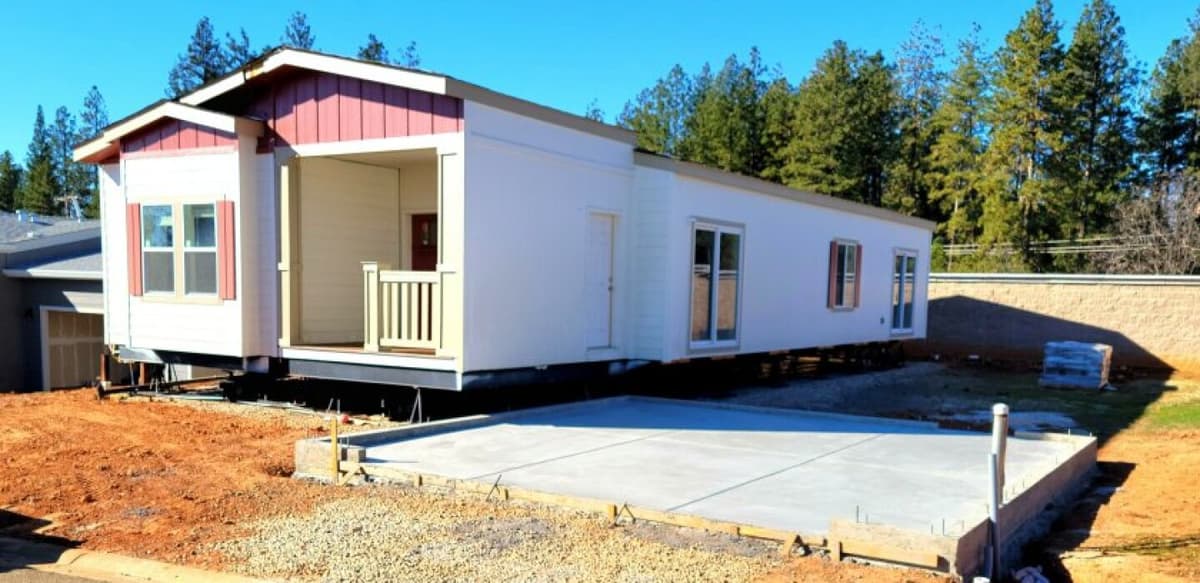
Manufactured Housing’s Unrealized Promise
Companies Mentioned
Why It Matters
Policymakers seeking to expand affordable housing cannot rely on state statutes alone; ineffective enforcement and financing barriers limit the impact of manufactured homes, a critical low‑cost option for millions of families.
Key Takeaways
- •Equal-treatment statutes raise local permitting odds only modestly (59%→66%).
- •Manufactured homes cut mortgage costs by about $585 per month in 2025.
- •Production remains over 70% below 1998 levels despite strong demand.
- •Local zoning loopholes blunt state law impact on housing supply.
- •Federal mortgage support is essential to unlock affordable manufactured housing.
Pulse Analysis
Manufactured housing has long been a cornerstone of affordable homeownership in the United States, providing shelter for roughly 7 million households at costs about 30% lower than comparable site‑built homes. The price differential translates into monthly mortgage savings of roughly $585 in 2025 dollars, making these homes especially attractive to lower‑income, Hispanic and Native American families. Despite this advantage, national production has fallen more than 70% from its 1998 peak, leaving a sizable gap between demand and supply.
State legislators have responded by passing equal‑treatment laws in Kentucky, Maine, Maryland, Montana and Virginia, aiming to strip local zoning barriers that have historically constrained factory‑built housing. Empirical analysis, however, shows the statutes shift the likelihood of a locality permitting manufactured homes from 59% to just 66%, a modest gain that fails to translate into higher statewide market shares. Municipalities counteract with “look‑alike” ordinances, aesthetic standards, and outright bans, effectively preserving the status quo even where state law mandates openness.
Financing remains the second, and arguably larger, obstacle. Only about 31% of manufactured home purchases are financed through traditional mortgages, while 20% rely on higher‑rate “home‑only” loans that sit outside the Fannie Mae, Freddie Mac, and FHA pipelines. This financing gap is concentrated in the hands of three lenders—two owned by Berkshire Hathaway—who control 76% of the market, driving up borrowing costs by an average of 3.6 percentage points above prime. To unlock the sector’s potential, policymakers must pair rigorous enforcement of zoning reforms with a federal initiative that expands mortgage eligibility for manufactured homes, especially those on leased land, thereby creating a dual‑track solution that addresses both supply and demand constraints.
Manufactured Housing’s Unrealized Promise
Comments
Want to join the conversation?
Loading comments...