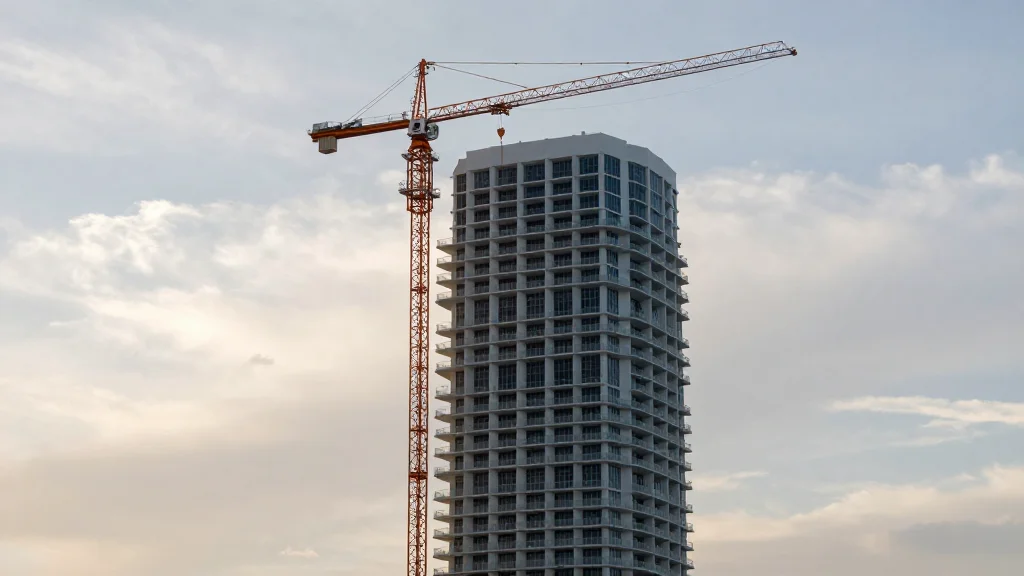
Miami Multifamily Market Nose-Dives As Hopes For Supply Relief Fade
Why It Matters
The slump erodes asset values and squeezes returns for owners, while the looming loan maturities could trigger broader credit stress if refinancing options dry up. It also creates buying opportunities for capital with deep pockets willing to pay discounts.
Key Takeaways
- •Q1 multifamily sales fell 18% to $972 M, 20% fewer deals.
- •Average price per unit dropped 14% to $268 K, five‑year low.
- •Rents down 4‑5% YoY while 14,300 units under construction.
- •$4.7 B of multifamily loans maturing in 2026, double 2025 level.
- •Distressed sales limited; delinquency under 1% through April.
Pulse Analysis
The Miami multifamily sector is now the outlier in an otherwise buoyant South Florida commercial‑real‑estate landscape. While total CRE transactions rose 11% year‑over‑year, apartment deals collapsed, reflecting a mismatch between a swelling pipeline—14,300 units under construction, the highest ratio among major metros—and waning demand. Rent concessions of 4‑5% for one‑ and two‑bedrooms signal tenants’ growing leverage, and the resulting downward pressure on unit valuations has pushed average prices to $268 K, a five‑year trough. This supply‑demand imbalance is amplified by a shrinking population, further dampening absorption prospects.
Investors who bought during the 2021‑22 boom now confront a harsh reality: many properties are underwater, and $4.7 billion of multifamily debt is set to mature in 2026, more than double the 2025 schedule. Although delinquency rates remain below 1%, the pressure to refinance or hold assets longer is intensifying. Sellers are either accepting losses, as illustrated by Marlin Spring’s 23% haircut on a $44 M purchase, or seeking creative structures to bridge the bid‑ask gap. Lenders are tightening terms, and the market’s liquidity has thinned, prompting a cautious approach to new financing.
Despite the gloom, the distress is not yet widespread, creating a niche for opportunistic buyers. Firms like Bainbridge are positioning themselves to acquire discounted assets, leveraging quiet, rapid transactions to narrow the price gap. For capital with deep reserves, the current discount environment may yield attractive yields once the pipeline eases and rent growth stabilizes. However, the sector’s recovery hinges on a slowdown in construction and a rebound in population inflows, making the next 12‑18 months critical for both investors and developers.
Miami Multifamily Market Nose-Dives As Hopes For Supply Relief Fade
Comments
Want to join the conversation?
Loading comments...