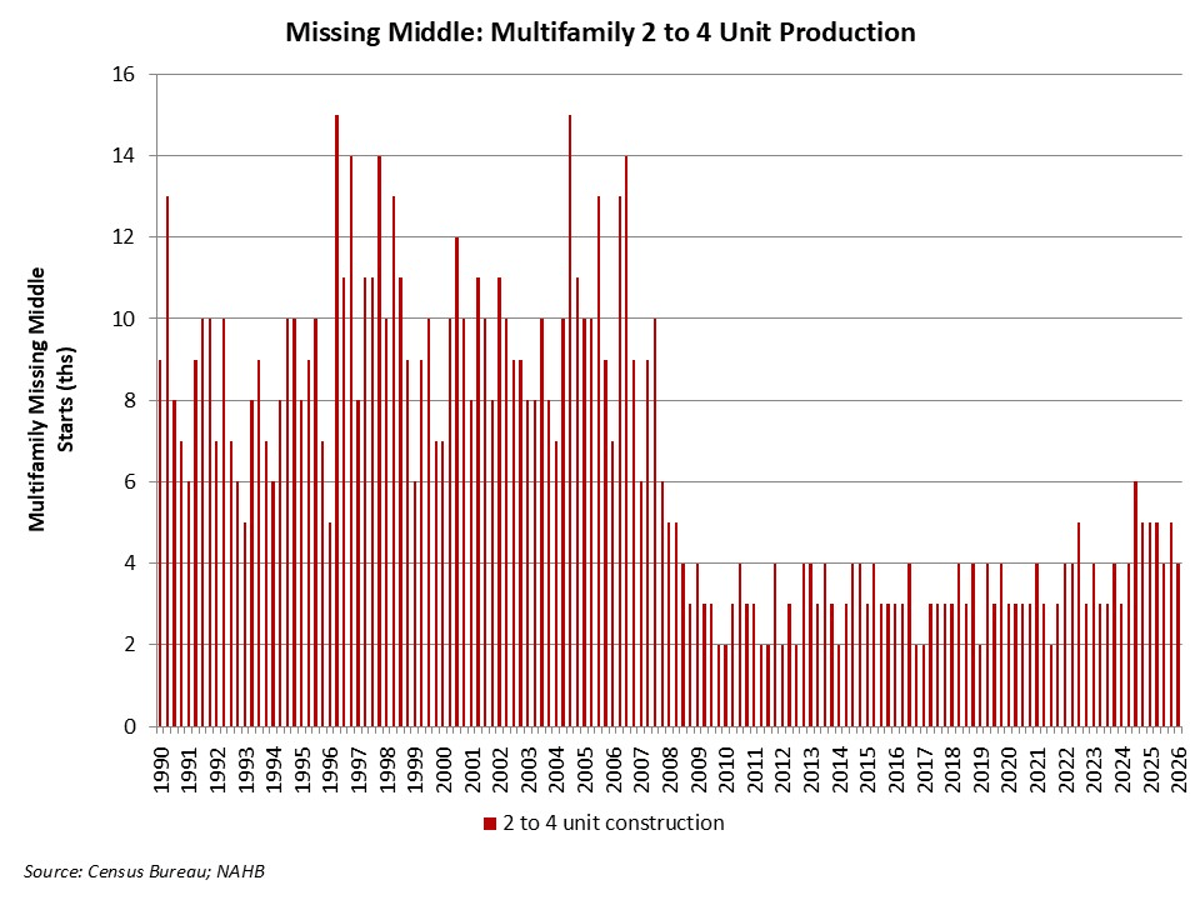
Multifamily Missing Middle Construction: First Quarter 2026
Why It Matters
The slowdown curtails the supply of affordable, medium‑density housing, intensifying pressure on urban housing markets and highlighting the need for zoning reform.
Key Takeaways
- •Q1 2026 saw 4,000 multifamily missing‑middle starts, a sharp decline.
- •Four‑quarter total fell to 23,000 units, below the previous 24,000.
- •Missing‑middle units represent only 4% of total multifamily construction.
- •Zoning restrictions are cited as primary barrier to sector growth.
Pulse Analysis
Missing‑middle housing—townhouses, duplexes, and small apartment blocks—has long been touted as a bridge between single‑family homes and high‑rise apartments. Yet the latest data show the segment’s momentum sputtering. After a modest rebound in 2025, Q1 2026 delivered just 4,000 new 2‑ to 4‑unit starts, and the cumulative four‑quarter tally slipped to 23,000 units. This represents a contraction in a niche that historically supplied roughly one‑tenth of all multifamily units, underscoring a structural supply gap that could exacerbate affordability challenges in many metros.
The underperformance is not merely a market anomaly; it reflects entrenched regulatory barriers. Local zoning codes often cap building heights, impose minimum lot sizes, or require extensive parking, all of which deter developers from pursuing medium‑density projects. Without reforms that enable "light‑touch density," such as allowing accessory dwelling units or reducing minimum lot requirements, the missing‑middle will remain a marginal player. Policymakers and housing advocates argue that easing these rules could unlock thousands of units, diversifying housing stock and easing rent pressures.
Looking ahead, developers are watching jurisdictions that experiment with permissive zoning. Cities that adopt streamlined approval processes or offer density bonuses may attract investment and revive the missing‑middle pipeline. For investors, the sector’s lag presents both risk and opportunity: early entrants in reform‑friendly markets could capture upside as demand for affordable, walkable housing rises. Ultimately, the trajectory of missing‑middle construction will hinge on whether policymakers translate the growing consensus for zoning flexibility into actionable legislation.
Multifamily Missing Middle Construction: First Quarter 2026
Comments
Want to join the conversation?
Loading comments...