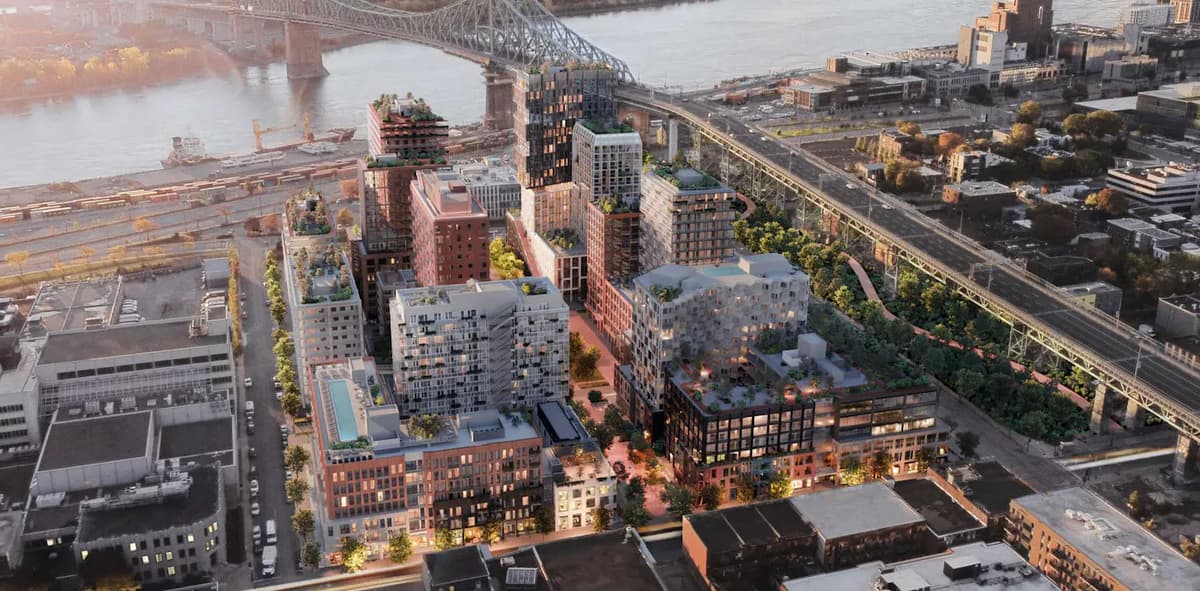
Neighbourhoods Are Changing as Cities Prioritize Diversity, Connectivity and Livability
Why It Matters
The move toward dense, mixed‑use neighbourhoods addresses housing shortages, reduces reliance on automobiles and enhances livability, reshaping the Canadian real‑estate market and municipal finance.
Key Takeaways
- •Montreal projects prioritize walkability, transit proximity
- •Mixed-use zoning replaces car-dependent suburban models
- •Infill redevelopment faces higher infrastructure and remediation costs
- •Federal funding incentivizes denser urban policies
- •New Urbanism principles drive diverse, community-focused neighborhoods
Pulse Analysis
The post‑war era’s sprawling suburbs are giving way to compact, mixed‑use districts that echo pre‑automobile city forms. In Montreal, developers are embedding residential towers within vibrant streetscapes, linking homes to grocery stores, cultural venues and transit hubs. This reflects the New Urbanism movement that champions pedestrian‑friendly design, mid‑rise architecture and the 15‑minute neighbourhood concept, positioning the city as a laboratory for sustainable urbanism.
While the benefits are clear, infill projects confront steep financial and regulatory hurdles. Remediating former industrial sites, upgrading sewer and road networks, and navigating complex ownership structures can inflate costs far beyond greenfield development. To offset these challenges, the federal government has pledged roughly $235 million USD in direct grants, encouraging municipalities to adopt density‑friendly zoning and streamline approvals. Such incentives aim to balance private profit motives with broader social objectives, ensuring that public infrastructure keeps pace with private development.
The ripple effects extend beyond Montreal’s borders. As Canadian cities grapple with housing affordability and climate targets, the success of these dense, walkable districts offers a replicable model. Real‑estate investors are increasingly valuing projects that integrate community amenities and transit access, while policymakers view them as tools to curb sprawl and lower emissions. Ultimately, the convergence of design innovation, public funding and market demand signals a lasting transformation in how Canadian urban landscapes are built and lived in.
Neighbourhoods are changing as cities prioritize diversity, connectivity and livability
Comments
Want to join the conversation?
Loading comments...