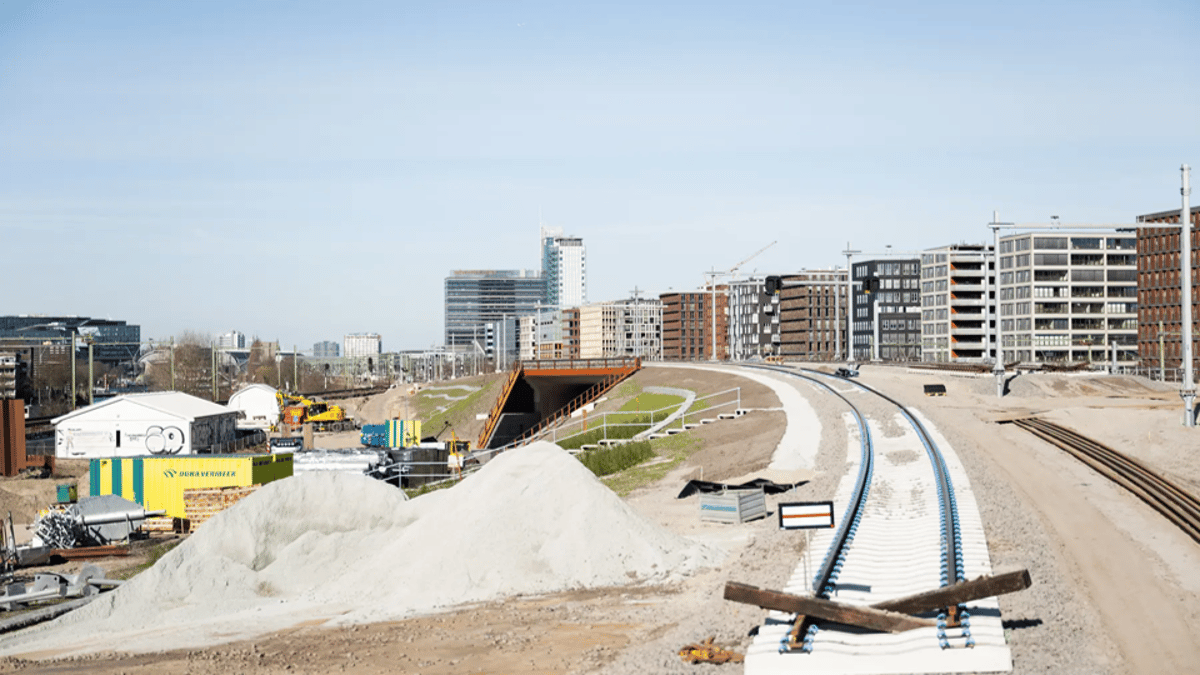
Netherlands’ Solution to the Housing Crisis: Neighborhoods Along the Railroad Tracks
Why It Matters
Integrating housing with rail infrastructure tackles the chronic shortage while reducing car dependence, delivering economic and environmental benefits. The model offers a replicable blueprint for other densely populated regions confronting similar affordability pressures.
Key Takeaways
- •Netherlands lacks ~400,000 homes, 5% of housing stock
- •ProRail pushes new neighborhoods adjacent to rail lines
- •Integrated housing‑rail planning cuts infrastructure costs and project time
- •Unused rail capacity exists in Randstad, Bunnik, Veenendaal‑De Klomp
- •Densification near stations reduces car dependence and sprawl
Pulse Analysis
The Dutch housing crunch is rooted in a mismatch between rapid household formation and a lagging construction pipeline. Structural constraints—including stringent environmental rules, soaring material prices and a skilled‑labour deficit—have kept annual completions well below the 100,000‑unit benchmark, leaving a deficit of about 400,000 homes. This shortage fuels rising rents, strained social‑housing queues and heightened pressure on urban infrastructure, especially in the Randstad corridor where demand is most acute.
ProRail’s proposal to locate new residential districts alongside existing rail corridors reframes the crisis as a mobility opportunity. The operator’s analysis shows ample unused track capacity that can accommodate additional passenger flows without costly line extensions. By co‑planning housing with station upgrades, developers can cut capital outlays, shorten permitting cycles and guarantee immediate public‑transport access for residents. Early‑stage coordination among municipalities, rail operators and builders also mitigates future bottlenecks, ensuring that rail services remain reliable as population density rises.
Beyond the Netherlands, the rail‑adjacent housing model signals a shift toward compact, transit‑oriented development that many European and North‑American cities are eyeing. Policymakers can leverage existing rail assets to deliver affordable units while curbing suburban sprawl and vehicle emissions. Success hinges on clear governance frameworks, shared data platforms and incentives that align private developers with public‑transport goals. If replicated, this approach could reshape urban growth patterns, delivering resilient, connected neighborhoods that meet both housing demand and climate objectives.
Netherlands’ solution to the housing crisis: neighborhoods along the railroad tracks
Comments
Want to join the conversation?
Loading comments...