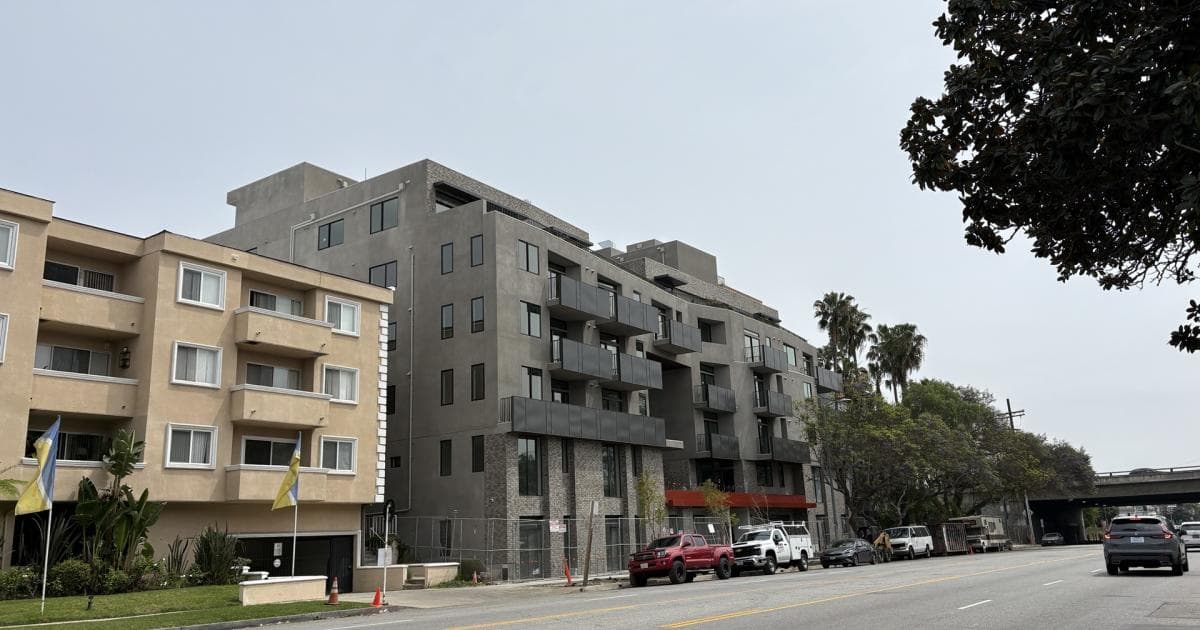
New Apartment Complex Unwrapped at 2450 S. Barrington Ave. In Sawtelle
Why It Matters
The development adds critical housing supply to a transit‑rich, high‑density area while embedding affordable units, illustrating how TOC incentives can unlock larger projects and address LA’s affordability gap.
Key Takeaways
- •Six‑story building adds 50 apartments to Sawtelle
- •Project uses TOC incentives, allowing larger footprint
- •Seven units reserved for below‑market rent
- •61 parking spaces support new residents
- •Ten recreation rooms converted into accessory dwelling units
Pulse Analysis
Sawtelle’s proximity to the 10 Freeway and the Metro Expo Line makes it a prime target for transit‑oriented development, a strategy Los Angeles has championed to curb sprawl and reduce car dependence. The neighborhood’s blend of residential density and vibrant retail along Pico Boulevard has driven strong demand for new units, especially those that cater to young professionals seeking walkable lifestyles. By situating the new complex within a short walk of major transit nodes, the project aligns with citywide goals to increase housing near public transportation, thereby easing commuter congestion and supporting sustainable growth.
The 2450 S. Barrington Avenue project showcases how developers can harness the city’s TOC program to exceed conventional zoning constraints. By committing seven apartments to below‑market rent, Dreyfuss secured permission for a larger building footprint and additional parking, a trade‑off that balances profitability with public benefit. Converting ten recreation rooms into accessory dwelling units (ADUs) further maximizes unit count without expanding the building’s footprint, reflecting a broader trend of leveraging ADUs to boost supply in tight markets. Mika Design Group’s architecture emphasizes modest, efficient layouts that cater to a range of household sizes, from single occupants to families.
For investors and policymakers, the development signals a viable template for future projects in high‑need corridors. The inclusion of affordable units, combined with market‑rate apartments, creates a mixed‑income community that can stabilize rents and diversify the tenant base. Moreover, the added 61 parking spaces address one of the common criticisms of dense urban housing—insufficient vehicle accommodation—while still encouraging transit use. As Los Angeles continues to grapple with a housing shortage, projects like this illustrate how incentive‑driven zoning reforms can deliver both quantity and quality, potentially accelerating the city’s path toward a more inclusive, transit‑centric urban fabric.
New apartment complex unwrapped at 2450 S. Barrington Ave. in Sawtelle
Comments
Want to join the conversation?
Loading comments...