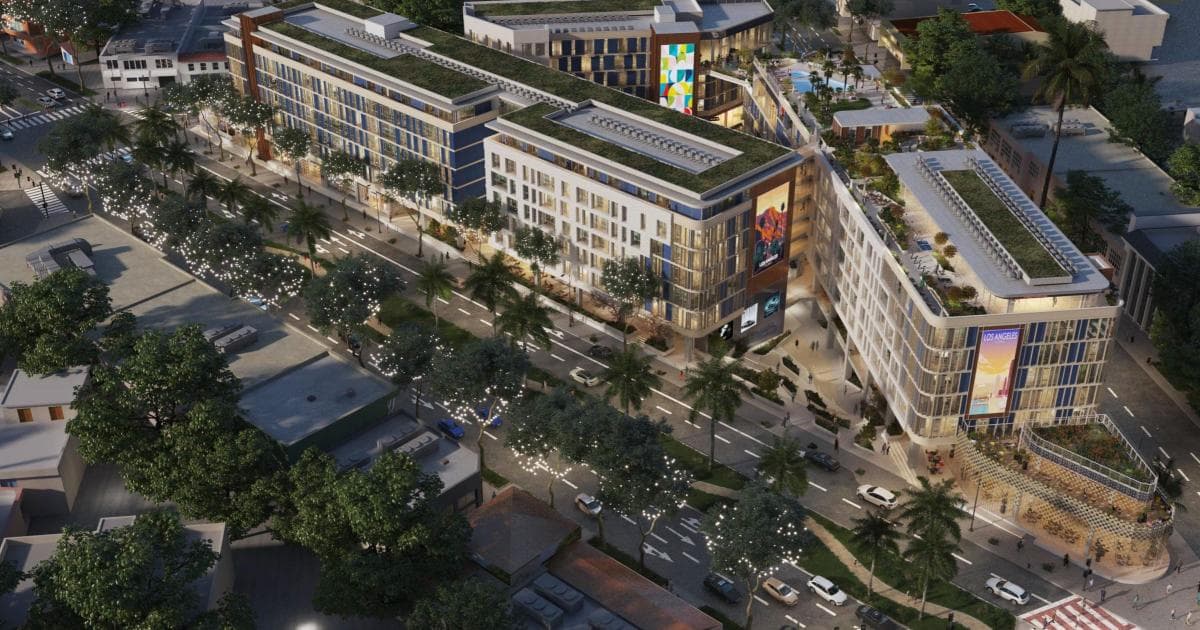
New Plan Unveiled for West Hollywood's Melrose Triangle Development
Why It Matters
The project adds substantial residential and retail capacity to a high‑density market, helping to alleviate West Hollywood’s housing shortage while revitalizing a long‑idle downtown site.
Key Takeaways
- •282 apartments, 66 senior affordable units.
- •96,000 sf of retail and restaurant space.
- •Three interconnected seven‑story towers replace former office plan.
- •Central courtyard enables walkable retail spill‑out and events.
- •No construction timeline announced; site has sat empty since 2021.
Pulse Analysis
The Melrose Triangle site at 9060 Santa Monica Boulevard has been a conspicuous hole in West Hollywood’s urban fabric since excavation began in 2021. Originally approved for a four‑story tower with a mix of office, retail and 76 apartments, the project stalled as demand for downtown office space evaporated during the pandemic and subsequent market correction. Developers The Charles Company responded by scrapping the office component and re‑imagining the parcel as a residential‑centric enclave, a shift that mirrors a broader reallocation of prime real‑estate toward housing in high‑density cities.
The revised scheme comprises three interlocking seven‑story buildings that will house 282 one‑ and two‑bedroom units, including 66 senior‑affordable apartments, and provide roughly 96,000 square feet of ground‑level retail and restaurant space. A 528‑space parking structure and a large central courtyard create a pedestrian‑friendly environment, allowing storefronts to spill onto outdoor dining areas and host pop‑up events. Corbel Architects, with landscape partner SWA Group, designed the layout to generate distinct zones rather than a single plaza, enhancing both daily foot traffic and seasonal activation potential.
By injecting nearly 300 new homes and a vibrant street‑level market into a coveted West Hollywood block, the development addresses the city’s chronic housing shortage while revitalizing a dormant site that has cost the municipality in lost tax revenue. Investors see the shift away from office risk toward stable residential rents, especially with a portion earmarked for senior affordable housing, which may qualify for public incentives. However, the absence of a firm construction timetable leaves stakeholders watching for any regulatory or financing delays that could affect the project’s economic upside.
New plan unveiled for West Hollywood's Melrose Triangle development
Comments
Want to join the conversation?
Loading comments...