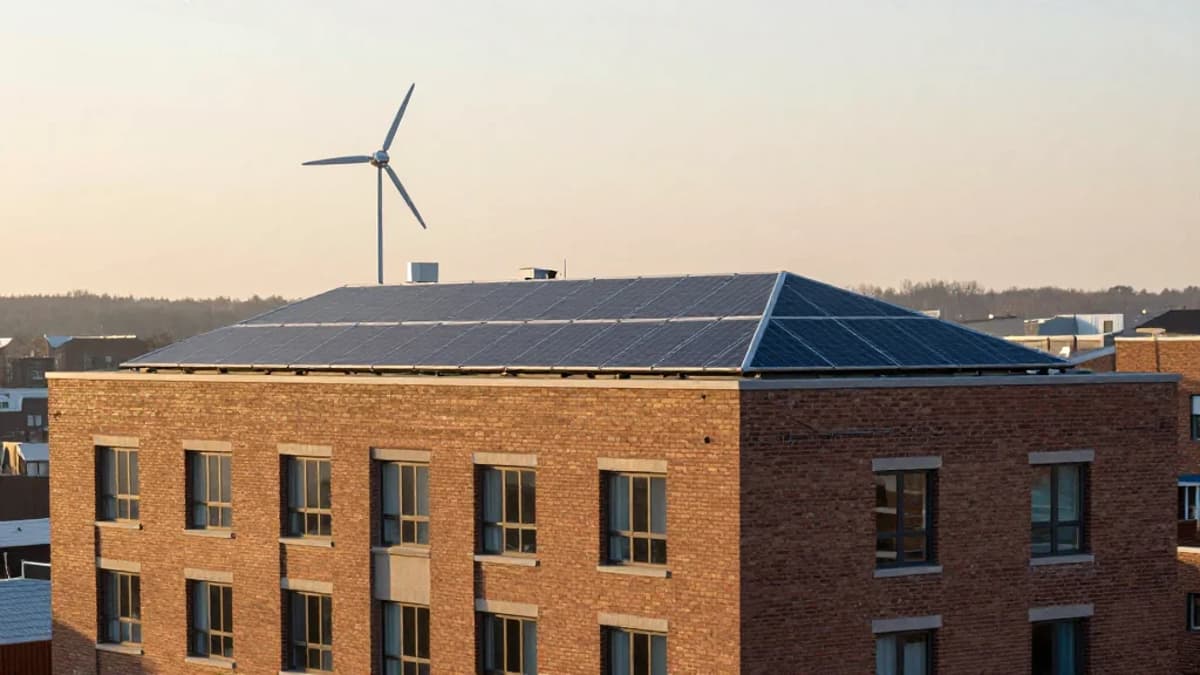
NZI on TAP: Philadelphia & Peer Cities Brainstorm Best Practices for Retrofitting Affordable Housing
•March 4, 2026
0
Why It Matters
Retrofitting affordable housing tackles both energy equity and climate goals, while the recommended financing and policy tools could unlock billions in investment for legacy‑stock cities.
Key Takeaways
- •88% of Philly housing built pre‑1980, high energy burden
- •Workshop produced seven actionable retrofitting recommendations
- •Peer cities offer regulatory models like Boston BERDO, NYC LL97
- •New financing tools include Philadelphia Green Capital Corp green bank
- •Training and developer services identified as critical success factors
Pulse Analysis
Philadelphia’s affordable‑housing portfolio is dominated by pre‑1980 structures, with roughly 88 % of units built before that year and an energy burden 86 % higher than the national average. These buildings consume disproportionate utility costs, deepening rent‑price pressures for low‑income households. Converting them to net‑zero performance is therefore both an equity and climate imperative. The ULI Net Zero Imperative’s Technical Assistance Panel (TAP) convened stakeholders in May 2025 to map the technical, financial, and policy gaps that have stalled large‑scale retrofits.
Financing emerged as the central obstacle, prompting the panel to catalogue federal, state, and local sources—from HUD programs to the newly created Philadelphia Green Capital Corp green bank. Peer‑city case studies, such as Boston’s Building Emissions Reductions Disclosure Ordinance and New York City’s Local Law 97, demonstrated how targeted regulations can unlock private capital and streamline permitting. The report recommends a unified process map, consolidated funding applications, and expanded gap‑financing mechanisms that align preservation goals with the city’s decarbonization targets, creating a more predictable investment environment for developers.
Beyond capital, the TAP highlighted capacity‑building as a decisive lever. Establishing a dedicated developer‑services team within the Department of Planning and Development, coupled with comprehensive training for owners, property managers, and residents, will sustain performance gains after construction. By institutionalizing these services and embedding them in existing housing programs, Philadelphia can accelerate the retrofitting pipeline while safeguarding affordability. The seven‑point recommendation set, if enacted, positions the city to meet both its climate commitments and housing stability objectives, offering a replicable model for other legacy‑stock markets.
NZI on TAP: Philadelphia & Peer Cities Brainstorm Best Practices for Retrofitting Affordable Housing
0
Comments
Want to join the conversation?
Loading comments...