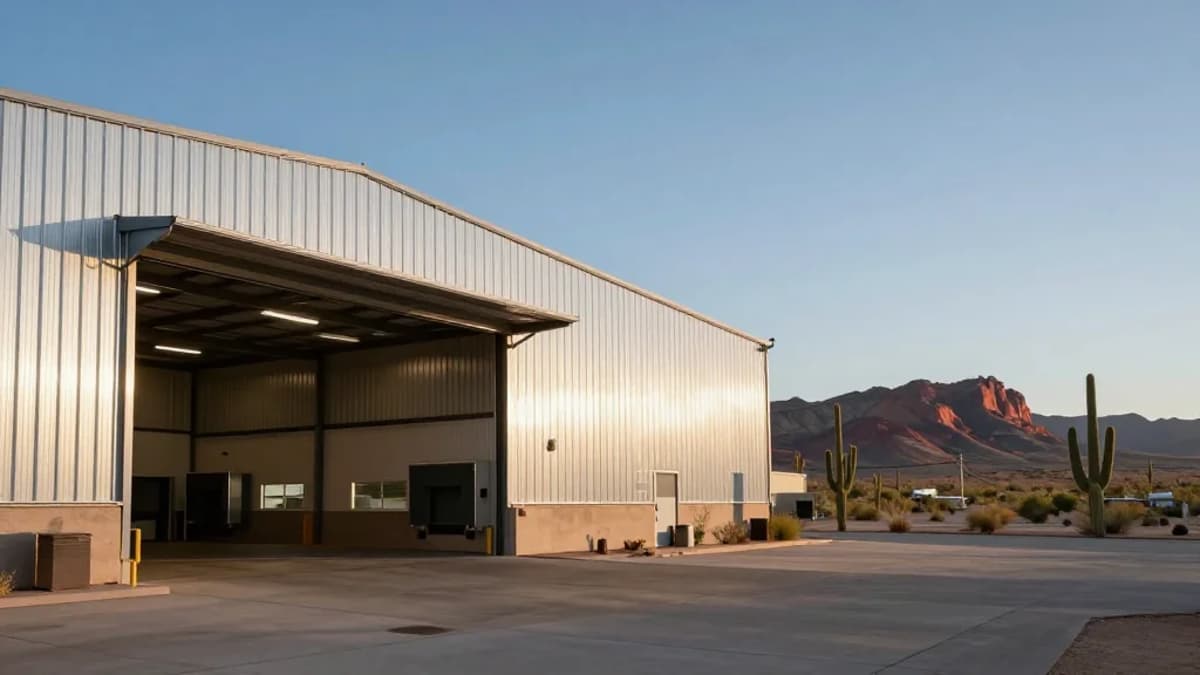
Phoenix Continues Industrial Market Dominance
•March 3, 2026
0
Companies Mentioned
Why It Matters
The market’s low vacancy and robust absorption signal strong demand, making Phoenix an attractive destination for investors and tenants seeking stable returns in industrial real estate.
Key Takeaways
- •Vacancy fell to 9.7% Q4 2025
- •Net absorption hit 18.2M sq ft annually
- •New deliveries dropped to 2.4M sq ft Q4
- •Average rent rose to $1.14 per sq ft
- •Market balance improved, supporting higher rents
Pulse Analysis
Phoenix’s industrial sector is outpacing many U.S. metros, driven by a combination of demographic growth and strategic location near major transportation corridors. The region’s population surged past 5 million, fueling demand for distribution centers that can serve both West Coast ports and the expanding Southwest consumer base. This demographic momentum, paired with a business‑friendly tax environment, has attracted national logistics operators, reinforcing the city’s status as a logistics hub.
The latest Colliers data highlights a market that is self‑correcting without aggressive new construction. New deliveries fell to 2.4 million square feet in the fourth quarter, a stark contrast to the 34.8 million square feet absorbed over the year. This supply restraint has helped keep vacancy at a modest 9.7%, while still allowing rents to climb modestly to $1.14 per square foot. For investors, the combination of low vacancy, steady rent growth, and limited new supply creates a compelling risk‑adjusted return profile compared with more saturated markets.
Looking ahead to 2026, the momentum appears sustainable. Tenant activity remains vigorous, and developers are likely to prioritize quality over quantity, focusing on high‑clearance, automation‑ready spaces that meet evolving supply‑chain needs. As e‑commerce continues to drive demand for last‑mile fulfillment, Phoenix’s central location and expanding labor pool position it to capture a larger share of national distribution networks, reinforcing its appeal to both existing tenants and new entrants seeking growth opportunities.
Phoenix Continues Industrial Market Dominance
0
Comments
Want to join the conversation?
Loading comments...