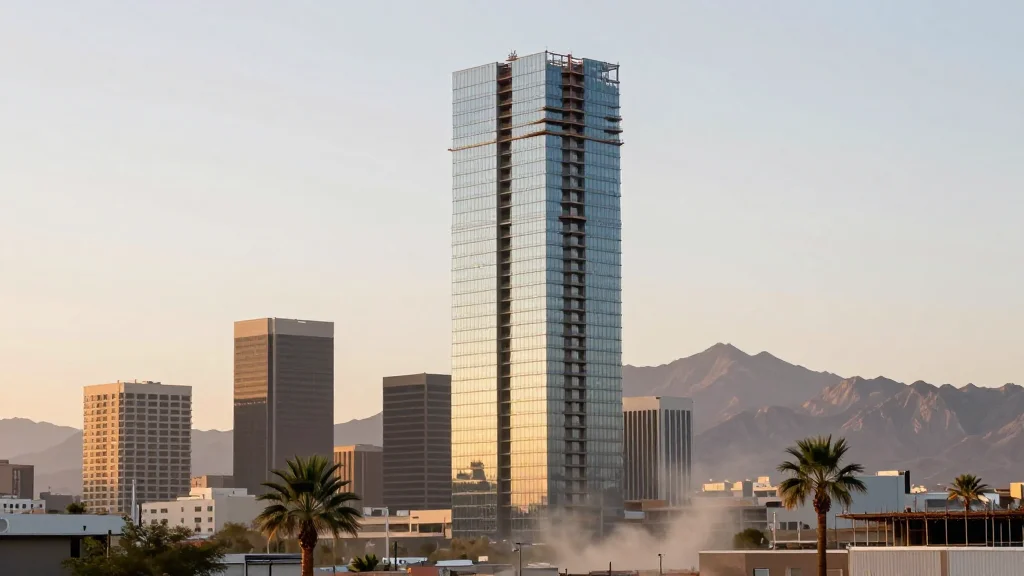
Phoenix Unveils Ambitious Downtown Revamp Plan to Create New Entertainment District

Why It Matters
The downtown revamp targets Phoenix’s ambition to compete with other fast‑growing western metros for conventions, tourism and talent. By adding hotel rooms, mixed‑use housing and vibrant public realms, the city hopes to capture higher‑spending visitors and retain residents who might otherwise relocate to more walkable urban centers. The financing model—leveraging bonds and parking‑meter revenue—also signals a willingness to use existing fiscal tools to fund large‑scale urban projects without raising taxes, a formula other municipalities may emulate. Beyond immediate economic gains, the plan’s focus on pedestrian infrastructure and shade addresses Phoenix’s extreme heat challenges, positioning the city as a leader in climate‑responsive urban design. Successful implementation could boost property values, increase tax revenues, and create a template for integrating entertainment anchors with mixed‑use development in other parts of the region.
Key Takeaways
- •Plan proposes two towers on the Convention Center South site with hotel and residential units.
- •Regency Garage slated for conversion into a high‑rise hotel with ground‑level dining.
- •Funding to draw from the next general‑obligation bond, existing bond proceeds, and parking‑meter revenue.
- •Downtown currently hosts >14 music venues, >245 restaurants and bars, and ~1.6 million sq ft of retail space.
- •City council’s Economic Development and Arts subcommittee will review the plan on April 8.
Pulse Analysis
Phoenix’s downtown blueprint reflects a broader shift among Sun Belt cities toward mixed‑use, entertainment‑centric cores. Historically, Phoenix relied on sprawling suburban growth; this plan marks a strategic pivot to densify the urban center, echoing successful transformations in Austin and Denver. The inclusion of a hotel component directly tied to the Convention Center signals an intent to capture higher‑value convention business, a sector that has been a growth engine for cities like Las Vegas.
The financing approach is noteworthy. By earmarking a portion of the general‑obligation bond and diverting parking‑meter revenue, Phoenix sidesteps the political fallout of new taxes while still unlocking capital for large projects. This mirrors financing tricks used in Chicago’s recent downtown hotel surge, suggesting a template that could spread across municipalities facing similar fiscal constraints. However, the plan’s reliance on subsidized rents to protect small businesses introduces a risk: if market rents rise faster than subsidy allocations, displacement could still occur, undermining the community‑building goals.
Looking ahead, the success of the revamp will hinge on execution speed and stakeholder alignment. The April 8 council hearing is a critical juncture; a swift approval could lock in construction timelines that align with upcoming major events at Chase Field and the Convention Center. Conversely, delays or funding shortfalls could stall momentum, allowing competing cities to poach the conventions and tourism dollars Phoenix aims to capture. The city’s ability to balance growth with affordability will ultimately determine whether the downtown district becomes a sustainable, inclusive hub or a high‑priced enclave for visitors and affluent residents.
Phoenix Unveils Ambitious Downtown Revamp Plan to Create New Entertainment District
Comments
Want to join the conversation?
Loading comments...