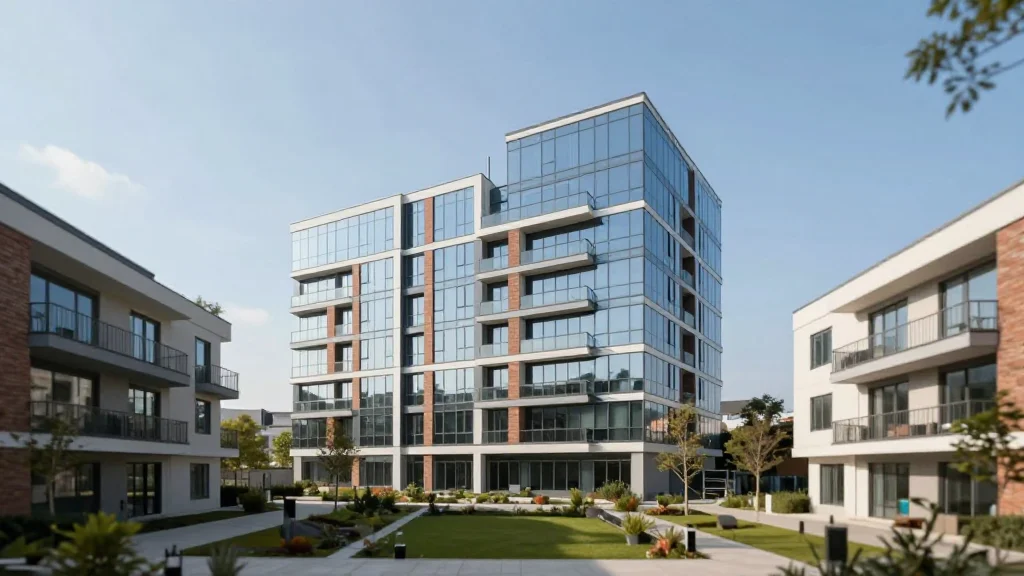
Portland’s Stroudwater Commons Adds 130 Units with $5,000 Buyer Incentives

Why It Matters
Stroudwater Commons tackles two persistent challenges in Portland’s real estate market: a shortage of affordable ownership options and limited pathways for first‑time buyers to generate rental income. By pricing units below $350,000 and offering ADUs that can earn $36,000 annually, the project expands the pool of attainable homeownership while also creating a modest supply of short‑term rentals. The $5,000 early‑buyer incentive further reduces entry barriers, potentially accelerating sales velocity and encouraging quicker turnover of new inventory into occupied homes. If the development meets its sales targets, it could signal to other developers that incentive‑driven, mixed‑use projects are viable in high‑cost urban markets. The model blends traditional condo sales with income‑producing assets, a combination that may reshape how cities think about affordable housing, especially in regions where zoning restrictions have limited the creation of accessory units.
Key Takeaways
- •130 residential units across 13 four‑story buildings in Portland
- •26 accessory dwelling units (ADUs) projected to earn $36,000 annually each
- •First 40 buyers receive a $5,000 Pottery Barn or West Elm gift card
- •Unit prices range from $241,153 (income‑restricted) to $449,999 (market‑rate)
- •HOA fees $235‑$580, reflecting affordability focus
Pulse Analysis
The Stroudwater Commons project arrives at a moment when Portland’s housing market is under intense pressure from rising prices and limited inventory. By embedding income‑producing ADUs into a larger condo development, GreenMars is effectively creating a hybrid product that appeals to both traditional homebuyers and investors seeking cash flow. This dual‑appeal strategy could shift developer risk calculations, encouraging more projects that blend ownership with rental potential.
Historically, Portland’s zoning policies have constrained the proliferation of ADUs, but recent regulatory changes have opened the door for developers to incorporate them at scale. Stroudwater Commons leverages this policy shift, offering up to two ADUs per owner, which not only expands the city’s housing stock but also provides a built‑in mechanism for owners to offset mortgage costs. If the $5,000 furnishing incentive spurs rapid sales, it may prompt municipalities to consider additional incentive structures—such as tax credits or fee waivers—to further stimulate affordable construction.
Looking ahead, the success of Stroudwater Commons could influence financing models. Lenders may view ADU‑enabled projects as lower‑risk due to the supplemental rental income, potentially leading to more favorable loan terms for buyers. Moreover, the project’s emphasis on energy‑efficient construction aligns with broader sustainability goals, positioning it as a template for future developments that must meet both climate and affordability targets. The real test will be whether the market absorbs the units at the projected price points and whether the ADU rental income materializes as expected, factors that will shape the next wave of Portland’s housing strategy.
Portland’s Stroudwater Commons Adds 130 Units with $5,000 Buyer Incentives
Comments
Want to join the conversation?
Loading comments...