Proposal From Jefferson Students Envisions Market East As Car-Free, Graduate Residential Hub
Why It Matters
The initiative could reshape a struggling downtown corridor into a vibrant, mixed‑use district, driving economic activity and addressing Philadelphia’s student housing shortage. Its success would set a precedent for community‑driven urban revitalization across similar post‑industrial neighborhoods.
Key Takeaways
- •Students propose car‑free linear park with 250 trees on Market East.
- •Plan adds graduate housing to create 24‑hour neighborhood.
- •Proposal targets pedestrians, buses, linking Reading Market, Chinatown, Washington Square.
- •City may offer incentives, up to 20‑year tax abatements.
- •Committee will seek broader feedback this summer.
Pulse Analysis
Market East has long been a patchwork of underutilized office towers, a fading retail corridor, and a commuter thoroughfare that struggles to attract residents. Recent demographic studies show that 96% of daily visitors don’t live in the area, underscoring a lack of neighborhood vitality. The student‑led vision leverages Philadelphia’s dense network of universities and hospitals, positioning the corridor as a natural hub for graduate housing while reimagining public space to prioritize pedestrians and transit riders.
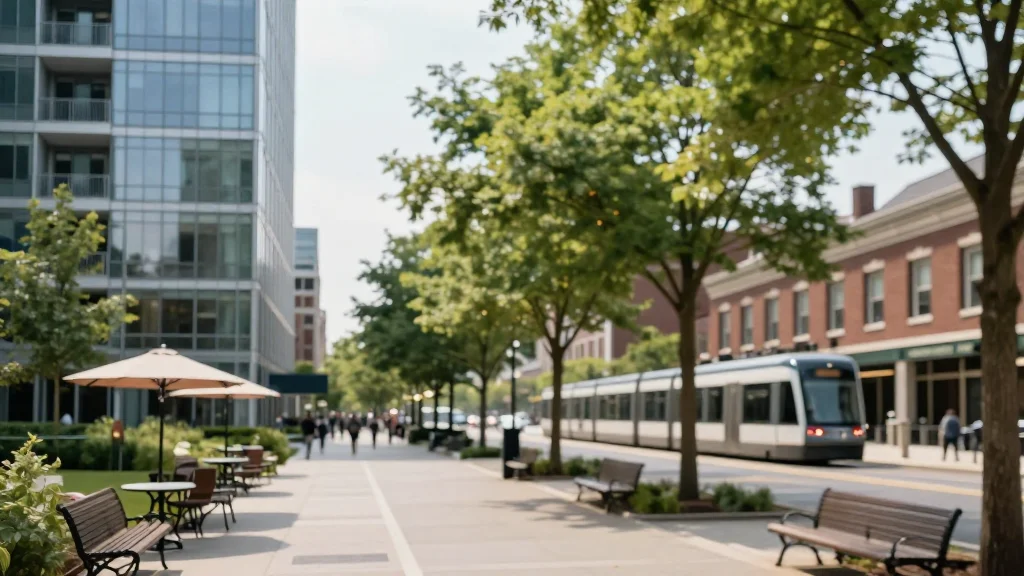
At the heart of the proposal is a linear park that would replace private‑car lanes with green infrastructure, including 250 newly planted trees and ample outdoor seating. By maintaining bus access and integrating pathways that connect the Reading Terminal Market, Chinatown, and Washington Square West, the design promises to knit together disparate cultural and commercial zones. Large‑scale graduate housing towers would create a 24‑hour presence, supporting local businesses, extending retail hours, and fostering a sense of community ownership that has been missing from Market East’s identity.
If the Market East Revitalization Committee adopts the plan, the city could deploy a suite of incentives—ranging from tax abatements to streamlined permitting—to accelerate construction. Such public‑private collaboration mirrors successful revitalization efforts in other U.S. cities where student populations have acted as catalysts for economic renewal. The outcome could serve as a blueprint for leveraging academic institutions to drive urban regeneration, positioning Philadelphia as a model for innovative, community‑centric development.
Proposal From Jefferson Students Envisions Market East As Car-Free, Graduate Residential Hub
Comments
Want to join the conversation?
Loading comments...