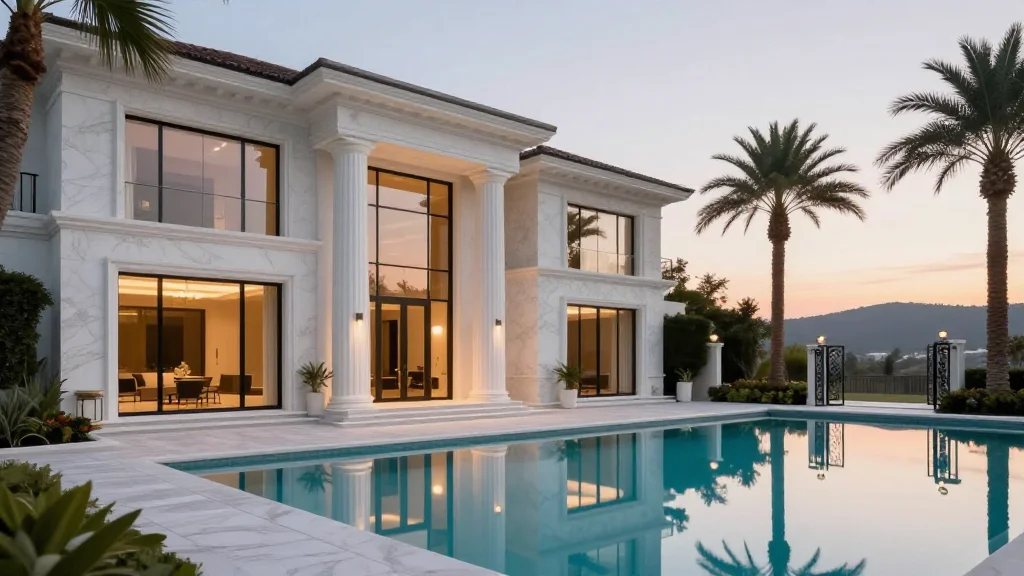
Qatari Al Thani Family Lists $400 Million Bel‑Air Mega‑Mansion, Aiming for U.S. Record

Why It Matters
The $400 million Bel‑Air listing underscores the growing concentration of wealth in California’s luxury real estate market and the fiscal pressures that accompany it. If sold at the asking price, the transaction would not only break the national record but also generate a sizable contribution to California’s proposed billionaire wealth tax, highlighting how policy and high‑net‑worth asset sales intersect. Beyond tax implications, the estate’s unprecedented scale and amenities raise the bar for future ultra‑luxury developments. Developers may feel compelled to incorporate comparable features—private medical facilities, extensive staff quarters, and bespoke entertainment spaces—to attract a dwindling pool of ultra‑wealthy buyers, potentially reshaping the design language of future mega‑mansions. The listing also serves as a barometer for global capital flows into U.S. real estate. The Al Thani family’s decision to sell after a decade of investment may signal shifting strategic priorities among sovereign‑wealth families, influencing how other international investors approach the U.S. luxury market.
Key Takeaways
- •Al Thani royal family lists 8‑acre Bel‑Air estate for $400 million, the highest U.S. home listing.
- •Property includes 39 bedrooms, 70,000 sq ft, private cinema, spa, hidden X‑ray room, and a 25‑car underground garage.
- •Listing price exceeds the current U.S. record by over $100 million; previous record $238 million (Ken Griffin, 2019).
- •California’s proposed 5 % billionaire wealth tax could add a $23.8 million mansion tax on a $400 million sale.
- •Industry insiders debate price realism; past ultra‑high‑price listings have sold for far less.
Pulse Analysis
The Bel‑Air mega‑mansion listing is more than a headline; it is a litmus test for the resilience of America’s ultra‑luxury housing market amid tightening fiscal policy. Historically, record‑setting home sales have clustered in periods of economic optimism and low interest rates. Today, the Federal Reserve’s higher rates and California’s aggressive tax proposals create a paradox: wealth is abundant, but the cost of financing and the prospect of hefty transfer taxes could dampen buyer enthusiasm. Sellers like the Al Thani family may be motivated by a desire to liquidate assets before the tax regime crystallizes, while buyers might view the property as a hedge against inflation and a status symbol that transcends market cycles.
From a supply‑side perspective, the estate’s opulent features set a new benchmark for what constitutes a "mega‑mansion" in the United States. Developers aiming for the top tier will likely need to incorporate comparable amenities—private medical suites, extensive staff quarters, and high‑tech entertainment spaces—to justify price tags in the $300‑plus million range. This could spur a niche wave of ultra‑customized construction, driving up costs for labor and premium materials, and potentially creating a feedback loop that inflates future listings.
Finally, the transaction will be a bellwether for foreign sovereign wealth involvement in U.S. real estate. The Al Thani family’s exit may signal a recalibration of asset allocation strategies among Gulf investors, who have historically favored stable, high‑visibility assets in major cities. If the sale proceeds at or near $400 million, it could reinforce confidence among other sovereign and ultra‑high‑net‑worth buyers, sustaining demand for premium properties despite tax headwinds. Conversely, a significant price reduction would likely temper expectations and could lead to a short‑term cooling of the ultra‑luxury segment.
Qatari Al Thani Family Lists $400 Million Bel‑Air Mega‑Mansion, Aiming for U.S. Record
Comments
Want to join the conversation?
Loading comments...