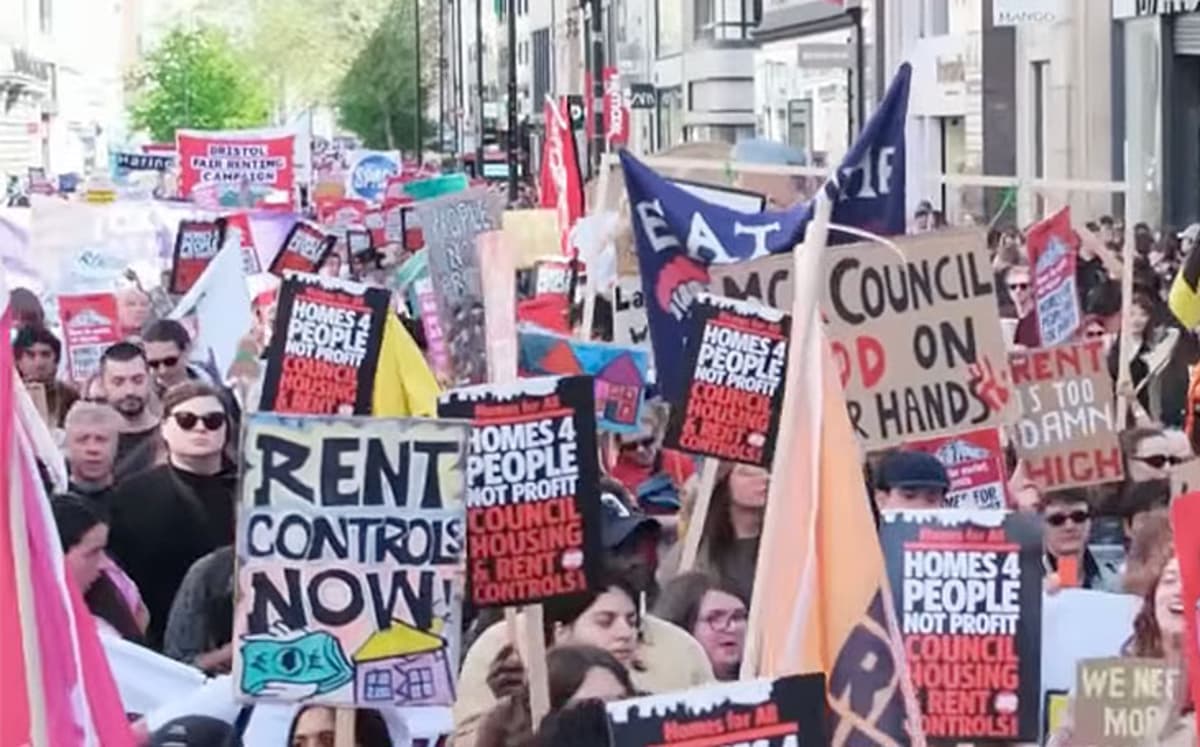
Rent Control Campaigners March in Central London
Why It Matters
Rent control and large‑scale council housing could reshape the UK housing market, influencing affordability, investor returns and electoral dynamics.
Key Takeaways
- •Thousands marched demanding rent controls and council housing
- •Speakers included Jeremy Corbyn and MP Zarah Sultana
- •Protesters blame Starmer government for housing crisis
- •Calls for large‑scale public housing construction intensify
Pulse Analysis
The United Kingdom’s housing shortage has reached a tipping point, with private rents soaring faster than wages and a chronic deficit of affordable homes. London, where median rents exceed £2,000 a month (about $2,500), epitomises the crisis, prompting tenant unions and trade unions to coordinate large‑scale demonstrations. The protest reflects a broader public backlash against policies that have favoured market‑driven development over social housing, a narrative amplified by rising homelessness and the widening wealth gap.
Rent control proposals, long championed by left‑leaning parties, aim to cap annual rent increases and protect tenants from displacement. International examples—from Berlin’s temporary rent freeze to New York’s rent‑stabilisation framework—offer mixed outcomes, showing both improved affordability and concerns about reduced investment in rental stock. In the UK context, advocates argue that caps, paired with a robust council‑housebuilding programme, could curb speculative price hikes while preserving supply. Critics warn that strict controls may deter private developers, potentially slowing the construction of new units and inflating the black‑market for rentals.
Politically, the march signals heightened pressure on Prime Minister Keir Starmer’s Labour government ahead of the next general election. With unions and grassroots groups mobilising, housing policy is poised to become a decisive electoral issue. Should the government adopt a hybrid approach—moderate rent caps alongside accelerated public‑sector building—it could defuse tenant unrest while maintaining investor confidence. Conversely, a perceived inaction may fuel further protests and empower opposition parties that promise more radical reforms. The outcome will shape the UK’s housing landscape for years to come.
Rent control campaigners march in central London
Comments
Want to join the conversation?
Loading comments...