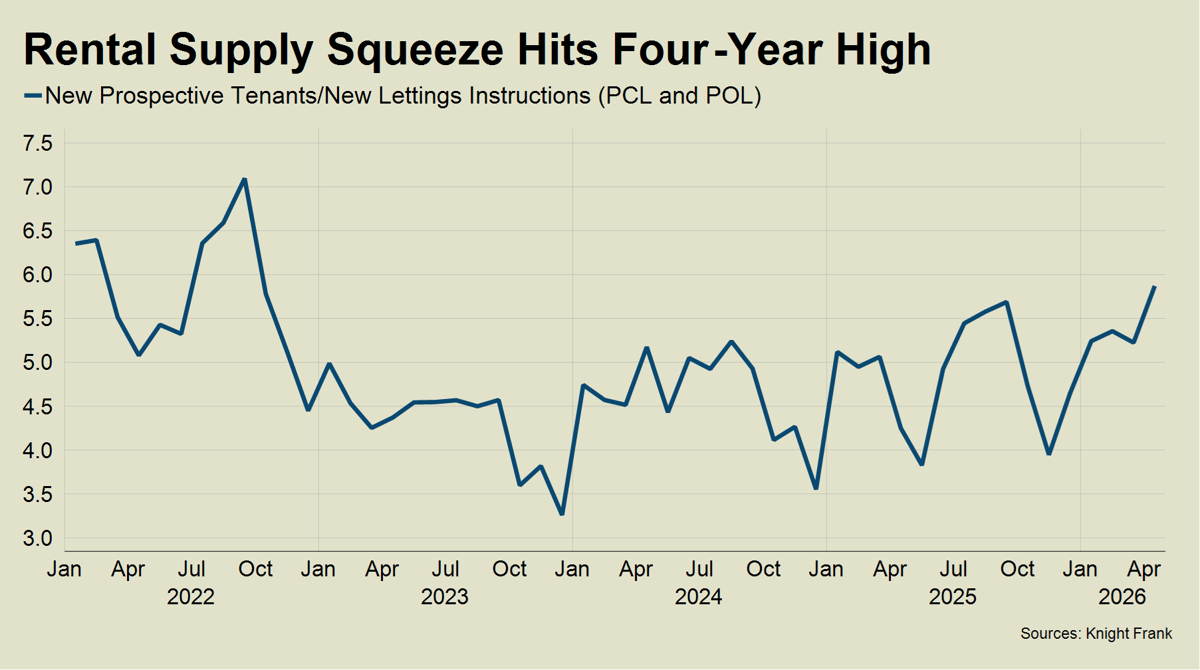
Rental Supply Squeeze Hits Four-Year High
Companies Mentioned
Why It Matters
A constrained rental inventory is pushing rents higher, tightening affordability for tenants and reshaping investment strategies in the UK residential market.
Key Takeaways
- •Renters' Rights Act triggers landlords to sell or reclaim properties.
- •Prime outer London rents rose 3% YoY, strongest since June 2024.
- •Lettings listings fell 15% below five‑year average in Q1 2026.
- •5.9 prospective tenants per new listing, highest since Sep 2022.
- •Central London rents grew only 1.1% as supply remains less tight.
Pulse Analysis
The Renters' Rights Act represents the latest regulatory shift targeting the private rented sector, introducing caps on rent hikes, stricter possession procedures, and new rules for selling tenanted homes. Anticipating these constraints, many landlords have opted to liquidate assets or regain possession before the law takes effect, directly reducing the pool of available units. This pre‑emptive behavior amplifies an already tight market, especially in prime outer London where demand outpaces supply, forcing landlords to recalibrate pricing strategies to preserve margins.
Data from Knight Frank and Rightmove illustrate the magnitude of the supply crunch. Average rents in prime outer London surged 3% year‑on‑year, the strongest performance since mid‑2024, while central London’s growth lagged at 1.1% due to relatively more discretionary letting activity. Listings are down 15% compared with the five‑year norm, and the tenant‑to‑listing ratio climbed to 5.9, a peak not seen since 2022. These figures signal a market where prospective renters face limited choices, intensifying competition and driving up price points across the board.
For investors, the evolving landscape presents both risk and opportunity. Higher rents can boost yields for owners who retain properties, yet the regulatory environment adds compliance costs and potential revenue caps. Tenants, meanwhile, confront reduced affordability and fewer alternatives, potentially prompting a shift toward shared‑housing or longer‑term tenancy commitments. Looking ahead, policymakers may need to balance tenant protections with supply incentives to avoid entrenched scarcity, while landlords will watch closely for any further legislative tweaks that could alter the profitability calculus of the UK rental market.
Rental supply squeeze hits four-year high
Comments
Want to join the conversation?
Loading comments...