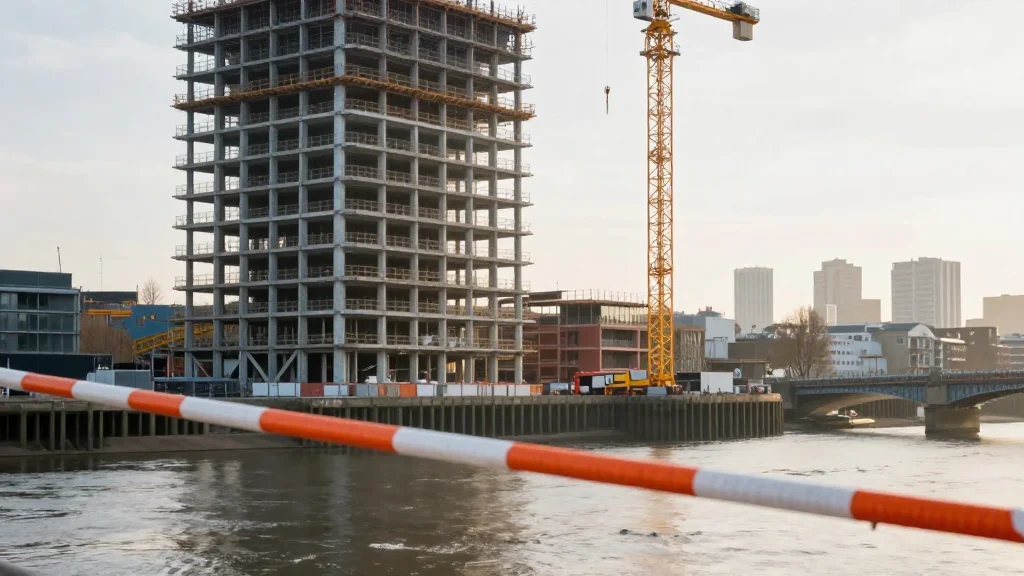
Rockwell Loses Appeal over 28-Storey Battersea Bridge Resi Plan
Why It Matters
The rejection signals stricter enforcement of planning policies, affecting how developers approach high‑rise housing in dense urban districts. It may reshape supply dynamics in a market already strained by limited affordable units.
Key Takeaways
- •Rockwell's 28‑storey Battersea Bridge scheme rejected by planning inspector
- •Proposal conflicted with London Plan's height and design guidelines
- •Wandsworth local plan cited adverse effects on neighbourhood character
- •Decision underscores tightening scrutiny on high‑rise residential projects
- •Developers may need to redesign to align with local planning policies
Pulse Analysis
London’s housing crunch has driven developers to pursue taller, denser projects, but the city’s planning framework remains a decisive gatekeeper. Rockwell’s 28‑storey Battersea Bridge proposal exemplified this tension, aiming to add premium units to a coveted riverside location while navigating the London Plan’s height caps and design standards. The planning inspector’s ruling underscores that even well‑funded developers must align with both regional and borough‑level policies, especially when a project threatens the visual cohesion of historic neighborhoods.
The inspector’s decision hinged on two key breaches: the scheme exceeded the permissible building height under the London Plan and conflicted with Wandsworth’s local plan, which prioritises preserving the character of the Battersea riverside corridor. By deeming the development likely to cause “adverse effects on the character and appearance of the area,” the regulator reinforced the importance of contextual design. This outcome serves as a cautionary tale for developers targeting high‑rise opportunities in similarly protected zones, where community sentiment and strict planning criteria can outweigh financial incentives.
For the broader market, the ruling may temper enthusiasm for ultra‑tall residential towers in inner‑London boroughs, prompting a shift toward mid‑rise, mixed‑use schemes that better integrate with existing streetscapes. Investors and lenders will likely scrutinize planning risk more closely, demanding robust compliance strategies before committing capital. As London grapples with supply shortages, the balance between density and heritage preservation will continue to shape the city’s development trajectory, making regulatory alignment a critical success factor for future projects.
Rockwell loses appeal over 28-storey Battersea Bridge resi plan
Comments
Want to join the conversation?
Loading comments...