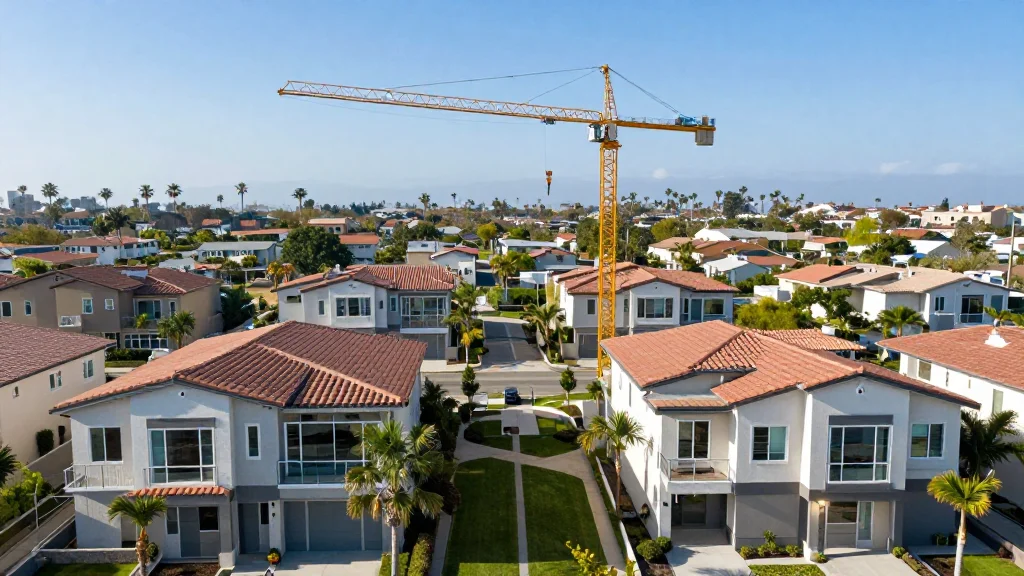
San Diego Council Approves 985‑Unit Collection at Cactus Near Border

Companies Mentioned
Why It Matters
The Collection at Cactus project tackles two of San Diego’s most pressing housing challenges: a severe shortage of affordable rentals and a dwindling supply of entry‑level homes for sale. By situating the development near the border, the city also addresses the growing demand from cross‑border workers who contribute to the regional economy but have limited housing options. The project’s scale—nearly 1,000 units—makes it a bellwether for how municipalities can leverage density bonuses and mixed‑use zoning to meet state‑mandated housing goals while balancing community concerns. If the development proceeds on schedule, it could set a precedent for repurposing underutilized industrial land in other high‑growth corridors across Southern California. Successful integration of affordable units into a traditionally commercial zone may encourage developers to pursue similar projects, potentially easing the broader regional housing crisis.
Key Takeaways
- •San Diego planning commission unanimously approved the 985‑unit Collection at Cactus project.
- •The development includes 313 townhomes for sale and 672 rental units on a 40‑acre site.
- •Project location is less than a mile from the US‑Mexico border and near the Cross Border Xpress bridge.
- •Construction is expected to start in at least a year, pending final plans and permits.
- •The mixed‑use project aims to provide both market‑rate affordable housing and truly subsidized units.
Pulse Analysis
San Diego’s housing market has been under strain for years, with supply lagging far behind demand. The approval of Collection at Cactus reflects a strategic shift toward leveraging underused industrial parcels for residential use—a trend gaining traction in other California metros like Los Angeles and the Bay Area. By employing density bonuses, the city can squeeze more units into a single site without overburdening existing infrastructure, a tactic that may become a template for future projects.
Historically, Otay Mesa has been a logistics hub, but its proximity to the border makes it uniquely positioned to serve a binational workforce. The new units could attract workers who currently endure long commutes or rely on expensive cross‑border housing, thereby improving labor market stability for customs and warehousing firms. However, the project's success hinges on navigating the permitting labyrinth and addressing any community pushback related to traffic, school capacity, and environmental impacts.
Looking ahead, the Collection at Cactus could catalyze a wave of similar developments if it demonstrates that mixed‑use, affordable‑focused projects can be financially viable and politically palatable. Developers may increasingly view border‑adjacent land as a premium asset, not just for commercial logistics but for housing that supports the cross‑border economy. The council’s unanimous vote signals that policymakers are ready to back such initiatives, provided they align with broader community plans and deliver tangible affordability outcomes.
San Diego Council Approves 985‑Unit Collection at Cactus Near Border
Comments
Want to join the conversation?
Loading comments...